





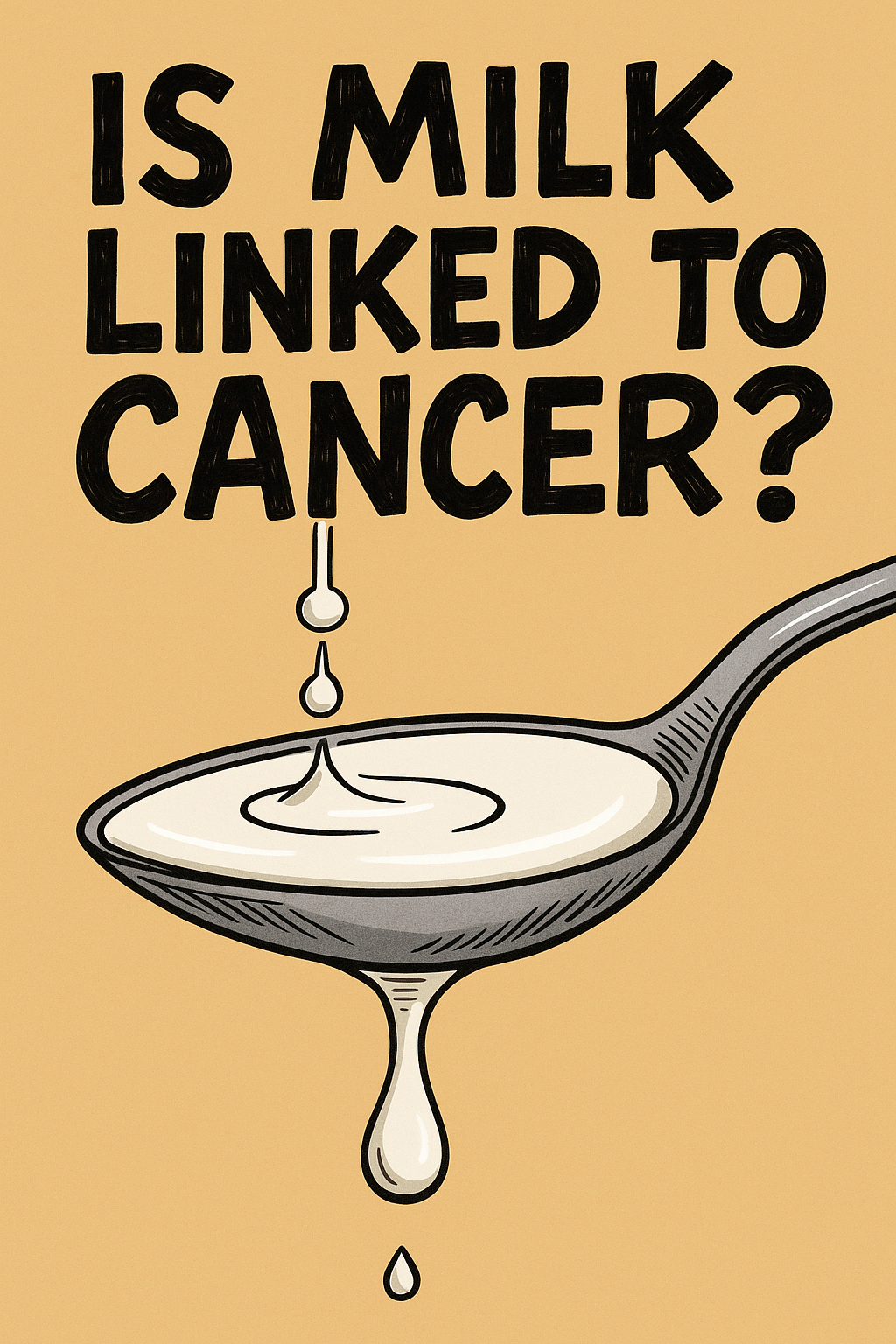
The Nobel Laureate Who Linked Beef and Milk to Colon Cancer – and What the Evidence Really Says
expert, nutritionist
What if one of the most common cancers in the Western world were linked not only to what we eat, but to something hiding inside it? That was the bold question asked by Harald zur Hausen, the German virologist and Nobel Prize winner who once proved, against the scientific mainstream, that a virus can cause cancer. Later in life he turned his attention to beef and cow's milk, and his idea still sparks heated debate among scientists today.
"I thought it was just my diet"
Colorectal cancer does not only affect people who live unhealthily. American actor James Van Der Beek, best known from Dawson's Creek, has spoken openly about his colorectal cancer diagnosis. He said he had stayed fit for most of his life and had no family history of cancer. When he first noticed changes in his bowel habits, he assumed his diet was to blame. After the diagnosis, he said he became much more mindful of what he eats: cutting back on processed food, gluten and dairy, eating vegetables from his own garden and exercising regularly (FOX 5 New York).
His story is a reminder of two things: food choices matter, and persistent changes in digestion are worth discussing with a doctor rather than brushing off.
A child's question that made headlines
The idea that cancer might be approached like an infection is not new. In 2015, a dinner-table conversation in Manchester made headlines around the world. Respected cancer researcher and professor Michael Lisanti, then director of the Breakthrough Breast Cancer Unit at the University of Manchester, was telling his family about his work and how difficult the search for a cancer cure is. His young daughter Camilla asked a disarmingly simple question: why not treat cancer with antibiotics, the way you treat a sore throat?
The childish logic seemed naive at first. Antibiotics act on bacteria, not on viruses or tumours. But Lisanti knew that some antibiotics also affect mitochondria, the tiny "power plants" inside our cells, and that cancer stem cells depend heavily on them. When his team tested several common antibiotics on cancer stem cells in the laboratory, four of them eliminated those cells across a range of tumour types. The results were published in the journal Oncotarget, and the tabloids happily wrote about the "discovery" of young Camilla.
It is important to keep this in perspective: these were laboratory experiments on cells, not a treatment for patients. Fortunately, the story did not end there, because it also reminded the world of the work of a well-known German virologist.
Dr. Harald zur Hausen: the man who proved a virus can cause cancer
For decades, German virologist and physician Dr. Harald zur Hausen argued that infections can sit behind some of humanity's most serious diseases. In 1976 he published the hypothesis that the human papillomavirus (HPV) causes cervical cancer. Many colleagues were sceptical, but he was proven right. His discovery paved the way for the HPV vaccine introduced in 2006, and in 2008 he received the Nobel Prize in Physiology or Medicine (International Agency for Research on Cancer). He led the German Cancer Research Center (DKFZ) in Heidelberg for twenty years and passed away in May 2023 at the age of 87.
From cervical cancer to beef and milk
After his Nobel Prize, zur Hausen turned to a new puzzle. A number of studies show that people who eat a lot of red meat, especially processed meat, have a higher risk of colorectal cancer. Zur Hausen wondered whether something carried by cattle could help explain this pattern. He pointed to countries such as India, where beef is largely avoided for religious reasons and colon cancer rates have historically been low.
Together with his wife and fellow scientist Ethel-Michele de Villiers, he examined samples of cow's blood serum and milk. The team found small circular DNA elements, which they named "Bovine Meat and Milk Factors" (BMMF). In a later study, the DKFZ team reported finding BMMF proteins in tissue surrounding colorectal tumours more often than in tissue from cancer-free people. Their proposed mechanism is that BMMF might act as indirect promoters, encouraging chronic inflammation in the gut lining over decades (DKFZ press release; study record).
Why other scientists are not convinced
This is where the story becomes more nuanced than the headlines suggest. In 2022, Germany's Federal Institute for Risk Assessment (BfR) and the Max Rubner-Institut reviewed the newer research. They concluded that the evidence does not support BMMF being a new kind of pathogen, noted that similar DNA elements are also found in many non-bovine foods, and stated that no health effects from BMMF are to be expected for consumers.
On milk specifically, the broader evidence actually points the other way. A major review for the World Cancer Research Fund Continuous Update Project (published in Annals of Oncology) linked higher red and processed meat intake to a higher colorectal cancer risk. The same review linked higher dairy intake to a lower risk. A 2019 meta-analysis in Advances in Nutrition and a large 2025 diet-wide study in Nature Communications reached similar conclusions, largely attributing dairy's apparent benefit to calcium.
In short, zur Hausen's BMMF idea remains an open scientific question rather than an established fact. The general link between high red and processed meat intake and colorectal cancer, however, is widely accepted.
What nutrition experts suggest today
The American Cancer Society notes that the World Health Organization's cancer agency classifies red meat as "probably carcinogenic" and processed meat as "carcinogenic to humans". The American Institute for Cancer Research recommends limiting red meat to no more than about three portions (roughly 350–500 g cooked) per week and keeping processed meat to a minimum.
From a nutritionist's point of view, these simple habits are a sensible place to start:
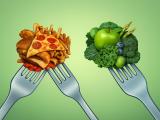
- Make meat a side, not the star. Fill half your plate with vegetables and add whole grains and legumes.
- Go easy on processed meats. Sausages, salami, bacon and ham are best enjoyed occasionally.
- Watch the grill. Very high-temperature cooking and charring can create unwanted compounds, so gentler methods such as stewing, steaming or baking are a good alternative.
- Don't fear dairy without reason. For most people, milk, yogurt and kefir can be part of a balanced diet.
- Listen to your gut. Persistent changes in bowel habits deserve a conversation with your doctor, at any age.
Some foods are also more nutritious when prepared the right way. Read more in our article Foods We Use Incorrectly, and see which everyday choices are worth reconsidering in 5 Foods That Shorten Your Lifespan.
Turmeric and cinnamon: the spice cabinet's quiet helpers
Spices such as turmeric and cinnamon, used generously in Indian cooking, are often mentioned in this context. Researchers at Penn State University found that adding a mix of antioxidant-rich spices to a high-fat meal reduced the rise in blood triglycerides afterwards by about 30 percent. Spices alone cannot explain differences in cancer rates between countries, which depend on many factors including genetics, lifestyle, screening and overall diet. Still, they are a flavourful way to make plant-rich meals more enjoyable. If you'd like to try something warming, take a look at our recipe Warm Water with Turmeric Against Winter Troubles.
Many of our readers tell us that the easiest change was not giving anything up completely. Instead, they swapped a few meat-heavy dinners a week for bean stews, vegetable curries or fish, and discovered new favourite dishes along the way.
Watch: Harald zur Hausen in his own words
You can learn more about Dr. Harald zur Hausen in the short video below.
One more thing…
When Dr. zur Hausen received the Nobel Prize, congratulations poured in from all over the world. Yet it was a small tabloid-friendly story about an 8-year-old girl and antibiotics that briefly captured the public imagination. Both stories share the same lesson: science often advances through bold, even unlikely questions, which then have to survive years of careful testing. Zur Hausen's beef-and-milk hypothesis is still undergoing exactly that test. Until the evidence is clearer, the advice of most experts is simple and reassuring: enjoy red meat in moderation, limit processed meats, and build your meals around vegetables, whole grains and legumes.
Information on this website is for educational purposes only and is not medical advice.
expert, nutritionist
 Would you like to be informed about news on the website?





|

