





Eggs, Salmon and Broccoli: Why These Foods Support Muscle Recovery and Fat Burning at the Same Time
expert, nutritionist
What if the secret to a stronger, leaner body isn't in an expensive supplement but already in your fridge? A carton of eggs, a fillet of salmon, a head of broccoli and a handful of walnuts may not look like much. Together, though, they cover almost everything muscles need to recover, and they keep you full long enough that late-night snacking loses its appeal.
One of the best-known examples is NFL legend Tom Brady, who played at the top level well into his forties. His former personal chef described a diet built mostly on vegetables, with lean protein such as wild salmon and plenty of water, in an interview with Boston.com. Brady later laid out his approach in detail through his TB12 program. Few of us will follow such a strict regime, but the principle is simple and repeatable: whole, balanced foods eaten consistently.
Muscle recovery isn't just for athletes
Muscle regeneration doesn't only matter when you exercise intensely or after heavy physical effort. Tissue repair and renewal is an ongoing process throughout the body. It involves the heart, and the body depends on a steady supply of nutrients to maintain the skin, gut lining, brain and other tissues and organs, including the thyroid. Foods that support these processes are usually well balanced, offering vitamins, protein, minerals, fiber, carbohydrates and fats. When all of these nutrients come in sensible proportions, our overall wellbeing is much more likely to stay in good shape.
This is why protein-rich food is so valuable when you are trying to lose weight. The body uses more energy to digest and process protein than it does for fats or carbohydrates. Researchers call this the thermic effect of food, and a review in Nutrition & Metabolism reported that protein has the highest effect of the three macronutrients. Protein also tends to keep us satisfied for longer. If you want to make sure you're getting enough, take a look at 3 mistakes when consuming protein.
Fats deserve a fairer reputation than they once had. Quality fats help us feel satisfied after a meal and are needed to absorb vitamins A, D, E and K. In moderate amounts, as part of a balanced diet, they don't automatically lead to weight gain. Vitamins are generally well tolerated, although fat-soluble vitamins can build up when taken in large supplemental doses. Minerals call for even more caution, because the line between enough and too much is narrower. Every body also needs carbohydrates. The difference is that simple carbohydrates enter the bloodstream quickly. Complex carbohydrates are generally the better choice, but portion size still matters.
Which foods are the most balanced?
1. Eggs
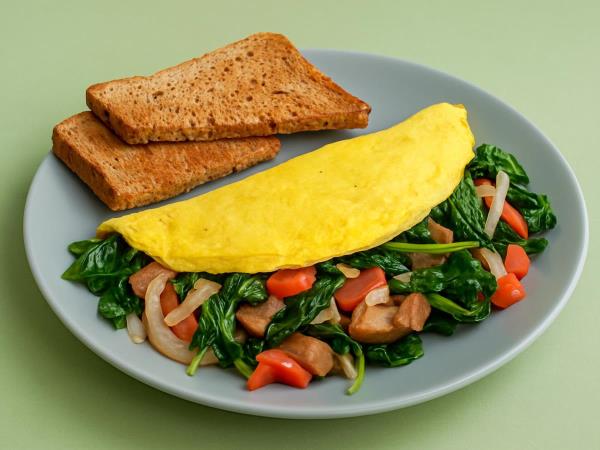
Eggs are a classic source of protein. They are very nutritious and, at any time of day, easy on both the digestion and the wallet. According to Harvard Health Publishing, a large egg provides about 6 grams of high-quality protein containing all nine essential amino acids, for roughly 70 calories. The same source notes that eating one egg a day is considered safe for most healthy people. And don't forget that eggs work just as well in savory dishes and main courses as they do in desserts.
One reader told us that swapping her morning pastry for two boiled eggs and a slice of wholegrain bread was "the single change that stopped my 11 a.m. hunger attacks."
2. Salmon
Salmon is an exceptional source of omega-3 fatty acids, and 100 grams of salmon also provides around 20 grams of protein. You can check the exact values for different types in the USDA FoodData Central database. The omega-3 fats EPA and DHA play a role in heart, brain and eye health, as explained by the NIH Office of Dietary Supplements. The American Heart Association recommends eating fish, particularly fatty fish such as salmon, about twice a week. It's no surprise that many people call salmon the best of all healthy foods. People managing gout or other specific conditions should ask their doctor or dietitian how often fish fits into their diet.
3. Berries
Raspberries, blackberries, strawberries, blueberries and currants contain impressive amounts of antioxidants. Some people also put watermelon in this group, although botanically it's a different case. Many berries are counted among the so-called superfoods, and researchers keep studying their beneficial properties. A large study of more than 93,000 women, published in the journal Circulation, found that those who ate more blueberries and strawberries had a lower observed rate of heart attacks. This was an observational finding, but it fits well with the general advice to eat more colorful fruit.
4. Walnuts and other nuts
Walnuts provide the body with plenty of mono- and polyunsaturated fats, which are important for the healthy functioning of every organism. Walnuts are also one of the few plant sources of the omega-3 fatty acid ALA. Hazelnuts, almonds and cashews belong in the same group. In the well-known Spanish PREDIMED trial, published in the New England Journal of Medicine, a Mediterranean diet supplemented with nuts was associated with fewer cardiovascular events. Nuts are energy-dense, so a small handful a day is plenty. To learn more about protein from plant sources, read Plant Proteins for a Longer Life.
5. Broccoli
Its green color hints at what broccoli offers: it's rich in fiber and low in calories, as most green vegetables are. Broccoli also keeps you feeling full for longer, which is why it appears in almost every weight-loss plan. It belongs to the cruciferous vegetables, which contain compounds called glucosinolates that researchers are studying with great interest. The Harvard T.H. Chan School of Public Health lists dark green vegetables among the most valuable foods for everyday eating. Short steaming preserves more of the nutrients than long boiling. If plain broccoli bores you, try it blended into a creamy soup, as described in Tasty and Healthy Meals from the Blender.
6. Oats
Oats contain a soluble fiber called beta-glucan, which can help support healthy cholesterol levels as part of a balanced diet. A meta-analysis of randomized controlled trials in the American Journal of Clinical Nutrition found that eating at least 3 grams of oat beta-glucan daily modestly lowered LDL cholesterol. Oatmeal is very nutritious and keeps you full for a long time. Just don't be fooled by packaging: manufacturers often add sugar and other ingredients that cancel out the benefits of oats. Always read the label, and see which other "healthy" products deserve a second look in Hello, and Fattening: Foods that Sabotage Your Diet.
A reader who started making plain overnight oats with berries and a few walnuts instead of buying flavored instant sachets told us she was surprised how sweet the fruit alone tasted after only two weeks.
7. Spinach
Spinach is often listed among foods with an alkalizing effect on the diet, and it's also exceptionally nutritious. It provides folate, vitamin K, magnesium and plant compounds such as lutein. Spinach deserves a place on your menu at least once a week. Twice is even better! People who take blood-thinning medication should keep their intake of leafy greens consistent and talk to their doctor, because vitamin K can affect how these medicines work.
8. Water
Water contains no calories or nutrients in the usual sense, yet no organism can function without it. Water carries nutrients to the muscles and supports digestion, circulation and temperature control. The European Food Safety Authority (EFSA) sets an adequate total daily water intake of about 2 liters for women and 2.5 liters for men, counting water from food as well. Make sure you always drink enough. By the time you feel thirsty, your body is often already asking you to catch up. If you sometimes feel puffy and heavy, you might also find this useful: Get Rid of Bloating and Excess Water.
How to put it all together
You don't need to eat all eight foods every day. A simple plan works well:
- Breakfast: oats with berries and a few walnuts, or eggs with spinach.
- Lunch: salmon with steamed broccoli and a wholegrain side dish.
- Snacks: a small handful of nuts or a bowl of berries.
- All day: a glass of water with every meal and between meals.
Balance, variety and consistency matter more than any single "miracle" food. This combination gives your body what it needs to recover, stay energized and feel satisfied.
Information on this website is for educational purposes only and is not medical advice.
expert, nutritionist
 Would you like to be informed about news on the website?













|

