




The Woman Who Knew Food Was Medicine - 900 Years Before Science Caught Up
expert, nutritionist
Nearly a millennium before "holistic wellness" became a buzzword, a Benedictine nun had already written the playbook. She linked what people ate to how they felt, tied illness to disrupted rhythms of sleep and season, and insisted that mind, body, and spirit could not be treated separately. Read her conclusions today and they could pass for excerpts from a contemporary wellness guide — except they were written around the year 1150.
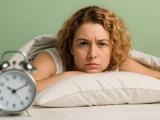
It's a pattern many people recognize once they start paying attention to their own routines: skip sleep, ignore the body's natural rhythm for a few weeks, and energy and mood quietly unravel — not because of one dramatic event, but because of the accumulation of small, ignored signals. That idea, that health is the sum of many interconnected daily habits rather than a single fix, is essentially the argument Hildegard of Bingen made eight centuries before "lifestyle medicine" existed as a term.
Who Was Hildegard of Bingen?
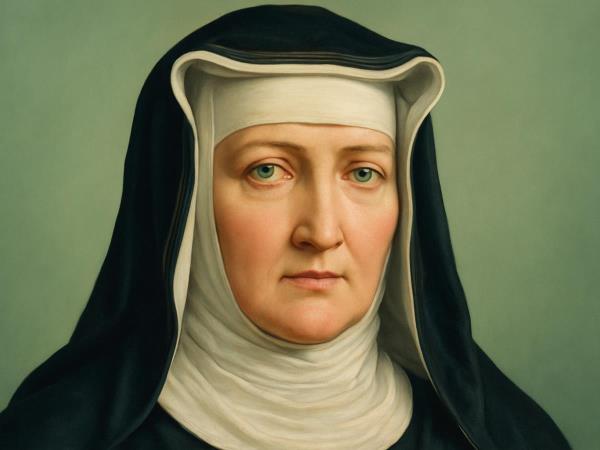
Hildegard was born on 16 September 1098, the tenth child of a noble German family — and, as was custom for a tenth child, she was given to the Church and sent to a Benedictine monastery for her upbringing. She quickly stood out for her curiosity and intellect. By the age of 32 she had become abbess of the monastery of Disibodenberg, and she later founded her own monastery near Bingen on the Rhine, where she would spend decades as a healer, writer, and composer.
Between roughly 1150 and 1158, Hildegard produced what is now known as her Physica (part of a larger body of work sometimes grouped with Causae et Curae), an encyclopedic catalogue of the medicinal properties of plants, animals, stones, and elements. Scholars believe she drew not only on the medical texts available to clergy of her era, but also on folk knowledge from local healers and herbalists, since her writing blends formal Latin medical terms with German folk vocabulary. Her recipes eventually numbered in the thousands, describing plants, animal parts, and stones alongside instructions for their use.
What makes the collection remarkable isn't just its size — it's that many of the concerns she catalogued (digestive troubles, headaches, joint pain, what she described as melancholy or mental unrest) are conditions people still talk about today, even though the frameworks and vocabulary used to describe them have completely changed. A 2023 academic analysis of her kidney-related remedies, published in the journal Experimental and Clinical Transplantation, compared her recorded treatments to earlier classical medical texts and found her work reflected genuine clinical observation and regional folk practice rather than simple copying from older sources.
Six Ideas Ahead of Their Time
Distilled from her writing, Hildegard's core health philosophy can be summarized in six themes — remarkable, given they were set down roughly 900 years ago:
- Food and healing are connected. What you eat directly shapes how you feel and function.
- Natural remedies come first. She favored preparations drawn from plants, animals, and minerals over the compounded substances of the alchemists of her day.
- Rhythm matters. Sleep patterns and the changing seasons were, to her, central to staying well — not incidental to it.
- Movement is essential. Regular physical activity featured prominently in her recommendations for maintaining health.
- The body needs regular "reset" practices — she wrote about bathing, sweating, and periods of fasting as ways to support the body's own processes.
- Health is not just physical. Her most enduring idea may be this one: that wellbeing is the product of psychological, physical, and spiritual factors working together, not any single one in isolation.
It's a genuinely striking list to read with modern eyes — not because it "proves" any specific remedy works, but because it shows how old the instinct is to treat the body as an interconnected whole rather than a set of separate problems to patch individually.
A Mystic Under Suspicion
Hildegard's reputation wasn't always so celebrated. Centuries after her death, in 1583, she was formally recognized as a saint and became associated with herb and spice gardens. But during her lifetime, her writings drew scrutiny from the Church itself. After Bernard of Clairvaux raised concerns to Pope Eugene III about her unusual books, a commission of clergy was formed to examine whether her visionary writing was compatible with Church doctrine — a serious inquiry, given the era's treatment of women who claimed spiritual visions. Her supporters reportedly urged her to simply record what she experienced rather than defend it, and the commission ultimately concluded she was a genuine mystic. Given the period's history, a different finding could have had serious consequences for her.
Why It Still Resonates
Hildegard's original texts were written in Latin, and translating them into modern language requires not just linguistic skill but historical context — which is part of why scholarly interest in her work continues. The most widely referenced English edition is Priscilla Throop's complete translation of the Physica, published in 1998, which organizes her remedies into categories spanning plants, trees, stones, fish, birds, animals, and metals.
None of this means her 12th-century remedies should be taken as medical guidance today — many reflect the medical understanding of her era rather than modern clinical evidence, and some (animal-part preparations among them) are firmly a product of their time. But as an early, systematic articulation of the idea that food, rhythm, movement, and mental state are all threads of the same fabric, her work remains a fascinating historical touchstone — and a reminder that "food as medicine" is a much older conversation than it might seem.
Information on this website is for educational purposes only and is not medical advice.
expert, nutritionist
 Would you like to be informed about news on the website?









|

