





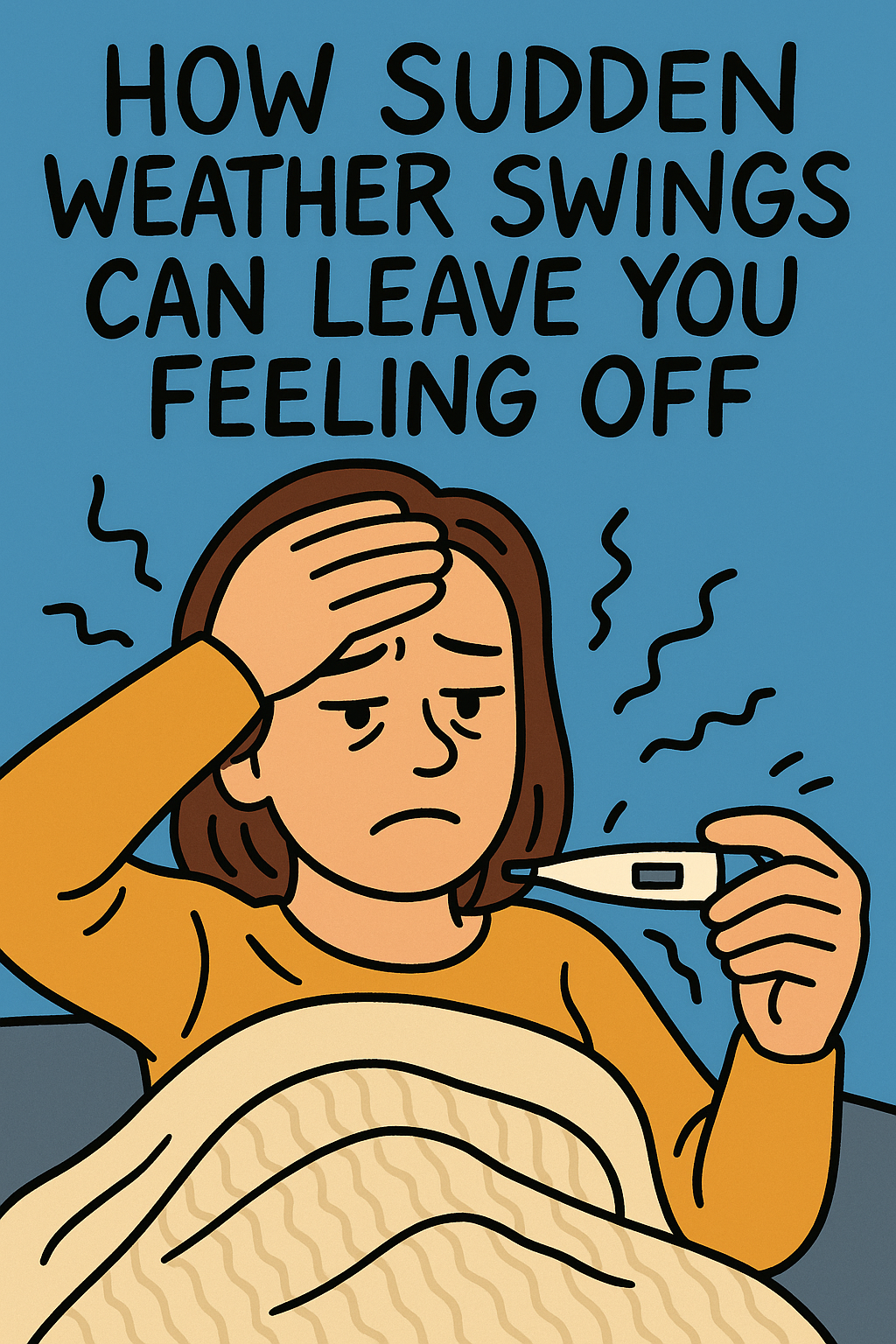
When the Sky Changes Its Mind: How Sudden Weather Swings Can Leave You Feeling Off
expert, nutritionist
You wake up to sunshine, step out without a jacket, and by evening the wind has turned bitter and your throat feels raw. Sound familiar? That uncomfortable in-between feeling — a tickly nose, stiff fingers, a heaviness in your chest — isn't just in your head. It's your body reacting, in real time, to a environment that changed faster than it could adjust.
Actress Kathleen Turner has spoken openly for years about living with rheumatoid arthritis, describing mornings that begin with a deep, bone-level ache long before she's even out of bed (Today.com). She isn't alone — many people who live with joint sensitivity say the discomfort seems to move with the weather, flaring in the damp cold and easing when things settle. Doctors don't fully agree on why, but the pattern is common enough that entire fields of research have grown up around it.
Even our grandparents had a saying for it: a sudden draft, and you'd catch a cold. There's more truth tucked inside that old belief than we sometimes give it credit for. Rapid swings in temperature and humidity really can put extra pressure on the body's defenses. According to Mayo Clinic family medicine physician Dr. Tejal Shelat, unpredictable swings between warm and freezing days cause body temperature to fluctuate as well, which — combined with the seasonal viruses already circulating — can make people more prone to picking up a cold or the flu.
Colds and Respiratory Infections: Why They Seem to Follow the Weather
The most familiar consequence of an abrupt weather change is a run-of-the-mill respiratory infection — what most of us just call a cold, a bug, or the flu. It isn't only about viruses being "in the air," although they always are. It's also about how we dress. A cool morning followed by a mild afternoon tempts many people outside in a light jacket, and by the time the wind picks up, they're caught underdressed and chilled.
Our bodies like routine, and when that routine is disrupted, the immune system can be left playing catch-up. This is where an old household trick still holds up well: dressing in light layers you can add or remove, rather than committing to one heavy coat that has you sweating one hour and shivering the next. It's the kind of simple, practical advice you'll still hear from family doctors today.
Dry Air, Sinus Trouble, and a Few Old-Fashioned Fixes
The throat and sinuses are next in line. When outdoor temperatures swing, we tend to reach for the air conditioner or crank up the heating indoors — and both dry the air out fast. Dry air irritates the mucous membrane, the moist lining inside the nose and throat that normally acts as a natural filter against bacteria, dust, and pollen. Once that lining dries out, it becomes noticeably easier for irritants to get a foothold.
Many doctors recommend a humidifier for exactly this reason. As ENT specialists explain, keeping indoor humidity in a moderate, comfortable range can ease the raw, dried-out feeling that comes with heated or air-conditioned rooms, particularly during the colder months. You don't necessarily need to buy one, though — a simple bowl of hot water left in the room, or a pot of water set near (never on top of) a radiator, does a similar job the old-fashioned way. Some people like to add a sprig of thyme or chamomile, since the rising steam can feel soothing, a bit like a homemade version of steam inhalation.
Cold Air and Breathing: Why Winter Is Tougher on the Lungs
Anyone who lives with asthma already knows this one well: cold air can be a genuine trigger. When you breathe in a sudden blast of cold air, the airways tend to narrow — a reflex called bronchoconstriction. For most people this means nothing more than an occasional cough, but for those with asthma it can bring on real breathing difficulty. The Asthma and Allergy Foundation of America notes that cold, dry air is a well-documented weather-related trigger, especially when it's breathed in through the mouth rather than warmed first by the nose.
Bronchitis — inflammation of the airways leading to the lungs — is another condition that tends to flare after a sharp temperature drop. The everyday, common-sense advice here is worth repeating: breathe through your nose rather than your mouth in cold weather, since the nose naturally warms incoming air before it reaches the lungs. A warm drink, such as ginger or mint tea, is also a pleasant way to warm the body from within. Ginger in particular has attracted research interest for its anti-inflammatory compounds, and some clinical studies — including one published in the journal Nutrients — have looked at whether ginger extract can ease pain and inflammation markers, though researchers stress that more human trials are still needed before firm conclusions can be drawn.
Muscles and Joints: The Weather's Quieter Target
While respiratory symptoms tend to get the most attention, plenty of people notice something else entirely: aching muscles and stiff joints. Anyone with arthritis (inflammation of the joints) has probably heard themselves say they "can feel rain coming" in their knees — and that folk wisdom has real scientific interest behind it. Shifts in atmospheric pressure are thought to affect the fluid inside joints, and some researchers believe this may contribute to stiffness and discomfort, particularly as temperatures drop. As the Arthritis Foundation explains, colder temperatures may thicken the synovial fluid that lubricates joints, which can add to stiffness — though researchers are candid that the exact relationship between weather and joint pain isn't yet fully settled.
Warm compresses made from flaxseed, or a simple heating pad, remain popular remedies that physiotherapists still recommend today. And there's one piece of advice worth taking seriously: when the weather shifts, ease into movement rather than diving in headfirst. Going for a run in freezing temperatures the day after a mild, warm one is a common way people strain a muscle they didn't warm up properly.
Getting Ahead of Sudden Weather Changes
The best defense is usually a bit of preparation — giving your body a helping hand so the transition feels less abrupt. A few simple habits, backed by both grandmotherly wisdom and modern advice, include:
- Dress in layers. It might feel old-fashioned, but it remains one of the simplest ways to stay comfortable — and adaptable — as the day's temperature shifts.
- Add some moisture to the air. You don't need expensive equipment. A pot of hot water on the stove, or a few drops of eucalyptus essential oil in the room, can noticeably ease that parched, dry-air feeling.
- Warm up gradually. Don't leap into strenuous exercise the moment the weather turns colder overnight — your body appreciates a little runway.
Listen to What Your Body Is Telling You
A sudden shift in the weather is, in a way, a small test for the body. Meet it halfway — with sensible layering, a bit of humidity indoors, and a gentler pace of movement — and your immune system, lungs, sinuses, and joints tend to cope far more comfortably. Ignore the signals, and a cold, a flare-up, or a nagging ache can creep in before you notice.
Your body usually tells you when something's shifting: cold feet, tightness across the chest, or a dull ache in the knees that seems to arrive just ahead of the rain. Learning to notice those small signals — and act on them a little sooner — is often the simplest form of prevention there is.
Sometimes it really does come down to the small things: a warmer layer, a cup of tea, or a bowl of steaming water by the radiator. Little habits like these can be the quiet difference between shrugging off a weather change and spending the next few days feeling under the weather.
If you've noticed your own body reacting to weather shifts, you might also enjoy these related reads on Warm Water with Turmeric Against Winter Troubles, Summer flu due to air conditioning? 3 ingredients that strengthen the immune system, and Heals the joints and repels colds.
Information on this website is for educational purposes only and is not medical advice.
expert, nutritionist
 Would you like to be informed about news on the website?















|

