




When the Cure Isn't the Problem: Why Cancer Drugmakers Ended Up Competing for Patients
expert, nutritionist
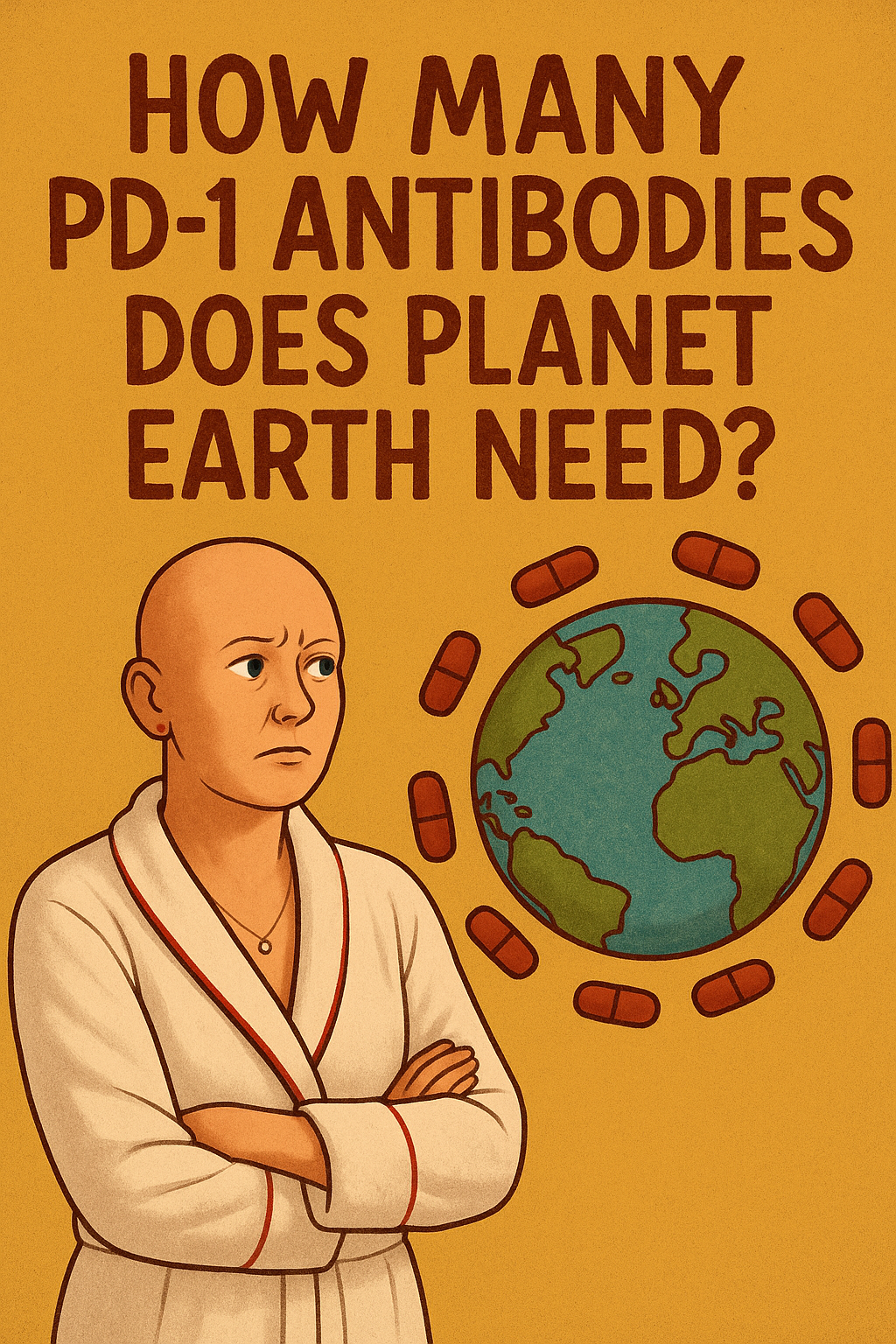
"How many PD-1 antibodies does Planet Earth need?" It's an odd thing for a pharmaceutical executive to say, especially one whose company sells one of them. Roy Baynes, then a senior vice president at Merck, asked exactly that in a 2017 New York Times investigation into one of the strangest problems in modern medicine. There were too many experimental cancer drugs, too many clinical trials, and not enough patients to test them on.
We are living through a real revolution in cancer treatment. It doesn't have one hero, though. It has two: immunotherapy and personalized medicine. Sometimes the two approaches look like rivals. More and more often they work together.
Two revolutions, briefly explained
Immunotherapy helps the patient's own immune system recognize and attack cancer cells. One of the best-known groups of these drugs, the checkpoint inhibitors, blocks a protein called PD-1. Cancer cells use PD-1 as a kind of "don't attack me" signal to hide from immune cells.
Personalized (precision) medicine matches treatment to the genetic features of a patient's tumor. Two people with "lung cancer" may have very different diseases at the molecular level, and a drug that works brilliantly for one may do nothing for the other. Precision treatments still have side effects. The goal is to give each drug to the patients most likely to benefit from it.
The moment the genie left the bottle
In July 2017, an FDA advisory committee voted unanimously, 10 to 0, in favor of a new kind of leukemia therapy, Novartis's CAR-T treatment tisagenlecleucel. It takes the patient's own T cells, genetically reprograms them to hunt leukemia cells, and infuses them back. A month later the FDA approved it as Kymriah, the first gene therapy cleared in the United States. It was approved for certain children and young adults with relapsed acute lymphoblastic leukemia.
It was a historic moment. It also showed how fast the field was moving, and how crowded it was becoming.
Too many drugs, too few patients
The New York Times reported that more than 1,000 immunotherapy trials were underway at the time, and the number kept growing. Independent data confirmed the scale. In an analysis published in the Annals of Oncology, the Cancer Research Institute counted 2,004 immuno-oncology agents, 940 of them already in clinical development. The institute also reported that 50 PD-1/PD-L1 drugs were being tested in 1,502 studies. Most of those were small, single-center trials. By August 2020, the institute's tracker counted 4,720 immuno-oncology agents.
The patients needed to test all these drugs simply don't exist in those numbers. The Times gave melanoma as an example. The US sees more than 85,000 new melanoma cases a year, but only about 10,000 of those patients relapse after surgery and could be candidates for experimental treatments. Dozens of companies compete for that same small group, especially for patients who live near centers that run clinical trials.
Major cancer centers started saying no. According to the Times, the Yale Cancer Center joined fewer than 10% of the immunotherapy trials it was invited to. Its doctors argued that many of the trials asked no new scientific question and existed mainly to get a company's own drug approved. Peter Bach of Memorial Sloan Kettering put it bluntly: "We are squandering our most precious resource - patients."
Precision medicine has the same bottleneck in an even sharper form. When a drug targets a rare mutation, finding eligible patients can take years. Pfizer reportedly needed three years to find 50 lung cancer patients with a ROS1 alteration, which shows up in only about 1% of cases.
Why companies don't simply cooperate
The obvious solution would be to combine forces. Many experts believe the best results will come from combinations: a checkpoint inhibitor plus another drug. But many companies would rather not build their combinations on a competitor's PD-1 drug. So they develop their own, and very similar anti-PD-1 drugs end up being tested all over again against the same cancers. The Times called this a me-too business strategy taken to multibillion-dollar extremes. In plain words, it's a lot of duplicated effort.
There is also a statistical cost. Small, overlapping trials make it harder to tell whether a drug really works or whether an apparent benefit is just chance.
How well do these drugs actually work?
This is where hype and reality need to be kept apart. All of the results below come from human clinical trials, and they vary a lot by cancer type and patient group.
- Lung cancer: In the KEYNOTE-001 trial of the PD-1 drug pembrolizumab (Keytruda) in advanced non-small-cell lung cancer, about 19% of all patients responded. Among patients whose tumors had high levels of PD-L1, the response rate was about 45%. That is an important advance, but it is not a cure for most patients.
- Colorectal cancer: In a specific subgroup, tumors with microsatellite instability (MSI-high), the KEYNOTE-177 trial found that first-line pembrolizumab kept the disease from progressing for significantly longer than chemotherapy, with fewer serious side effects. Most colorectal cancers are not MSI-high, however.
- Prostate cancer: Here checkpoint inhibitors have been largely disappointing. Prostate tumors are usually immunologically "cold," and reviews of the clinical trials describe only limited responses in advanced disease.
In 2017, industry insiders told the Financial Times that roughly 20 to 30% of patients respond very well to checkpoint drugs, while the majority derive no benefit. That gap is exactly why there are so many follow-up trials.
Chemotherapy hasn't disappeared
When immunotherapy first arrived, many people predicted the end of chemotherapy. That hasn't happened. In many cancers the two now work as partners. In the KEYNOTE-189 trial, adding pembrolizumab to standard chemotherapy helped patients with advanced lung cancer live significantly longer than chemotherapy alone.
A famous patient
The most famous patient of this new era was probably former US President Jimmy Carter. In August 2015 he announced that melanoma had spread to his liver and brain. He received targeted radiation and the PD-1 drug pembrolizumab, and in December of that year he said a brain scan showed no sign of the original spots or any new ones. His case made headlines worldwide. Doctors stressed that results like his are possible, but they are not typical for everyone.
And the price?
Basic economics says that more supply should lower prices. Cancer drugs have not followed that rule. Kymriah launched at $475,000 for a single treatment. Novartis called that a fair price, and patient advocates called it excessive. Hundreds of similar drugs in development have not brought prices down.
Where things stand now
The field has partly corrected itself. The Cancer Research Institute's 2023 analysis in Nature Reviews Drug Discovery found that immuno-oncology trials had finally started to move beyond PD-1/PD-L1 inhibitors. It also reported that the number of new phase II trials fell in 2022. That suggests some of the me-too wave was starting to fade.
Meanwhile, the bigger picture is encouraging. According to the American Cancer Society's Cancer Statistics, 2026, about 2.1 million new cancer cases are expected in the US this year. Five-year survival for all cancers combined has reached 70%, up from about 50% in the mid-1970s. We cover more of what the latest figures do and don't tell us in When Medicine Stays Quiet: 5 Cancer Myths Science Still Can't Fully Settle.
Researchers are also looking at whether everyday factors such as diet might influence how well immunotherapy works. This work is still early. If you're curious, read Do olive oil and walnuts really protect the body against cancer? and Soy and Cancer: Why Doctors Wrongly Forbade It to Breast Cancer Patients for Decades.
The lesson of the "too many drugs" paradox is not that the new treatments are a scam. Many of them are real breakthroughs. The problem is that a market racing for profit doesn't always use its most precious resource wisely, and that resource is the patients who volunteer for trials.
Information on this website is for educational purposes only and is not medical advice.
expert, nutritionist
 Would you like to be informed about news on the website?















|

