





Why Do You Always Wake Up at the Same Time? Your Body Might Be Trying to Tell You Something
expert, nutritionist
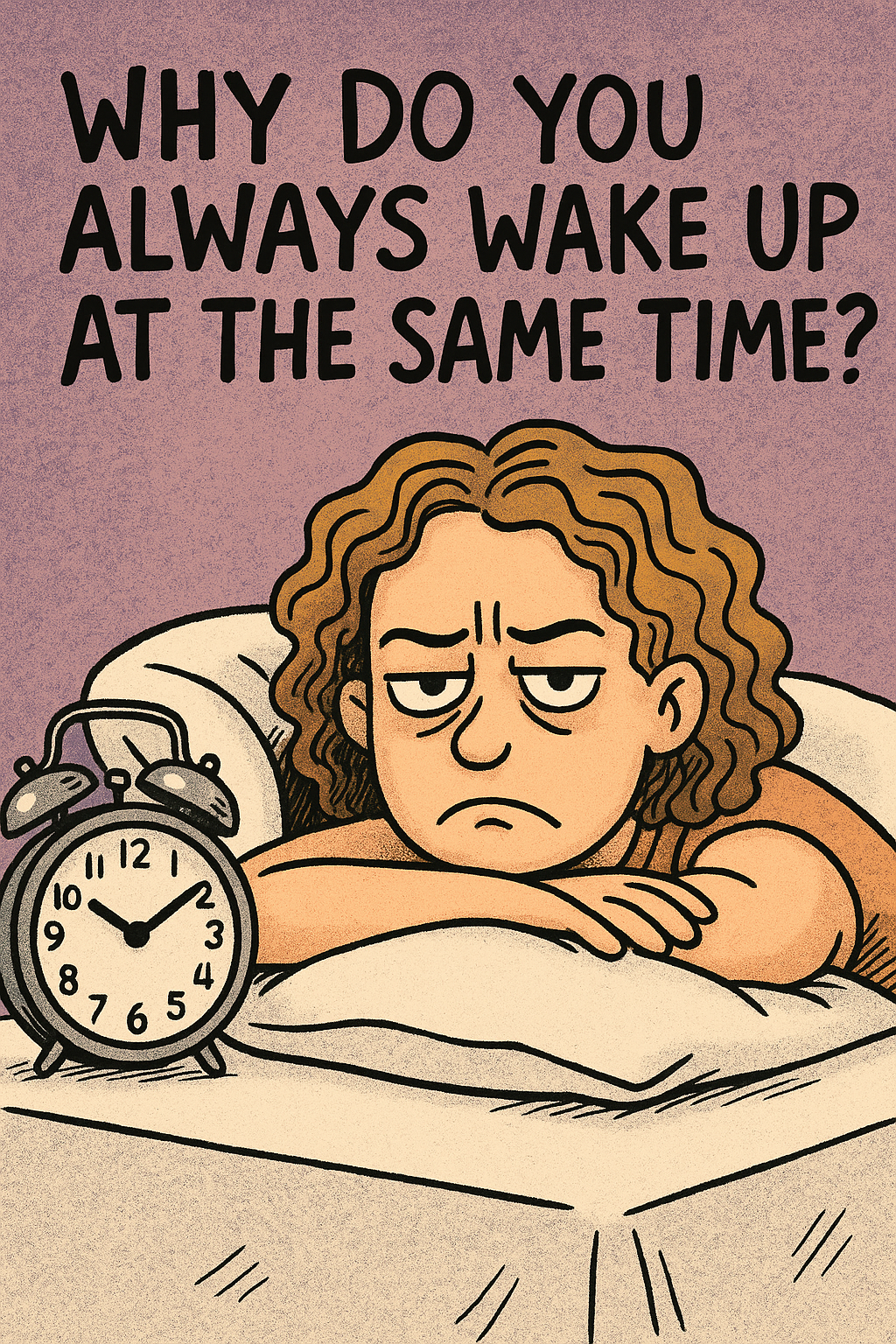
It's 2 a.m., or maybe 3 a.m. — and there you are, wide awake, staring at the ceiling for what feels like the tenth night in a row, always around the exact same hour. If that sounds familiar, you're far from alone, and according to one of the world's oldest wellness traditions, the clock itself might be worth paying attention to.
Even award-winning actor George Clooney has spoken openly about this kind of disrupted sleep. He told The Hollywood Reporter that despite going to bed by 10 p.m., he wakes up repeatedly through the night, describing it as something that happens "without question" (Fox News). Interestingly, he's also said those wakeful hours have occasionally turned into productive writing time — a reminder that a rough night isn't always wasted time.
So why does this happen, and why does it always seem to be around the same hour? One explanation comes from a concept in Traditional Chinese Medicine (TCM) known as the "organ clock" — the idea that a 24-hour cycle of energy, or qi, moves through the body in two-hour blocks, with each block loosely associated with a different organ system (Healthline). It's important to be upfront here: this is a centuries-old belief system rather than a diagnostic tool, and mainstream researchers say there's currently little rigorous scientific evidence that these specific two-hour "organ windows" are accurate (Healthline). What is well established is that the human body does run on a genuine internal clock — a circadian rhythm that governs temperature, hormones, digestion and alertness — so the broader idea that timing matters for your body isn't far-fetched at all, even if the ancient organ-by-organ map shouldn't be read as medical fact.
With that context in mind, here's what the traditional organ clock says about each stretch of the night — treated as food for thought rather than a diagnosis.
9 – 11 p.m.: Winding down
In TCM, this window is linked to the body's hormonal and metabolic "housekeeping" system. It's simply the window when most people are naturally winding down for bed. Modern sleep science backs the broader point even if it skips the organ talk: going to bed around a consistent time each night helps stabilize the body's rhythm, and irregular bedtimes are one of the most common drivers of poor sleep quality.
11 p.m. – 1 a.m.: The shift toward deep rest
Traditionally, this is described as the hour when the body's energy shifts from a "yin" to a "yang" phase, with the body said to be busy metabolizing fats and letting muscles recover. Waking here is sometimes attributed, in TCM thinking, to a heavy or fat-laden evening meal. There's a genuinely science-backed version of this idea too: researchers have found that diets high in saturated fat and refined carbohydrates are associated with lighter, more fragmented sleep, according to Columbia University sleep and nutrition researcher Dr. Marie-Pierre St-Onge (South China Morning Post).
1 – 3 a.m.: The "liver hour"
This is the window traditionally linked to the liver, framed as the body's main nightly "clean-up" period — cleansing the blood, supporting the skin, and (in some interpretations) processing built-up mental and emotional tension. In TCM belief, repeated waking here is sometimes associated with a diet heavy in processed or fatty foods (Healthline). Worth noting: while the specific "1–3 a.m. liver window" isn't something mainstream science has confirmed, researchers have genuinely found that the liver plays a bigger role in regulating the body's circadian rhythm than once assumed — a 2023 study from the University of Queensland showed that liver cells can directly influence the brain's central body clock (Lab+Life Scientist). If waking at this hour becomes a frequent pattern, it's worth mentioning to a doctor rather than self-diagnosing — recurring middle-of-the-night waking can have several underlying causes.
3 – 5 a.m.: The "lung hour"
This stretch is traditionally tied to the lungs, said to be the peak window for their restorative "cleansing" work. TCM practitioners sometimes link waking here to breathing difficulties or to eating too quickly and irregularly during the day. Keeping a room comfortably cool and well-ventilated, and eating at a calmer pace, are gentle, low-risk habits worth trying regardless of which framework you subscribe to.
5 – 7 a.m.: The body's "reset"
In TCM, early morning is considered the window when the body clears out the toxins and tension built up overnight, traditionally tied to the large intestine. Whether or not you buy into the organ-specific framing, a calm, unhurried morning routine — a glass of water, some fresh air, a regular bathroom routine — is a genuinely useful habit for how you'll feel the rest of the day.
What if you're a natural night owl?
If you've kept a later bedtime consistently for a few weeks or more, your internal clock likely has already adjusted — so simply shift all of the windows above forward to match your own schedule.
The bigger picture
Modern sleep researchers actually have a more down-to-earth explanation for waking at the same time every night: your brain and body can become conditioned to it, almost like clockwork, according to Cleveland Clinic sleep psychologist Dr. Alicia Roth, who suggests experimenting with a slightly later bedtime if this happens to you (Your Island News). Stress, alcohol, caffeine, and an inconsistent sleep schedule are also common, well-documented triggers for repeated night waking (Daily Maverick / The Conversation).
Whether you find the organ-clock idea fascinating folklore or a useful nudge to reflect on your evening habits, the underlying message is a fair one: consistent, quality sleep really does matter for how your body functions. If waking at the same hour becomes a regular, disruptive pattern, it's worth a conversation with a doctor rather than relying on any single explanation — traditional or modern.
Information on this website is for educational purposes only and is not medical advice.
expert, nutritionist
 Would you like to be informed about news on the website?















|

