





Why Chanterelle Mushrooms Are Almost Never Wormy — The Secret Hiding in One Natural Compound
expert, nutritionist
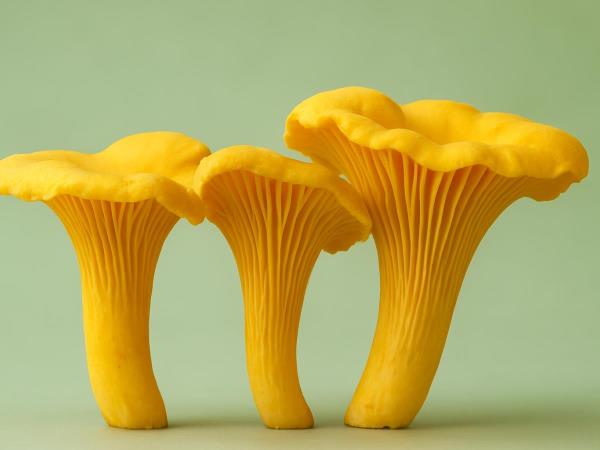
Walk through a spruce forest in early autumn and you'll eventually spot it: a small cluster of egg-yolk-yellow, funnel-shaped caps pushing up through the moss, smelling faintly of ripe apricots. Chanterelles are one of the most sought-after wild mushrooms in Europe and North America, and experienced foragers will tell you the same thing almost word for word: pick a basket of chanterelles and, unlike almost any other wild mushroom, you'll rarely find a single wormhole in the lot.
One longtime forager who shares tips on a regional foraging forum put it simply: after twenty years of collecting boletes, morels and chanterelles, chanterelles are the only ones she can bring home without checking each cap for larvae first. It's a small, practical detail — but it points to something genuinely interesting about how this mushroom is built.
More Than 70,000 Species — and a Fall Favorite
Mycologists have catalogued more than 70,000 mushroom species worldwide, and autumn is when many of the edible ones — chanterelles included — appear most abundantly on European and North American tables. One thing worth clearing up first: mushrooms aren't plants. They belong to their own biological kingdom, Fungi, and unlike plants they contain no chlorophyll and can't photosynthesize their own food. Instead, chanterelles are mycorrhizal — they live in a cooperative, underground partnership with the roots of trees like spruce, pine and oak, trading minerals and water for sugars the tree produces through photosynthesis. Many other mushroom species instead feed as decomposers, breaking down dead organic matter in the forest floor.
Nutritionally, chanterelles punch well above their weight for a low-calorie food. Reviews of their composition point to a solid B-vitamin complex (including riboflavin, thiamine and niacin), meaningful amounts of vitamin C and vitamin D, plus provitamin A carotenoids, alongside minerals such as iron, copper, potassium, calcium, magnesium, sodium and zinc.
The Compound Behind the "Wormless" Reputation
So why do chanterelles so rarely host insect larvae, when morels, boletes and many other wild mushrooms commonly do? Foragers, mushroom sellers and several regional food-composition write-ups consistently point to a naturally occurring compound in the mushroom's tissue — often referred to as chitin-mannose (also written "chitinmannose") — that insects appear to avoid, while it causes no known harm to people. It's worth being upfront here: robust, peer-reviewed research specifically isolating and confirming this exact insect-deterrent mechanism in chanterelles is still limited, so this is best treated as a well-established field observation rather than a settled scientific fact. What the peer-reviewed literature does confirm more broadly is that chanterelles are naturally rich in bioactive compounds — phenolics, carotenoids, sterols and polysaccharides among them — with documented antioxidant and antimicrobial activity in laboratory studies, which may plausibly play a role in the mushroom's natural resilience.
A 2023 study in the journal Molecules measured meaningful antioxidant activity in golden chanterelle extracts and found early cytotoxic effects against cancer cell lines in a lab setting — promising groundwork, though far from proof of any effect in the human body. A broader 2016 scientific review similarly catalogued chanterelles' phenolic and carotenoid content and their associated antimicrobial, anti-inflammatory and antioxidant properties observed in laboratory research.
What the Research Says About Chanterelles and the Body
It's important to separate traditional and folk use from what's actually been studied in humans. A 2023 review published on PubMed Central summarizes laboratory findings on chanterelle-derived compounds — including their fatty acid, vitamin D and phenolic content — and their association with anti-inflammatory and antioxidant activity in cell studies. A more recent 2025 comprehensive review in the journal Food Science and Nutrition likewise surveys the mushroom's nutraceutical potential, from its nutrient density to compounds under investigation for immune-supportive and antimicrobial properties.
Chanterelles are also frequently cited for containing several times more vitamin A precursor than carrots, gram for gram, thanks to their carotenoid content — a genuinely striking nutritional fact, even if "more vitamin A than carrots" shouldn't be read as a reason to swap out your vegetables. As with most mushroom research, most of these findings come from extract or lab-based studies rather than large human clinical trials, so they're best understood as promising early science rather than established medical claims.
One compound that has drawn particular interest is ergosterol, a plant-sterol precursor to vitamin D that chanterelles are especially rich in, along with trametonolinic acid, a compound studied in relation to liver-supportive activity in some mushroom species. Both are active areas of mycological research rather than settled clinical fact.
How Foragers and Cooks Traditionally Prepare Them
If chanterelles do owe their pest resistance partly to heat- and salt-sensitive compounds, that has a practical downside: those same compounds are said to break down at temperatures above roughly 50–60{-15696}C (122–140{-15696}F), and salt is thought to have a similar effect. That's one reason many households across Central and Eastern Europe favor drying chanterelles gently rather than cooking them hard, then grinding the dried mushroom into a fine powder. A traditional way to use it: stir a teaspoon of the powder into a glass of water and drink it in the morning and evening — though this is a folk custom rather than a clinically studied dosing regimen, and there's no standardized "effective amount."
One more practical note echoed across foraging communities: chanterelles are relatively dense and can sit heavily in the stomach, so it's generally suggested to enjoy them earlier in the day rather than at a late dinner, particularly for anyone who already deals with digestive sensitivity.
The Takeaway
Chanterelles are a genuinely nutrient-rich, low-calorie addition to an autumn kitchen, and their near-immunity to insect infestation is one of the more charming quirks in the mushroom world — even if science hasn't fully pinned down every mechanism behind it yet. As always with wild mushrooms, correct identification matters more than any of the above: harvest only from someone experienced enough to positively identify chanterelles from look-alike species, and speak with a healthcare provider before using any mushroom preparation medicinally, particularly if you're pregnant, immunocompromised, or managing a chronic condition.
Sources and further reading:
1. Chanterelle — general species overview, Wikipedia
2. Anti-inflammatory and antioxidant compounds of Cantharellus cibarius — PubMed Central
3. Antioxidant and cytotoxic activity of golden chanterelle aqueous extracts — Molecules, 2023
4. Nutritional, Nutraceutical, and Medicinal Potential of Cantharellus cibarius — Food Science and Nutrition, 2025
5. Chanterelles: Health Benefits and Traditional Uses — Shroomer
Information on this website is for educational purposes only and is not medical advice.
expert, nutritionist
 Would you like to be informed about news on the website?











|

