





Your Feet Know More Than You Think: 6 Signs You Shouldn't Ignore
expert, nutritionist
Take off your shoes for a moment and look at your feet as if for the first time. Are they cold even though the room is warm? Do they itch right after you've washed them? Do your toes look different in the evening than they did that morning? This article looks at what your feet may be telling you and when it's worth mentioning to a doctor — always as general information, never as a diagnosis.
When an Olympic champion's feet told the real story
Few examples make the point better than that of American sprinter Gail Devers. In the late 1980s she was plagued by dizziness, headaches, and swelling that doctors couldn't explain — some even suspected she was simply overtraining. It took roughly two years before she was diagnosed with Graves' disease, an autoimmune condition that overworks the thyroid. The radiation treatment that followed brought its own complication: painful blisters formed on her feet, and at one point doctors discussed amputation. Devers recovered, and less than a year and a half later she won Olympic gold in the 100 meters in Barcelona. Her story is an extreme one, but it's a vivid reminder that changes in the feet can be tied to what's happening much further up in the body (SurvivorNet — Gail Devers' story).
Most of the time, of course, the signs are far more modest — and far less dramatic. Here are six of the most common ones, what they can mean, and when it might be worth a quick conversation with your doctor.
1. Cold Feet
If your feet feel cold day after day, it's often simply a matter of circulation — something that can be influenced by a wide range of factors, from thyroid function to cardiovascular strain to smoking, since the lungs of smokers absorb oxygen less efficiently. The Cleveland Clinic lists poor blood flow to the legs, often tied to metabolic, hormonal, or nerve-related issues, among the most common causes of cold feet (Cleveland Clinic — Cold Feet). Mayo Clinic researchers add an interesting nuance: feet that feel persistently cold to the person but not to the touch of another person can sometimes point toward a neurological issue rather than a purely circulatory one (Mayo Clinic News Network). If your feet feel cold on a regular basis, especially alongside any of the other signs below, it may be worth bringing up at your next check-up.
2. Itchy Feet
Itching is often an early sign of a fungal infection, or simply the result of tight shoes, synthetic socks, or less-than-ideal foot hygiene. Diet plays a smaller supporting role here, but changing your footwear and socks is usually the single most effective fix. Fungal infections tend to be more stubborn than people expect, and toenails are one of their favorite places to take hold. If itching comes with an unpleasant odor, look for shoes and socks made from breathable, natural materials and let your feet air out whenever you can; if the itching persists for more than a week or two, a dermatologist can identify the cause and the right treatment far faster than guesswork.
3. Changes in Toe Shape and Nail Color
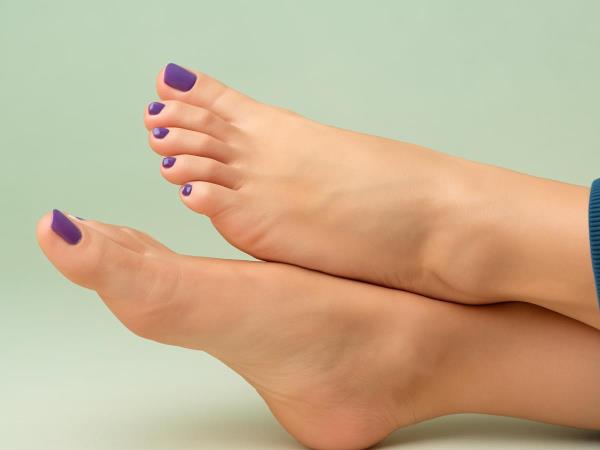
Look closely and you may notice your toes aren't quite identical morning and evening — feet naturally change shape a little throughout the day. When the difference is more pronounced, one possible explanation is reduced oxygen delivery to the tissue, which can sometimes relate to the lungs, heart, or kidneys. Toenail color can also be informative: purplish, yellowish, or unusually pale nails each point in different directions and are worth asking a doctor about if they persist. According to the National Institute of Diabetes and Digestive and Kidney Diseases (NIDDK), up to half of people with diabetes develop some degree of peripheral neuropathy — nerve damage that most often affects the feet and legs — so noticeable, persistent changes are a reasonable prompt to check blood sugar levels (NIDDK — Peripheral Neuropathy).
4. Swollen Ankles
Ankles swelling after a long walk or a day spent standing is a perfectly normal response. Swelling that appears with no obvious trigger is a different matter — possible contributors include high blood pressure, diabetes, certain medications, occasional food sensitivities (legumes are a common one), and less commonly rheumatoid arthritis or osteoporosis. The Mayo Clinic notes that persistent swelling, medically known as edema, is usually a symptom of something else rather than a problem in itself — which is why treating only the swelling, without addressing what's driving it, tends to bring the puffiness right back (MedlinePlus — Edema). Staying hydrated, moving regularly through the day, and elevating your feet when you can are simple habits that support healthy circulation generally.
5. Cramps in the Foot
Frequent foot cramps are often linked to elevated blood sugar or nerve-related issues, though stress and circulatory strain can play a role too. A burning sensation alongside the cramp often shows up when the body — physically or mentally — has been pushed harder than usual for a stretch, and what it typically needs most is genuine, restorative sleep rather than simply lying down. On the question of ice versus heat for a cramping muscle, researchers publishing in Frontiers in Rehabilitation Sciences have found that heat therapy tends to be the more effective choice for chronic muscle and joint discomfort, compared with cold (Frontiers in Rehabilitation Sciences).
6. Pain in the Big Toe
Pain and stiffness in the big toe joint are among the more reliable early signs that uric acid is building up in the joint — in other words, that the body is struggling to clear it efficiently. According to the American College of Rheumatology, gout affects roughly 4% of adults, with men, particularly those over 40, affected more often than women (American College of Rheumatology — Gout). Left unaddressed, flare-ups can spread to other joints over time and become genuinely painful; big-toe pain is also sometimes among the earliest signs of rheumatoid arthritis. Diet has a real role to play here: purine-rich foods are a well-documented trigger, a connection Foodwhisper has covered in more depth, including which fats are considered safer for people managing elevated uric acid (Foodwhisper — how diet drives uric acid and gout risk, Foodwhisper — can you take omega-3 fatty acids if you have gout?).
What Can You Do?
None of the signs above are, on their own, a reason to worry. In the vast majority of cases they're harmless, temporary responses to exertion, cold weather, or the wrong pair of shoes. That said, one general rule of thumb is worth keeping in mind: if a sign keeps recurring, lingers longer than usual, or shows up alongside other changes — fatigue, unexplained weight change, unusual thirst, swelling that won't go down — it's a reasonable prompt to mention it to a doctor rather than wait it out. A quick self-check of your feet now and then, especially if you manage diabetes or a circulation-related condition, is a small habit that can make an outsized difference in catching problems early.
Information on this website is for educational purposes only and is not medical advice.
expert, nutritionist
 Would you like to be informed about news on the website?















|

