






Why You Shouldn't Put Vegetables Straight Into the Fridge: The Warm-Water Trick That Can Keep Them Fresher
expert, nutritionist
A limp, sad head of lettuce can look crisp again in about two minutes, and the secret isn't ice water. It's water hotter than a hot tub. It sounds backwards, but this little trick from Japanese kitchens has a surprisingly solid scientific explanation behind it.
One Foodwhisper reader, a keen home cook who buys vegetables at the farmers' market once a week, shared her experience: "By Thursday my lettuce and spinach always looked tired, and I was throwing half of it away. A friend told me to try a warm bath before putting greens in the fridge. I was sure it would cook them. Instead, the leaves firmed up, and my salads lasted noticeably longer into the week. Now I keep a kitchen thermometer next to the sink."
The restaurant everyone laughed at
When the restaurant Dellis first appeared in the Japanese media, people mostly made fun of it. The specialty of Dellis's kitchen was cooking with a thermometer. The owner and head chef claimed that temperature is a very important factor in every kitchen, and that it starts as early as how you put food into the fridge. The theory was examined by the Cooking Technology Research Society, and the findings were surprising enough that Yahoo Japan and SoraNews24 reported on the so-called "50-degree wash", which soon became a popular home technique across Japan.
According to its supporters, when vegetables and meat are prepared properly, they taste better, stay fresh longer and keep better.
What the science actually says
The tests suggested that vegetables should be washed in water at 48 to 50 degrees Celsius before going into the fridge. This was said to apply to leafy greens, root vegetables and even onions and garlic. The original explanation was that the warm bath "awakens" the vegetable and makes it tastier.
Plant scientists describe the effect a little differently. A short burst of heat triggers what is called a heat-shock response. Researchers at the University of California, Davis found that briefly immersing cut iceberg lettuce in hot water reduced the activity of an enzyme (phenylalanine ammonia-lyase, or PAL) linked to browning. Their work was published in the Journal of the American Society for Horticultural Science and later described in a US patent on heat-shocking produce and in a follow-up study on how heat shock limits browning in lettuce. Separately, a team from Wageningen University & Research reported in LWT – Food Science and Technology that the sweet spot is narrow. Mild heat helped, but too much heat or too long a bath can speed up the produce's "breathing" and shorten its life.
Japanese proponents also note that warm water helps the leaves take up water and makes dirt and tiny insects easier to rinse away. A poster from Scotland's James Hutton Institute compared lettuce washed at 4 °C and at 50 °C, and found lower microbial counts after the warmer wash. A 2026 review of heat-shock treatments for fresh-cut vegetables (not yet peer-reviewed) summarizes many similar findings. Most of this research comes from controlled lab and industry settings, so treat it as a promising kitchen tip rather than a guarantee.
How to do it at home
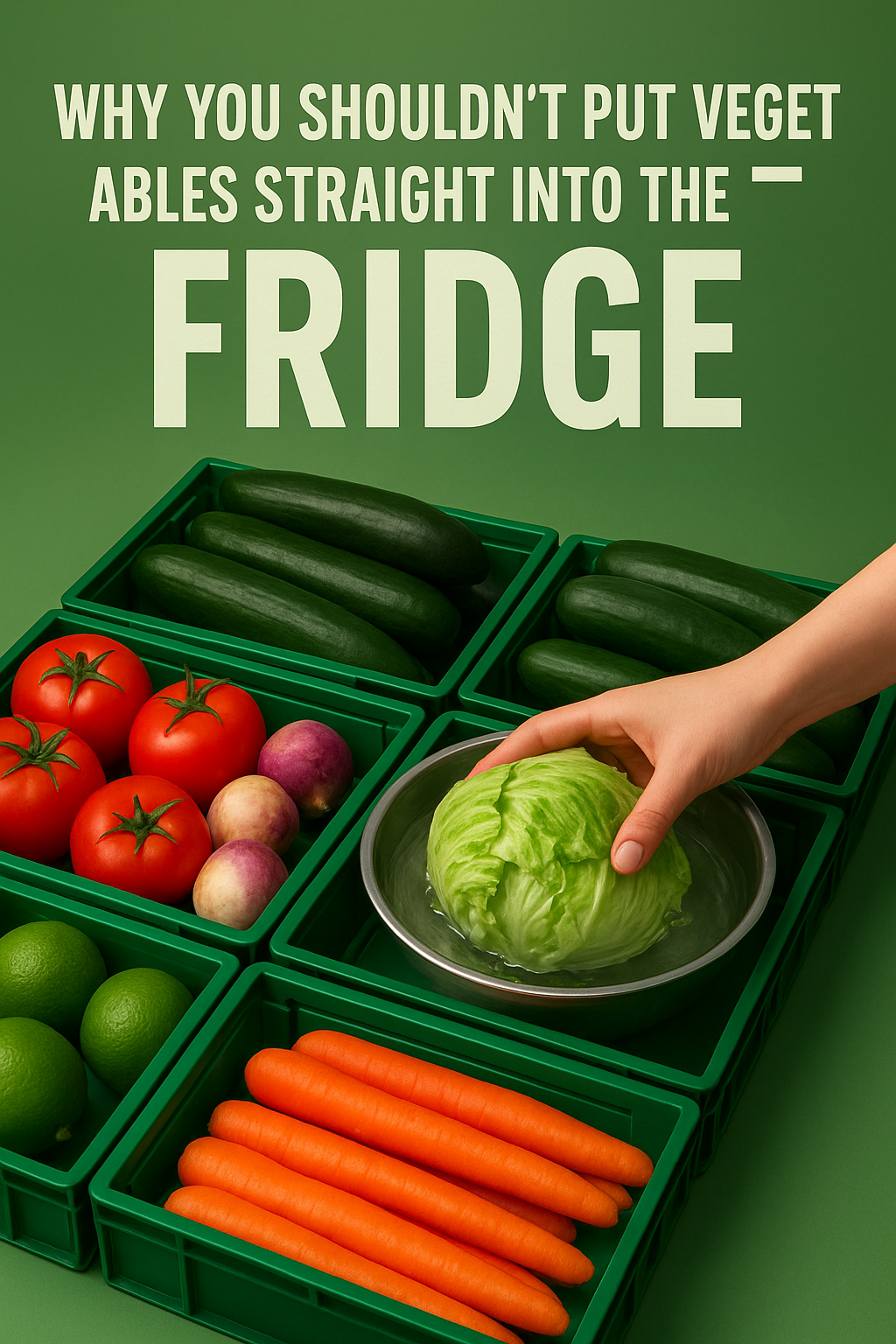
For most vegetables, a warm bath of 3 to 5 minutes is enough. Put lettuce, cabbage and spinach into the water one leaf at a time, so the warmth reaches every surface. Root vegetables can be rubbed gently with your hands while they soak. Change the water after 2 to 3 minutes, or top it up with hot water.
- Use a thermometer. Water from the tap "feels" hot long before it reaches 50 °C, and the effect depends on hitting the right range.
- Don't let the bath cool down. Supporters of the method advise keeping the water above roughly 43 °C. Lukewarm water is the range where microbes multiply more easily, so a cooled-down bath sitting on the counter is not a good idea.
- Don't go hotter. Above about 50 °C, cell walls start to break down, and you are no longer refreshing your greens but blanching them.
- Protect your hands. Water at 50 °C is uncomfortable on the skin for longer periods, so use tongs or a sieve.
- Dry well. Spin or pat the leaves dry before storing, as extra moisture encourages spoilage.
Fresh, crisp greens are the starting point for a good meal. If you want to turn them into something more filling, read When Vegetables Become a Meal: What Is Salad Missing To Really Fill You Up.
Fruit, fish and meat: where to be careful
In Japan, the same warm bath is also used for fruit, fish and meat, usually for a shorter time of about 2 to 3 minutes. For fruit, a short warm rinse is a reasonable experiment. With raw meat and poultry, however, food-safety authorities take a different view. The USDA Food Safety and Inspection Service advises against washing raw meat and poultry, because splashing water can spread bacteria around your sink and kitchen. Proper cooking is what makes meat safe. If you decide to try the method with fish, keep it brief, use a clean bowl, and refrigerate or cook the fish right away.
Into the fridge, quickly, but not everything
Vegetables refreshed this way should go into the fridge as soon as possible. Your refrigerator should run at about 1–4 °C, as Vegetable Expert recommends. Leafy greens do best in the crisper drawer. Keep in mind that not every vegetable belongs in the cold. The Old Farmer's Almanac advises keeping onions, shallots and garlic out of the fridge, and potatoes also prefer a cool, dark pantry.
If you won't use your vegetables within a few days, the freezer is a good option. Consumer organization Which? recommends keeping it between -18 °C and -20 °C. Some vegetables are even more nutritious after a quick cook. See Food That Is Healthier Cooked Than Raw.
Thawing: a cold rule, not a warm one
Fans of the 50-degree method also suggest thawing frozen food at the same temperature. Here the official advice is clear and different. The USDA's "Big Thaw" guide lists three safe ways to thaw food: in the refrigerator, in cold water, and in the microwave. It warns against keeping perishable food in the "danger zone" between about 4 °C and 60 °C. If you use cold water, keep the food in a leak-proof bag and change the water every 30 minutes, as Michigan State University Extension explains. Food thawed in cold water or the microwave should be cooked right away.
Fresher vegetables, fewer wasted vitamins
Every day a vegetable spends wilting in the fridge is a day of lost flavor and, often, lost nutrients. That matters more than ever, as we discussed in Does the theory of vitamin decline in vegetables hold? The best results still start with buying wisely. Seasonal produce is usually fresher to begin with, as explained in What If the Tastiest Tomato You'll Eat All Year Is Also the Cheapest? And if you need a reminder of why it's worth keeping your greens in top shape, take a look at 7 types of vegetables that heal the body.
The 50-degree wash won't turn old vegetables into new ones. Still, for a few minutes and a kitchen thermometer, it is an easy experiment that may bring you crisper salads and less food in the bin.
Information on this website is for educational purposes only and is not medical advice.
expert, nutritionist
 Would you like to be informed about news on the website?







|

