



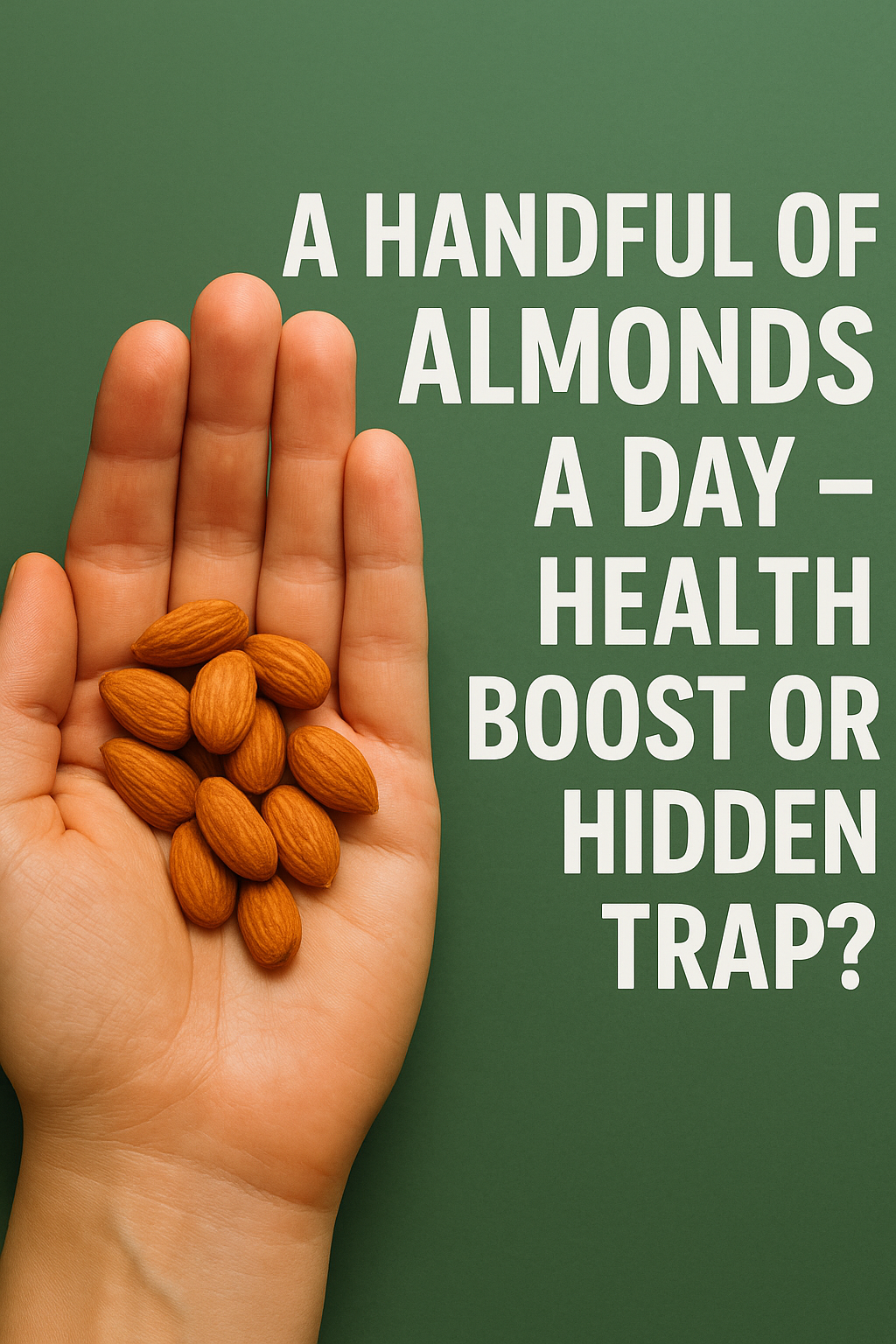


A Handful of Almonds a Day – Health Boost or Hidden Trap? 7 Truths Worth Knowing
expert, nutritionist
Almonds are like a friend who brings homemade apple juice when visiting: kind, wholesome, full of nature's goodness, but with a few surprises of their own. Do you know what they are?
Even a former President of the United States keeps his almonds in check. In a 2016 New York Times profile, it was reported that Barack Obama's only evening snack was seven lightly salted almonds. Obama later laughed off the idea that he counts them one by one, but he confirmed that almonds remain his favorite snack. Counted or not, the story became famous for a simple reason: it shows that with almonds, the portion matters as much as the food itself.
We know a woman who was convinced that a handful of almonds worked like medicine, so she ate a handful three times a day. After two weeks, she was dealing with a bloated stomach and constipation that wouldn't let up. Once she cut back on the amount and started soaking her almonds overnight, her discomfort faded within a week. The almond wasn't the problem. The quantity was.
Nutrition experts often describe almonds as one of the most heart-friendly snacks, as long as they are eaten mindfully. Global almond production runs into millions of tonnes a year, with California supplying the lion's share, according to the Almond Board of California. Almonds are rich in vitamin E (about 7.3 mg per 28 g, according to USDA FoodData Central), healthy unsaturated fats and fiber. So what happens when we overdo it?
1. Digestion Gets Confused: Bloating, Gas and Constipation
Almonds are high in fiber. A 28-gram portion (about 23 almonds) contains roughly 3.5 grams of fiber, around 12% of an adult's daily needs. That's excellent for the gut, but only if you increase your intake gradually and drink enough water. The Mayo Clinic notes that adding too much fiber too quickly can promote intestinal gas, bloating and cramping.
Interestingly, a randomized controlled trial from King's College London, published in the American Journal of Clinical Nutrition (2022), found no increase in gut symptoms among healthy adults who ate almonds in place of their usual snacks for four weeks. On the contrary, almond eaters had higher levels of butyrate, a beneficial short-chain fatty acid produced by gut bacteria. The key detail: participants replaced other snacks with almonds rather than simply adding them on top.
If bloating is a recurring issue for you, you may also find useful ideas in Get Rid of Bloating and Excess Water.
Tip: When you snack on almonds, drink a glass of lukewarm water or a cup of warm peppermint tea, which many people find soothing for the stomach. Soaking almonds overnight and peeling them in the morning may also make them easier on digestion for some people.
2. Your Weight Can Creep Up Unnoticed
Almonds are healthy, but they are calorie-dense. A 28-gram portion has about 160–165 calories and 14 g of fat. If you eat 100 grams a day, which is surprisingly easy when nibbling at your desk, you take in close to 600 calories, roughly a third of the daily energy needs of many adults. Nuts are filling, but as explained in Hello, and Fattening: Foods that Sabotage Your Diet, even healthy foods can quietly push us past our daily limit.
The good news? A study by researchers at the US Department of Agriculture, published in the American Journal of Clinical Nutrition, found that the body does not absorb all the calories listed on the label. Part of the fat stays "locked" inside the almond's cell walls, so whole almonds deliver roughly a fifth fewer calories than standard calculations suggest. Still, that's no excuse to overindulge.
A large Harvard study published in BMJ Nutrition, Prevention & Health followed nearly 145,000 adults for over 20 years. It found that increasing nut intake by half a serving a day (about 14–15 g) was associated with less weight gain over four-year periods, and going from no nuts to at least half a serving daily was linked to a 16% lower risk of obesity. As Harvard Health Publishing points out, the benefit appeared when nuts replaced less healthy foods such as processed meat, fries, desserts or chips, not when they were simply added to an existing diet.
Tip: Instead of a full handful, take 10 to 15 almonds and pair them with an apple or plain yogurt. You'll feel fuller for longer with noticeably fewer calories. For more simple strategies, see 3 tricks to never be hungry.
3. Blood Sugar and Insulin Sensitivity
In moderate amounts, almonds may help keep blood sugar steadier, because fiber, protein and healthy fats slow the absorption of glucose. However, when almonds are eaten in large amounts without adjusting the rest of the diet, the picture can change. Research generally shows that simply adding almonds on top of your usual calories can lead to weight gain, which in turn can affect metabolism. When almonds replaced bread or sugary snacks, results tended to improve.
Looking for an easy, balanced way to start the day? Try the combination described in Spinach and Carrot: The Simple Breakfast That Gives Your Body More Than You Think, where a small handful of almonds or walnuts rounds out the plate.
Tip: Use almonds as a swap for sweet or salty snacks, not an extra. That's when they are most likely to work in your favor.
4. Antinutrients: Some Minerals Are Absorbed Less Easily
Almonds contain natural plant compounds such as phytic acid, often called antinutrients, which can reduce the absorption of minerals like iron, zinc and calcium. Much of this is concentrated in the brown skin.
Soaking almonds for around 8 hours is a popular kitchen tradition, and many people find soaked, peeled almonds softer and easier to digest. It's worth knowing, though, that the science is more modest than the hype: a study from the University of Otago, published in Food Chemistry, found that soaking almonds and other nuts did not meaningfully improve the balance between phytate and minerals. In other words, soak them if you enjoy the texture and they sit better in your stomach, but don't expect a nutritional miracle. Add a pinch of cinnamon and warm them slightly for a lovely breakfast snack.
5. Kidney Stones in People Who Are Prone to Them
Almonds contain a fair amount of oxalate, several hundred milligrams per 100 g. Oxalates are natural compounds that can bind with calcium and, in some people, contribute to kidney stones. A review published in Frontiers in Medicine (2023) describes oxalate as one of the key factors in kidney stone formation.
Important context: the National Kidney Foundation notes that oxalate is mainly a concern for people who form calcium oxalate stones, the most common type. For them, it advises limiting high-oxalate foods, drinking plenty of fluids and, interestingly, not cutting calcium: eating calcium-rich foods together with oxalate-rich foods helps the two bind in the gut before they reach the kidneys. For healthy people with a balanced diet, a moderate portion of almonds is generally not considered a particular risk.
Tip: If you are prone to kidney stones, keep almond portions small, stay well hydrated, enjoy them with a calcium source such as yogurt, and talk to your doctor about what suits you.
6. Bitter Almonds: Watch Out for Cyanide
The sweet almonds you buy at the store are considered safe. Bitter almonds are different: they come from a separate variety of almond tree and contain amygdalin, a compound that breaks down into hydrogen cyanide in the body. Memorial Sloan Kettering Cancer Center warns that cyanide poisoning has been linked to amygdalin intake, and a clinical review in Revista Pediatr{-15443}a de Atenci{-15437}n Primaria describes a suspected case in a three-year-old child after eating bitter almonds. Children are especially vulnerable because of their small body size.
Tip: If an almond tastes distinctly bitter, spit it out. Regular sweet almonds from the store do not carry this risk.
7. Nut Allergy
Tree nut allergy is one of the most common food allergies. According to Food Allergy Research & Education (FARE), tree nuts such as almonds, hazelnuts and cashews have high allergenic potential, and reactions can range from itching and swelling to severe anaphylaxis. If you are allergic to any tree nut, be especially careful with almonds and check the labels of chocolates, cereals, granola and snack mixes, where almonds are a common hidden ingredient.
For mild, everyday tummy discomfort (not allergic reactions), traditional wisdom suggests fennel or sage tea. This is simply a comforting habit for general digestive ease and never a treatment for an allergy. Any suspected allergic reaction should be assessed by a doctor.
How Many Almonds Are Just Right?
Most nutrition guidance agrees: about 23 almonds (one small handful, roughly 28–30 g) a day is a sensible portion for most adults. Some studies have used two portions a day without problems, but only when almonds replaced other snacks. Soaking and peeling is optional; choose whichever form you enjoy and digest best.
- Always have a glass of water with them.
- Chew slowly and savor every bite.
- Children under 4 shouldn't be given whole almonds because of the choking risk; finely ground almonds or smooth almond butter are safer options, as advised by the American Academy of Pediatrics.
- Choose unsalted almonds most of the time to keep sodium in check.
- Use almonds as a replacement for less healthy snacks, not an addition.
Nature doesn't make mistakes, but moderation is its best friend. Almonds are a wonderful gift of nature, a bit like sunshine: beautiful and beneficial, as long as we don't overdo it. Listen to your body, and it will thank you.
Information on this website is for educational purposes only and is not medical advice.
expert, nutritionist
 Would you like to be informed about news on the website?















|

