




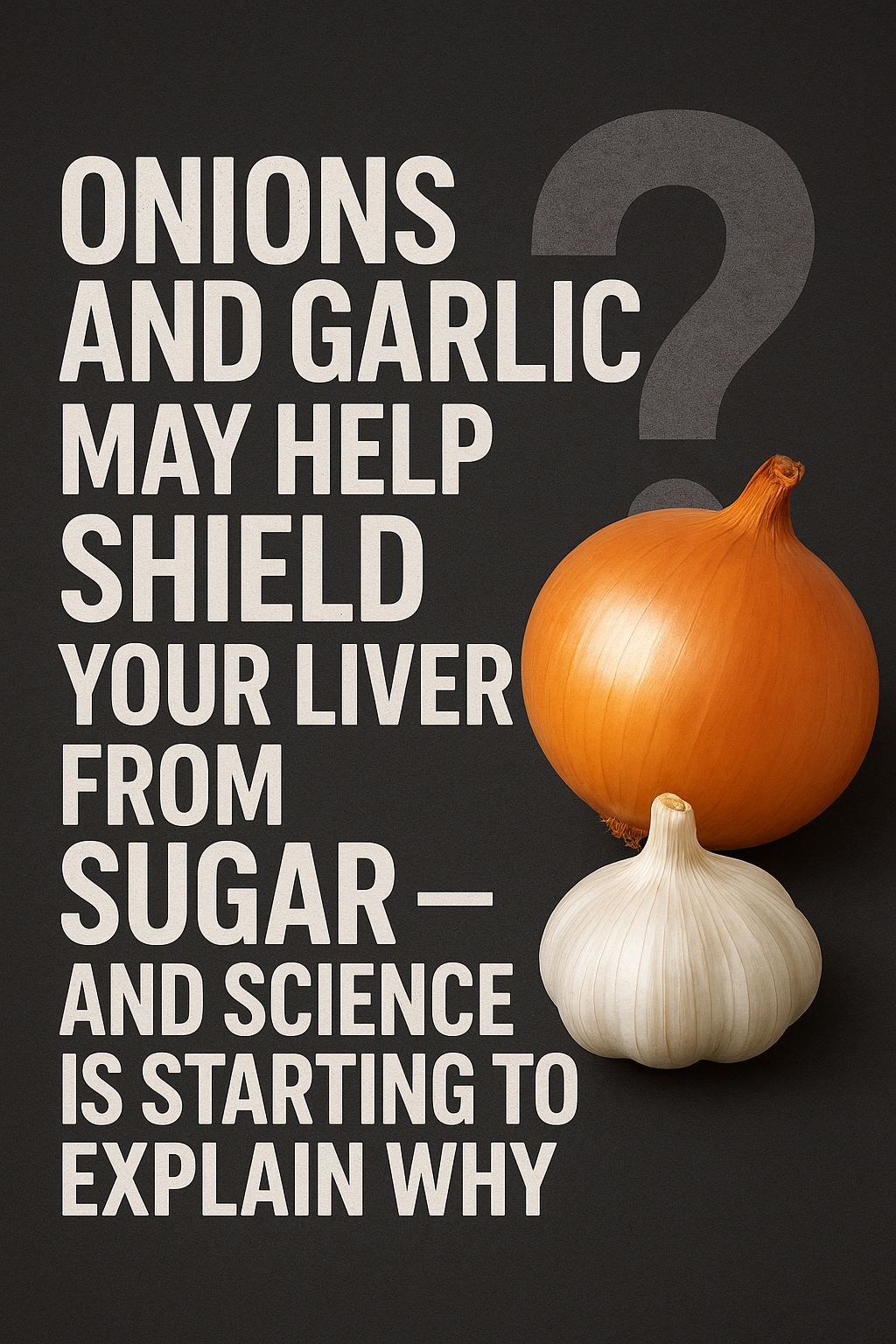


Onions and Garlic May Help Shield Your Liver From Sugar – and Science Is Starting to Explain Why
expert, nutritionist
Onions and Garlic May Help Shield Your Liver From Sugar – and Science Is Starting to Explain Why
The findings come from studies in mice. Still, they add to a growing body of evidence that a fiber-rich plate is one of the kindest everyday choices you can make for your liver.
Every glass of soda or sweetened juice sends a wave of fructose toward your liver. But what if a humble onion on your plate could help your gut bacteria intercept part of that sugar before it gets there? That is exactly what a new study published in one of the world's leading metabolism journals suggests. Even better, the "secret ingredient" isn't an expensive supplement or an exotic powder from the other side of the world. It is something you have probably been eating since childhood.
"I Thought I Was Healthy": A Doctor's Wake-Up Call
The late British doctor and BBC science presenter Dr. Michael Mosley considered himself reasonably slim and healthy. Then, while filming a documentary, he climbed into an MRI scanner. The images showed layers of hidden fat wrapped around his internal organs, including his liver. As he later explained on The Fast Diet website, he discovered he was a "TOFI": thin on the outside, fat on the inside. He described being in a state of shock, especially because he had watched his own father die of diabetes-related illness. Not long afterwards, routine blood tests showed that he had developed type 2 diabetes.
Mosley's story became a warning for millions of readers and viewers: you cannot always see what sugar and an unbalanced diet are doing inside the body. And that is precisely why the new research on inulin is so interesting.
Today we know that the world of food hides remarkable solutions that science is only beginning to understand. And what is most fascinating is that they are not expensive dietary supplements or exotic powders, but what you have probably eaten since you were a child: onions, garlic, artichokes and other vegetables that contain a natural fiber called inulin.
What Is Inulin?
Inulin is a special type of dietary fiber. The body does not digest it the way it digests bread or sugar. Instead, it is "eaten" by the beneficial bacteria in the gut, which turn it into compounds that help support the body. In one sentence: inulin is food for your good gut bacteria, and it may help them limit the harm caused by excess sugar.
Interestingly, inulin is itself a chain of fructose molecules, which is why scientists suspected it could "teach" gut bacteria how to handle fructose. Most of us eat very little of it. A large analysis by the U.S. Department of Agriculture, published in The Journal of Nutrition, estimated that the average American diet provides only about 2.6 grams of inulin per day. Most of it comes from wheat and onions. A classic review in Critical Reviews in Food Science and Nutrition also showed that inulin is often left out of standard food tables, so many people have no idea how much of it they are (or are not) eating.
What the New Study Found
The study, carried out at the University of California, Irvine School of Medicine, was published in September 2025 in the respected journal Nature Metabolism under the title "Dietary fibre-adapted gut microbiome clears dietary fructose and reverses hepatic steatosis". The full text of the study is freely available.
The researchers found that when mice were given inulin, the bacteria in their small intestine became better at breaking down fructose. Less of the sugar then "spilled over" to the colon and the liver. The inulin-fed animals also showed less fat building up in the liver and better insulin sensitivity. Their livers also produced more of glutathione, the body's own antioxidant.
Why does this matter? Because too much fructose can overburden the liver and encourage it to store fat. Fructose is a natural sugar found in fruit, but in modern diets it comes mainly from sweetened drinks and processed foods. Fatty liver has become remarkably common. A major systematic review published in Hepatology estimated that around 30% of adults worldwide show signs of fatty liver. The same review found that the figure rose from about 25% in the period 1990–2006 to roughly 38% in 2016–2019.
An important note: this research was done in mice. It explains a possible mechanism, but it does not prove that eating onions will protect a human liver. Studies in people are still needed. What the study does is add a fascinating new piece to a picture that nutrition science has been building for decades: fiber matters.
Why This Matters for You
Many people think sugar-related problems begin only when they show up on the scales or in the doctor's office. The reality is different. Even with a normal body weight, a diet high in sugar can contribute to a condition that doctors now call metabolic dysfunction-associated steatotic liver disease (MASLD), previously known as non-alcoholic fatty liver disease. In this condition, fat builds up in the liver even though a person drinks little or no alcohol.
And here is the surprising part. A large meta-analysis published in The Lancet Gastroenterology & Hepatology found that around 40% of people with fatty liver worldwide were not obese, and almost one in five was lean. This is not just a problem for people who are overweight! Dr. Mosley's experience shows exactly the same thing.
According to Johns Hopkins Medicine, the liver carries out more than 500 vital functions. Among other things, it processes nutrients, helps the body handle toxins and plays a key role in regulating energy. When it is overloaded, the effects can ripple through the whole body.
That is why it makes sense to give the gut the tools it needs to help protect the body from excess sugar. And there is no need to buy expensive supplements. Our grandmothers used to say: "For every illness, a herb grows." As it turns out, they may have known more than we thought.
If you would like to see how cutting back on refined carbohydrates affected liver fat in a Swedish study, read How do 2 weeks without bread and pasta bring your liver to its senses? and Is a lower carbohydrate intake suitable for fatty liver?
What Happens in the Gut?
The study was led by Dr. Cholsoon Jang, who heads the Nutrient Metabolism & Disease Lab at the University of California, Irvine. He explained that fiber such as inulin changes the gut bacteria so that they consume more of the incoming fructose. In the mouse experiments, a bacterium called Bacteroides acidifaciens played a key role. When gut bacteria are well "fed" with fiber, they break down part of the fructose before it reaches the liver. When fiber is lacking, more fructose flows on to the liver, where it may encourage fat production.
Dr. Jang also stressed that his team focused on liver problems that appear in people who are not obese. These are particularly hard to spot, because a normal body weight gives a false sense of security.
It is a bit like having gatekeepers at the entrance to a city who check tickets. If you pay them well (in our case, feed them fiber), they let in only those who are "allowed" and stop the rest. But if the gatekeepers fall asleep (because we don't give them the fiber they need), anyone can walk in and cause chaos.
How to Use This Knowledge at Home
The best news is that inulin is cheap and completely natural. It is found mainly in:
- onions
- garlic
- leeks
- artichokes (both globe and Jerusalem artichokes)
- parsnips
- dandelion greens
- chicory (especially the root)
- asparagus and slightly green bananas
Garlic contains several times more inulin than onion, and chicory root is one of the richest sources of all, which is why inulin sold in shops is usually extracted from chicory. If you think of our grandmothers, they used garlic and onions every day. Not because they were following a trendy diet, but because they believed that "garlic keeps the blood clean and the stomach strong." Today we would say that these vegetables support the gut and, through it, a healthy metabolism.
A practical goal is to include a small onion or a couple of garlic cloves in your daily meals, along with a leek, a few asparagus spears or a handful of dandelion greens when they are in season. In this way you will feed your good bacteria. Research suggests that the gut responds surprisingly quickly. In a study published in mSystems, just two weeks of a high-fiber, whole-food diet changed the composition of participants' gut bacteria, including an increase in fiber-loving microbes such as Bifidobacterium.
Garlic has a few tricks of its own. If you want to get the most from it, read What happens if we put garlic in the refrigerator before we cut it, and see where garlic ranks among everyday heroes in 10 Foods Nutritionists Swear By.
A tip from a nutritionist: increase your intake gradually. Inulin is fermented by gut bacteria, and if you suddenly eat a lot of it, you may feel gassy or bloated. People with irritable bowel syndrome are often sensitive to this type of fiber (onions and garlic are high-FODMAP foods), so they should follow the guidance of their doctor or the Monash University FODMAP program. People with inflammatory bowel disease should also be careful. More on this in Should we avoid fiber if we suffer from intestinal inflammation?
Most of Us Simply Don't Eat Enough Fiber
In recent years, liver problems have been appearing in younger and younger people, and the global trend is clearly rising. The main culprits? Sweetened drinks, sweets and too little fiber. It is no wonder when you consider that the European Food Safety Authority (EFSA) considers at least 25 grams of fiber a day adequate for adults, and the World Health Organization recommends at least 25 grams of naturally occurring fiber daily. Most Europeans fall short of this target. For a closer look at why fiber deserves a bigger place on your plate, read The Secret Weapon Against Stubborn Weight: Is Fiber the One Thing Missing From Your Diet?
These are not small numbers. A series of systematic reviews commissioned by the World Health Organization and published in The Lancet found that people who ate the most fiber had a 15–30% lower risk of death from all causes and from heart disease, as well as a lower incidence of coronary heart disease, stroke, type 2 diabetes and colorectal cancer, compared with those who ate the least. The greatest benefits were seen at 25 to 29 grams a day.
If you remember the 2020 pandemic and all the worries about immunity, it is now clear that immunity is not only about vitamin C, but also about the gut. A large share of the body's immune cells is found in the gut-associated lymphoid tissue. Scientists often cite figures of around 70%, as described in a review in Clinical & Experimental Immunology. When the gut is not working well, it is like having an army without boots: it is hard to fight.
For more vegetables that give your fiber intake a boost, see Fiber is the express train to your happiness, and to learn which food pairings help your body make the most of what you eat, read Foods That Improve Nutrient Absorption.
A Simple, Inexpensive Home Habit
If you would like to take the first step, try a simple recipe that our ancestors also used:
In the evening, slice an onion and cover it with good apple cider vinegar. In the morning, eat a few spoonfuls, ideally with breakfast. The vinegar adds a pleasant tang and organic acids, while the onion provides inulin. Many people who enjoy this habit say their digestion feels lighter. Because vinegar is acidic, it is a good idea to rinse your mouth with water afterwards. If you have heartburn or a sensitive stomach, enjoy the onion in a salad instead.
For the more adventurous: one clove of garlic a day, added to meals for a few months. Old folk sayings recommended garlic for "clean blood and a strong stomach." Today we would say: for happy gut microbes and a better defense against excess sugar. If you are curious about the old custom of eating garlic first thing in the morning, read What happens if you eat a clove of garlic on an empty stomach? One caution: anyone taking blood-thinning medication should talk to their doctor before eating large amounts of garlic or taking garlic supplements.
Be Careful With Artificial Sweeteners
If you think you can solve the sugar problem by switching to diet drinks with artificial sweeteners, be careful! A randomized controlled trial carried out at the Weizmann Institute of Science and published in 2022 in the journal Cell found that all four sweeteners tested changed the gut microbiome of healthy adults. Two of them, saccharin and sucralose, also worsened participants' blood sugar response, and the effects differed greatly from person to person. In other words, you may avoid sugar, but you may affect your gut in a different way. In such cases, natural fiber is even more important.
If you want to know what really sits inside "sugar-free" products, read Sugar Is the New Fat - So What's the New Sugar? And to discover where sugar hides in seemingly healthy foods, see Hello, and Fattening: Foods that Sabotage Your Diet and Popcorn Beats Apples, and Sugar Beats Honey: 8 Nutrition Face-Offs That Flip Everything You Thought You Knew.
To put it simply: your gut is your first security guard against excess sugar. If you feed it well, it can help protect your liver, your blood sugar balance and your energy levels. If you don't, more sugar may slip past the checkpoints and leave traces that we often feel only years later.
Our suggestion: a little onion or garlic every day, some dandelion greens or artichokes when you can, and fewer sweetened drinks. The Mayo Clinic also lists sodas, fruit juices and other sugary foods among the things worth limiting for liver health. It is an investment in your well-being that costs less than one euro a day, and it may help you avoid problems for which people later spend a great deal on medicines and treatment. If you are ready to cut back on sugar, read what to expect in 5 things that happen when you stop eating sugar?
If you want to live a long and vital life, you don't need to search for miracles. It is enough to listen to what nature knew long before we understood the scientific terms.
And as the old folk wisdom says: "Health grows in the field, not in the pharmacy."
Information on this website is for educational purposes only and is not medical advice.
expert, nutritionist
 Would you like to be informed about news on the website?













|

