





Eat After 6 PM, Forget Brown Sugar, and Other Food Myths You Believed Like Gospel
expert, nutritionist
Brown sugar is not "healthier." Olive oil is not "light." And the clock on your kitchen wall matters far less than you think. Some nutrition advice gets repeated so often that we stop questioning it. We pass it on to friends, follow it for years, and feel guilty every time we break it. Yet when you look at the research, a surprising number of these rules simply don't hold water.
Take actor Hugh Jackman. To prepare for his role as Wolverine, he famously ignored the classic "small meals all day" advice and ate within a single 8-hour window, followed by a 16-hour break. Men's Health described him as one of the earliest and best-known followers of this 16:8 approach. His dinner was often finished in the early evening, not because of a magic "6 PM rule," but because it fit his schedule and his goals. His story is a good reminder that eating patterns are personal, and that rigid food rules often matter less than the overall quality and quantity of what we eat.
One of our readers shared a similar experience: "For years I went to bed hungry because I believed eating after six would ruin my diet. When I finally switched to an earlier, lighter dinner at around eight and stopped snacking in front of the TV, I slept better and actually felt more in control." Let's look at the most common myths one by one.
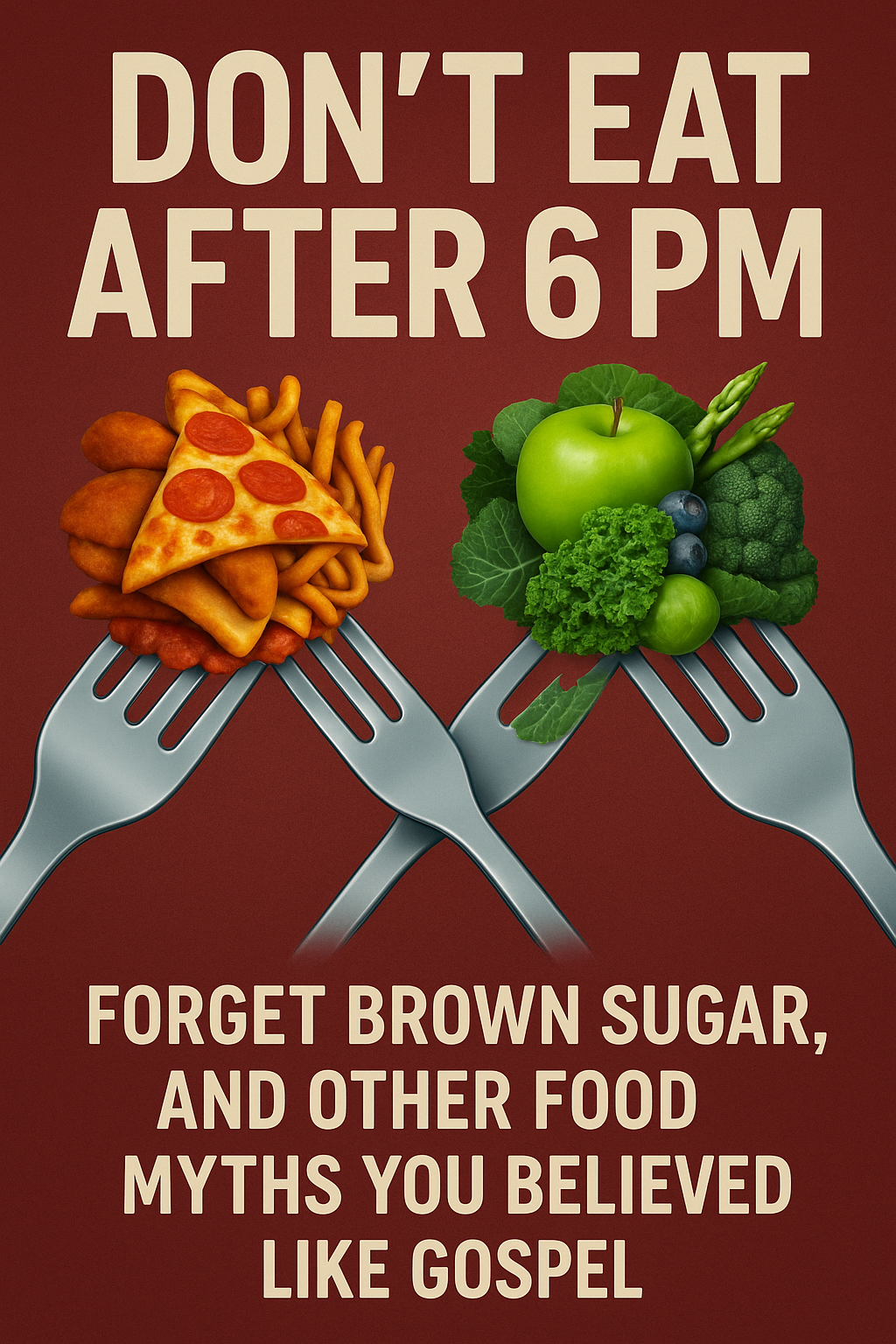
Myth 1: Don't eat after 6 PM
This isn't true. The time on the clock matters less than the time between your last meal and going to bed. A more useful guideline is to finish eating about 2 to 4 hours before sleep, so your body has time to digest. Eating late can be a problem mostly because late-night meals tend to be larger, heavier, and less planned.
A 2022 study from Brigham and Women's Hospital, published in Cell Metabolism, found that eating the same meals four hours later in the day was linked to greater hunger and changes in how the body handled energy. The takeaway is not to panic about 6 PM, but to avoid regularly pushing your main meals deep into the night. You can read more in our article The ideal time for dinner is 7 PM.
Myth 2: Dark bread is always healthier than white bread
If we compare the calories in white bread and dark bread, there are no major differences. The real advantage of genuine whole grain bread is its fiber and the nutrients found in the bran and germ. However, "dark" does not automatically mean "whole grain." Some breads get their color from malt, caramel, or added coloring. Always check the label for "100% whole grain" or "whole wheat flour" as the first ingredient. The Harvard T.H. Chan School of Public Health offers a helpful guide to recognizing true whole grains. We also covered seemingly healthy foods that hide extra calories in Hello, and Fattening: Foods that Sabotage Your Diet.
Myth 3: Drinking orange juice is always healthy
Fresh orange juice does provide vitamin C and other valuable nutrients, but quantity matters. Vitamin C is water-soluble, so what your body doesn't need is mostly flushed out in urine, according to the NIH Office of Dietary Supplements. More importantly, juice contains a lot of natural sugar and very little fiber. The UK's NHS recommends limiting fruit juice and smoothies to about 150 ml a day in total, while the World Health Organization counts sugars in fruit juices as "free sugars" that are best kept low. A whole orange is usually the better choice: you get the fiber and feel fuller.
Myth 4: Sushi is always a light, healthy meal
Sushi can be a great choice, but not every roll is equal. Simple nigiri or rolls with fish and vegetables are fairly modest in calories. Rolls with tempura, cream cheese, or mayonnaise-based sauces can add up quickly, and a single specialty roll can easily reach several hundred calories. Soy sauce is not high in calories, but it is very high in salt. Just one tablespoon can supply a large share of the daily sodium limit suggested by the American Heart Association. Choose reduced-sodium soy sauce and dip lightly.
Myth 5: Dark chocolate helps you lose weight
Dark chocolate can be part of a healthy diet, but only if the cocoa content is above 70 percent and you keep portions small, around three squares a day. It contains flavanols, plant compounds that researchers continue to study for their possible benefits, as summarized by the Harvard Nutrition Source. Still, dark chocolate is very energy-dense, with around 600 kcal per 100 grams. Testing by Consumer Reports has also found heavy metals in some dark chocolate bars, which is one more reason to treat it as a small treat rather than a "health food." More is not better, and that applies to antioxidants too.
Myth 6: The less you eat, the faster you lose weight
Drastically cutting food often backfires. Very low intake can leave you hungry, tired, and more likely to overeat later. Many people find it easier to manage their weight with regular, moderate meals and without ever really stuffing themselves. Whether that means three meals or five smaller ones is largely a matter of personal preference. A study in the British Journal of Nutrition found that eating more frequently did not by itself lead to greater weight loss when total calories were the same. What tends to matter most is the overall balance of energy and the quality of your food. For practical ideas, see Quick tricks for better health and a perfect body.
Myth 7: Olive oil is low in calories
Olive oil is rich in calories: roughly 120 kcal per tablespoon, about the same as any other oil, according to USDA FoodData Central. Where olive oil stands out is its quality, not its calorie count. Extra virgin olive oil is rich in monounsaturated fats and polyphenols. The large Spanish PREDIMED trial, published in the New England Journal of Medicine, linked a Mediterranean diet supplemented with extra virgin olive oil to fewer cardiovascular events. So use it generously in terms of quality, but measure it rather than pouring freely. Learn more in Olive oil on an empty stomach: healthy habit or myth?
Myth 8: Carbohydrates are harmful
This is only partly true, and it applies mainly to refined carbohydrates and added sugars found in heavily processed foods. Complex carbohydrates from vegetables, fruit, legumes, and whole grains are an important source of energy and fiber. The World Health Organization recommends a diet rich in these foods. A major review published in The Lancet associated higher fiber and whole grain intake with better health outcomes in observational studies.
Myth 9: Brown sugar is better than white sugar
Tests have shown that brown sugar has almost exactly as many calories as white sugar, close to 380 to 390 kcal per 100 grams in USDA data. There are no significant differences between them. Brown sugar is mostly white sugar with a little molasses, which adds color and flavor but only trace amounts of minerals. Your body handles both in much the same way, so the advice is the same for each: use them sparingly.
Myth 10: Fruit is always the best dessert
Fruit is a far better choice than cakes and pastries, and the popular idea that fruit "ferments" in the stomach after a meal isn't supported by science. Still, some people with sensitive digestion feel more comfortable eating fruit between meals as a snack rather than straight after a heavy lunch. If that's you, enjoy fruit as a mid-morning or afternoon bite. Pairing it with a handful of nuts or plain yogurt can help keep you full for longer.
Myth 11: You can eat anything for breakfast
Not quite. A good breakfast should be balanced, with enough protein, healthy fats, complex carbohydrates, and fiber. A sugary pastry with a sweet coffee may give you a quick lift, followed by a slump a couple of hours later. Eggs with whole grain toast and vegetables, or oatmeal with nuts and berries, will usually keep you going much longer. See which choices are best skipped in Why is it dangerous to eat these foods for breakfast.
Myth 12: We only burn calories through exercise
There are other ways to burn calories. Most of the energy we use each day goes into simply keeping the body running: breathing, circulation, repairing cells, and maintaining body temperature. This is called basal metabolism, and it continues even while we sleep, as explained by the Mayo Clinic. Everyday movement, such as walking, taking the stairs, and household chores, also adds up. Sleep matters too: too little of it can affect appetite. We wrote about that in When you sleep too little, your belly grows.
Myth 13: Fruit is healthier than vegetables
Both belong on your plate, but many nutritionists suggest letting vegetables take the lead. The Harvard Healthy Eating Plate recommends filling half your plate with vegetables and fruit, with more vegetables than fruit. Vegetables generally offer plenty of fiber, vitamins, and minerals with less natural sugar. A large meta-analysis in the International Journal of Epidemiology associated higher combined fruit and vegetable intake with better long-term health. A practical rule of thumb is several portions of vegetables and one or two portions of fruit a day.
The bottom line
Most food myths survive because they are simple. Real nutrition is a little less dramatic: it's about overall balance, sensible portions, whole foods, and habits you can keep up for years. Next time you hear a strict food rule, ask yourself a simple question before you start following it: where does this advice actually come from?
Information on this website is for educational purposes only and is not medical advice.
expert, nutritionist
 Would you like to be informed about news on the website?














|

