




Raisins and Your Liver: Old Russian Folk Wisdom That Modern Nutrition Partly Supports
expert, nutritionist
Your grandmother may have known something before nutrition science caught up. In Russian villages, a glass of warm water with a handful of raisins soaking in it on the windowsill overnight was a familiar sight. The next morning the raisins and their sweet, amber water were eaten before anything else. No supplements, no expensive "detox" kits, just dried grapes and patience. Today, researchers studying dried fruit say that raisins contain more interesting compounds than their modest look suggests.
This morning ritual is not limited to Eastern Europe. Indian nutritionist Rujuta Diwekar, known for working with Bollywood stars such as Kareena Kapoor, regularly advises her followers to begin the day with soaked raisins, soaked almonds or a banana instead of tea or coffee. In her widely shared advice, she suggests eating a small number of soaked dark raisins on an empty stomach and drinking the water they were soaked in, rather than throwing it away. Many of her readers say this simple habit helped them feel more energetic in the morning and made it easier to skip sweet pastries at breakfast.
A reader from Ljubljana shared a similar experience: "My grandmother soaked raisins every Saturday evening. I started doing the same after a stressful year. I can't say it changed my blood tests, but my digestion felt calmer and I stopped reaching for biscuits first thing in the morning."
What raisins actually bring to the table
Raisins are a good source of antioxidants and fibre. Traditionally, people believed they help regulate digestion, strengthen the immune system, support the liver, "cleanse the blood", remove toxins, and provide energy, vitality, good looks and a good mood. Modern science is more cautious, but some of these beliefs have a reasonable nutritional basis.
A review titled "Is Eating Raisins Healthy?", published in the journal Nutrients by researchers from the University of Barcelona, collected the available studies on raisins. The authors found that, despite their high natural sugar content, raisins have a low-to-moderate glycaemic index, may contribute to better diet quality and may help reduce appetite. Their antioxidant capacity is linked to their phenolic compounds, and their fibre may act as a prebiotic for gut bacteria. Interestingly, the review notes that darker (red) raisins showed the highest phenolic content and antioxidant capacity, while light (white) raisins showed the lowest. The authors also say that more research in humans is needed before firm conclusions can be drawn.
What about the liver? The liver is the body's main filter and already does its own "cleaning" around the clock. No single food can "cleanse" it. A critical review in the Journal of Human Nutrition and Dietetics found very little clinical evidence that commercial detox diets eliminate toxins. What we can do is make the liver's job easier: eat more fibre and plant foods, limit alcohol, sugar and highly processed food, and maintain a healthy weight. If you want to know more about how diet affects liver fat, read our article How do 2 weeks without bread and pasta bring your liver to its senses? A handful of soaked raisins fits nicely into such a lifestyle, as a small, pleasant habit rather than a miracle cure.
How to choose the right raisins
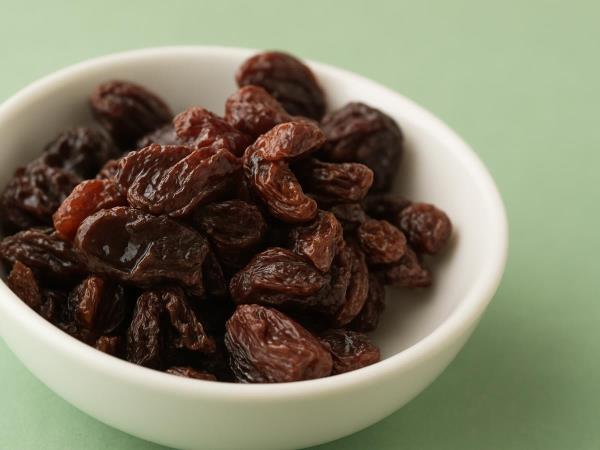
Today it is not easy to find unsprayed raisins without added sulphur dioxide. Do not buy very light and yellowish raisins. A light colour is almost certainly the result of sulphur dioxide treatment. Also avoid "shiny" raisins, as they are often chemically treated or coated with oil. Quality raisins have no shine, are wrinkled, not too soft and not too hard either. The berries should be undamaged and the colour dark brown (although this also depends on the grape variety).
Why does this matter? Sulphur dioxide (E220) and sulphites (E221–E228) are used as preservatives to keep dried fruit light and prevent browning. The European Food Safety Authority (EFSA) concluded in its updated assessment that intake of sulphites could be a safety concern for people who consume a lot of foods containing them, and it recommended further research into sensitivity and intolerance in some consumers. People with asthma or sulphite sensitivity should be particularly careful. Always check the label: in the EU, sulphites above a certain level must be declared.
Quick checklist when shopping:
- Dark brown or nearly black colour (natural for most dark grape varieties)
- Matte, not glossy surface
- Wrinkled, slightly soft but not sticky or mushy
- No "E220", "sulphur dioxide" or "contains sulphites" on the label
- Organic certification is a plus
The morning raisin ritual – recipe
The traditional "cleansing" raisin ritual is extremely simple.
In the morning, first rinse a handful of raisins under running water, then put them in a glass and fill it to the brim with warm water. Let the raisins stand in the water for at least 10 hours (it can be longer), and eat them together with the water on an empty stomach (preferably the next morning).
It is highly recommended to rest for another hour or two before eating breakfast and starting your day. That is exactly why this ritual is best done at the weekend.
Folk nutrition advisers traditionally recommend doing the raisin ritual once a week and no more than four times in a row, and they consider two such cycles per year to be quite enough.
Soaking softens the raisins and makes them easier to chew and digest for many people. Eating the raisins together with the water is better than drinking only the water, because most of the fibre stays in the fruit itself.
Why the morning, and why the empty stomach?
Many traditional remedies recommend a gentle, natural food first thing in the morning instead of coffee or sweets. Our article What not to eat early in the morning (or late at night) explains why heavy and very sugary foods are a poor start to the day, while folk healers favoured simple fruit such as an apple or a dried plum. Similar advice applies to fresh fruit: in What happens to the body if we eat pears regularly we describe how a small portion of fruit before breakfast can gently wake up digestion. And if you are wondering which breakfast foods are best left aside, read Why is it dangerous to eat these foods for breakfast.
Who should be careful
- People with diabetes or insulin resistance: raisins are rich in natural sugars. Keep the portion small and talk to your doctor or dietitian first.
- People with a sensitive gut or IBS: fibre and fructose can cause bloating or loose stools. Start with a few raisins.
- People sensitive to sulphites or with asthma: choose only unsulphured raisins.
- People with liver disease or iron overload: raisins contain iron, and no food replaces medical treatment. If you have been told you have high iron levels, read Too much iron in the blood can also be a problem and consult your doctor.
- People watching their weight: a handful of raisins (about 30–40 g) contains roughly 100–120 kcal. Count it as part of your breakfast, not an extra.
The bottom line
Soaked raisins will not "wash" your liver, but they are a tasty, inexpensive and traditional way to add fibre and plant antioxidants to your morning. Combined with plenty of vegetables, little alcohol, regular movement and enough sleep, this old Russian ritual can become a pleasant weekend habit that supports your overall well-being. Choose dark, matte, unsulphured raisins, keep the portion moderate, and enjoy the slow morning that comes with it.
Information on this website is for educational purposes only and is not medical advice.
expert, nutritionist
 Would you like to be informed about news on the website?















|

