





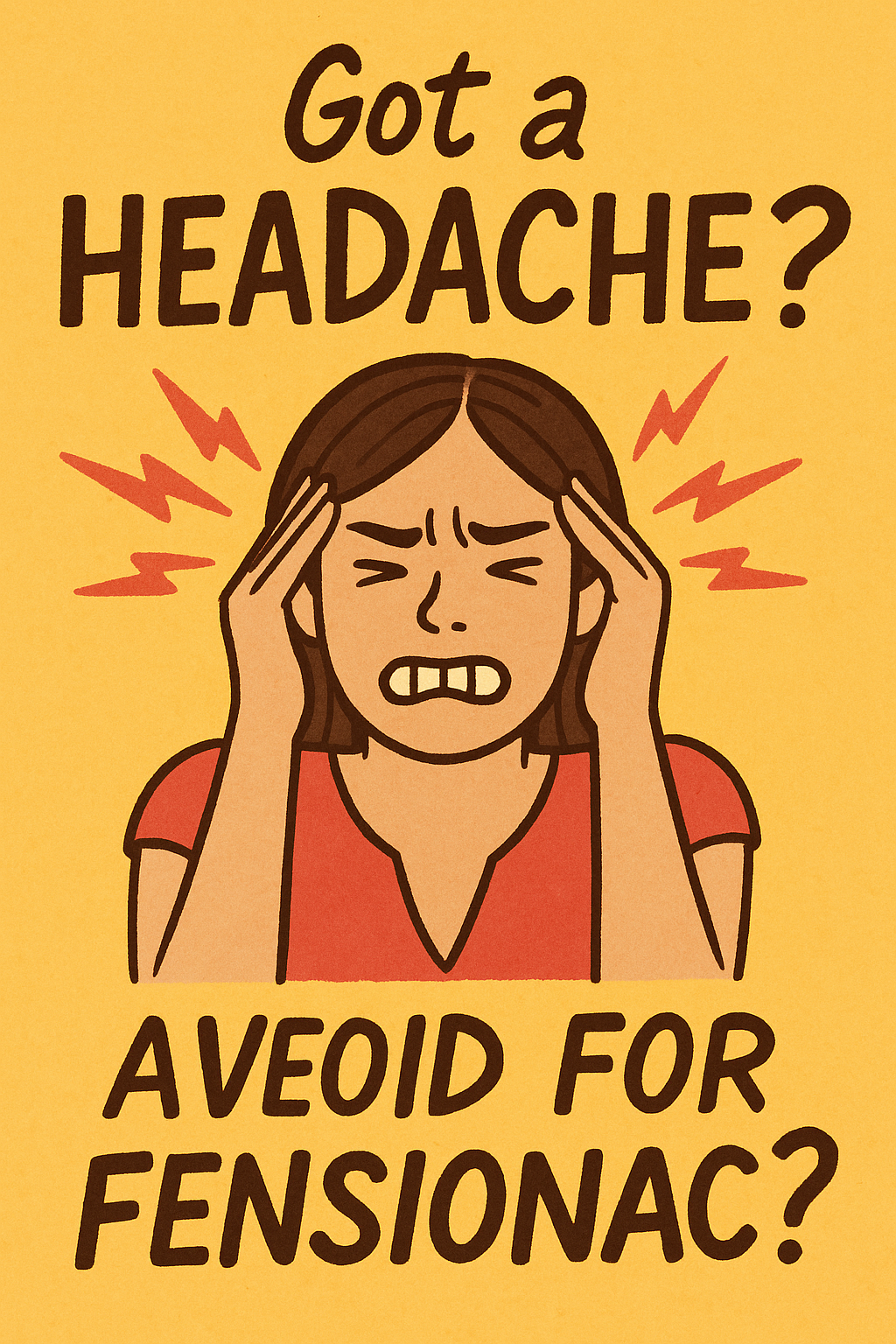
7 Natural Headache Tricks You Probably Haven't Tried Yet
expert, nutritionist
Almost half of all adults will deal with a headache at some point this year. According to the World Health Organization, headache disorders are among the most common conditions of the nervous system worldwide, affecting an estimated 40% of the global population. Most of these headaches are harmless tension-type headaches, and for many of them a few simple tricks from your own kitchen may be enough to take the edge off.
Even legends are not immune
Few people know that one of the greatest basketball players of all time spent much of his career fighting headaches. Kareem Abdul-Jabbar, the six-time NBA MVP, lived with migraines for about two decades. During the legendary 1984 NBA Finals against the Boston Celtics, he reportedly had six migraine attacks in just nine days, and one hit him in the early hours before Game 6. He still played and scored 30 points (Sportscasting). Later he explained that the hardest part was that people assumed it was "just a regular headache." The Lakers' longtime trainer Gary Vitti has also described how the team arranged special measures in every hotel to help him through the attacks (The SportsRush).
Kareem's story shows two things. Headaches can be serious and deserve to be taken seriously, and many people end up finding their own personal set of habits that help them cope.
Natural first, medicine when needed
Natural approaches to everyday headaches are generally a gentle first step, although sometimes there is no other solution than taking a tablet, and that is perfectly fine. But before you turn to medication, try some of these methods. Which one works best depends on your body, so it is worth experimenting a little.
Readers often tell us they keep a small "headache toolkit": a heat pack in the freezer drawer, a piece of fresh ginger in the fridge and a jar of dried marjoram in the pantry. One reader shared that simply stepping away from her laptop, drinking a large glass of water and putting a warm compress on her neck works for her "about eight times out of ten."
1. A warm compress
Make a warm compress and place it on your forehead, or even better, on the back of your neck. Warmth helps relax tense muscles, supports circulation and may ease the pain. This is especially helpful for tension-type headaches, which often start in tight neck and shoulder muscles. The Mayo Clinic lists applying heat or cold to the head and neck among the useful self-care steps for tension headaches.
Tip: If heat doesn't help, try the opposite. Some people, particularly those with throbbing, migraine-type pain, find a cool compress on the forehead more soothing.
2. A warm foot bath
If you have the chance, soak your feet in a warm (not hot) foot bath for 10 to 15 minutes. Many people find that it improves circulation in the legs and eases the feeling of pressure in the head. You will probably feel more relaxed right away, and as an evening ritual it can also help you unwind before sleep.
Note: People with diabetes, reduced sensation in the feet, or varicose veins should keep the water only lukewarm, or skip this trick and check with their doctor first, because heat can widen veins and reduced sensation makes burns more likely.
Good sleep matters more for headaches than most people think, and it affects other parts of your health too. Read more in our article When you sleep too little, your belly grows.
3. Head massage
Slow, medium-pressure circular movements lasting at least 3 minutes can be a very pleasant way to ease a headache. You can massage your forehead, temples, the top of your head, or any area of the scalp. Don't forget the base of the skull and the neck, where tension often collects. A small study published in the American Journal of Public Health found that regular massage of the neck and shoulder area was associated with fewer headache days in people with chronic tension-type headaches.
A bonus: a small Japanese study reported in Eplasty suggested that regular scalp massage may be linked to slightly thicker hair, though the research is still very limited.
4. Ginger
Ginger contains natural compounds such as gingerols, which are studied for their anti-inflammatory properties, so it may help reduce headache pain. A small clinical trial published in Phytotherapy Research found that ginger powder offered some participants with migraine relief comparable to a common prescription medication, although larger studies are needed to confirm this.
Tea is the easiest way to use it: pour hot water over a few slices of fresh ginger, let it steep for 10 minutes and drink it warm. Ginger plays a part in many processes in the body, so a strong cup of ginger tea is a good choice for most people. If you take blood thinners or have gallbladder problems, check with your doctor first, as the U.S. National Center for Complementary and Integrative Health (NCCIH) advises. For more ginger inspiration, see Get Rid of Bloating and Excess Water.
Tip: Let the tea cool to a comfortable warm temperature before drinking. The International Agency for Research on Cancer (IARC) advises against regularly drinking beverages hotter than about 65 {-15696}C.
5. Coffee
Coffee can also help with headaches. Caffeine narrows blood vessels in the head, which may relieve some headaches. That is why it is an ingredient in many over-the-counter pain relievers. A Cochrane review found that adding caffeine to common pain relievers slightly increases the number of people who get good pain relief.
The catch is that this trick doesn't work well for people who already drink a lot of coffee. In regular heavy drinkers, skipping the usual cup can itself trigger a "withdrawal headache." Moderation is key. The U.S. Food and Drug Administration (FDA) and the European Food Safety Authority (EFSA) consider up to about 400 mg of caffeine a day (roughly four cups of filter coffee) safe for most healthy adults. Did you know that darker coffee is not necessarily stronger? Find out more in When salad isn't healthy, and coffee isn't what you think.
6. Cinnamon
Cinnamon is good when you eat it, and warm compresses with cinnamon are another traditional approach. Soak a cotton cloth in hot water, sprinkle it with cinnamon and place it on your forehead. Keep it on for a few minutes while it is still warm. Test it on a small patch of skin first, because cinnamon can irritate sensitive skin.
Science is only beginning to look at cinnamon in this area. A small 2020 trial in the journal Neurological Sciences observed fewer and milder migraine attacks in participants who took cinnamon powder for two months, but the results are preliminary. In the kitchen, a pinch on your oatmeal or in a warm drink is plenty. The NCCIH notes that large amounts of cassia cinnamon contain coumarin, which may be problematic for the liver, so Ceylon cinnamon is a better choice for regular use. Warm spiced drinks are a cozy tradition. Try our Warm Water with Turmeric Against Winter Troubles.
7. Marjoram
Marjoram tea is an old folk remedy for headaches. Pour hot water over dried or fresh marjoram leaves and let it steep for 10 to 15 minutes. Marjoram has traditionally been used for relaxation, and many people enjoy a cup as a calming ritual, for example before an exam or another stressful event. Scientific evidence for its effect on headaches is still limited, so think of it as a gentle, pleasant support rather than a cure. Pregnant women should avoid medicinal amounts of marjoram. You can find reliable information about herbs in the NCCIH Herbs at a Glance guide.
Bonus: the simplest trick of all – a glass of water
Before trying anything else, drink a large glass of water. Even mild dehydration is a common headache trigger, as the NHS points out. Regular meals, enough sleep, short screen breaks and fresh air can also help prevent many everyday headaches. The American Migraine Foundation recommends keeping a simple headache diary to spot your personal triggers, such as skipped meals, alcohol or too little sleep.
When natural tricks are not enough
Home remedies are meant for ordinary, occasional headaches. Seek medical advice if your headaches become frequent or keep getting worse. Get help urgently if a headache is sudden and extremely severe, follows a head injury, or comes with fever, a stiff neck, confusion, vision problems, weakness or numbness. This article is for general information only and does not replace the advice of a doctor or pharmacist.
Information on this website is for educational purposes only and is not medical advice.
expert, nutritionist
 Would you like to be informed about news on the website?












|

