




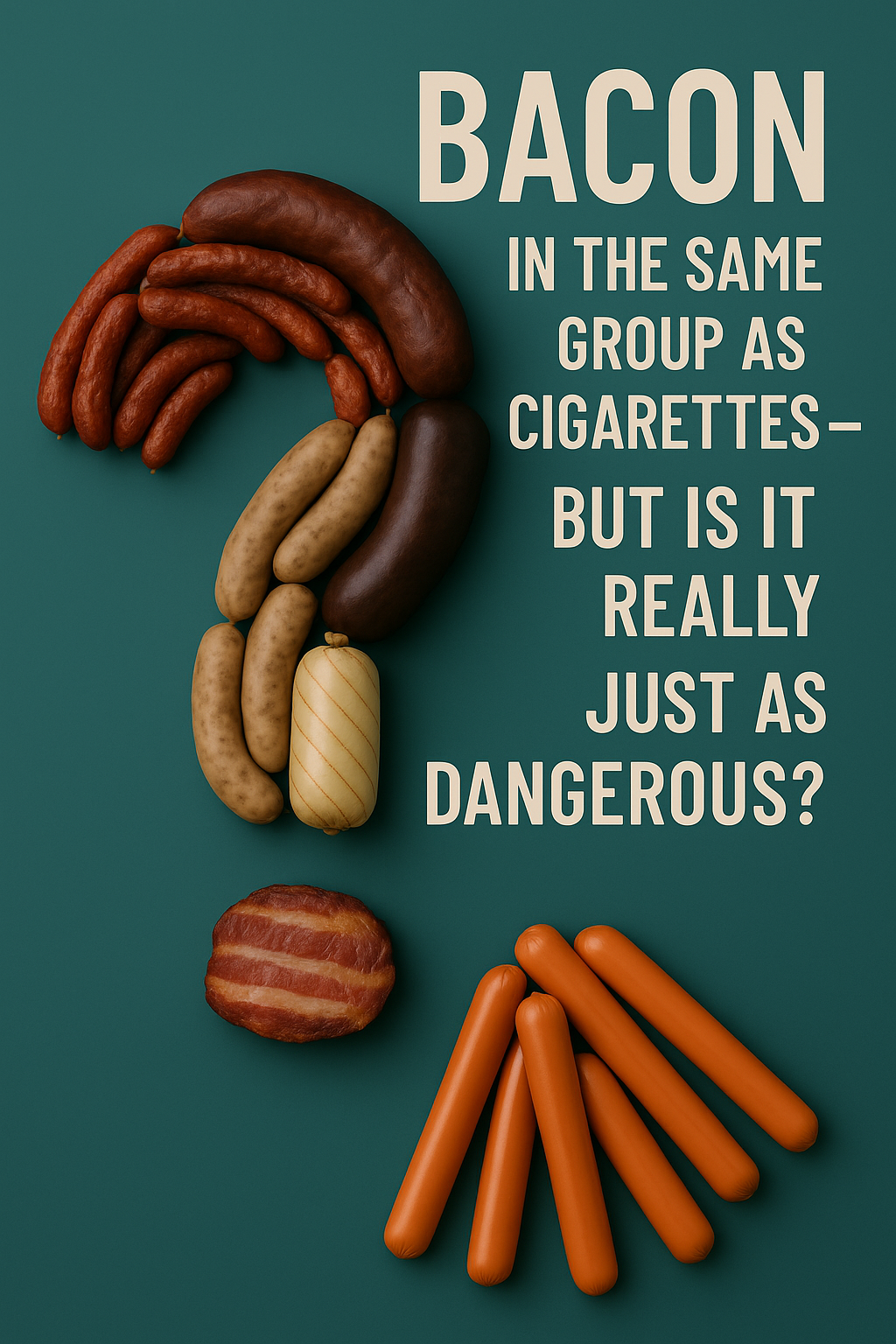

Bacon in the Same Group as Cigarettes – But Is It Really Just as Dangerous?
expert, nutritionist
Two rashers of bacon a day. That is roughly 50 grams of processed meat, and according to experts at the International Agency for Research on Cancer (IARC), eating that amount every day is associated with an approximately 18% higher relative risk of colorectal cancer. So does your Sunday breakfast belong on the same shelf as a pack of cigarettes? The short answer is no. The longer answer is far more interesting, and it may change how you look at the deli counter.
Former U.S. President Bill Clinton knows how much a plate of food can matter. Once famous for his love of burgers, he underwent a quadruple bypass in 2004 and a further heart procedure in 2010. With guidance from physicians including Dr. Dean Ornish, he then gradually moved from a meat-heavy diet to a mostly plant-based one. In an interview with CNN's Wolf Blitzer, he described living largely on beans, legumes, vegetables and fruit. Years later, he said of meat that he simply doesn't miss it. Not everyone needs to go that far. His story shows that eating habits can change, even after decades.
What Is the IARC, and What Does Its List Actually Measure?
The IARC is a specialized agency operating within the World Health Organization (WHO). It was founded in 1965. Since 1971, its Monographs Programme has brought together international expert panels to evaluate substances, foods, habits and work environments, then sort them into groups according to how strong the evidence is that they can cause cancer in humans.
This is the single most important thing to understand, and it is where many headlines go wrong. The IARC classification describes the strength of scientific evidence, not the size of the risk. Tobacco and bacon sit in the same group because scientists are equally confident that both can contribute to cancer. They are not equally dangerous. The agency itself has cited Global Burden of Disease estimates that link about 34,000 cancer deaths a year worldwide to diets high in processed meat, compared with around one million linked to smoking.
Despite this context, many of us keep eating these foods even as research accumulates. Why? Partly habit and taste, and partly because "same group as cigarettes" sounds so dramatic that many people simply dismiss it. A calmer explanation is more useful, so let's go through the groups one by one.
GROUP 1 – Carcinogenic to Humans
Tobacco smoking, solar radiation, alcoholic beverages, processed meat ...
This group contains agents for which there is sufficient scientific evidence that they cause cancer in humans. Tobacco is the best-known example. According to the U.S. Centers for Disease Control and Prevention (CDC), cigarette smoking is linked to roughly 80 to 90% of lung cancer deaths. Lung cancer remains the leading cause of cancer death worldwide, accounting for nearly one in five cancer deaths.
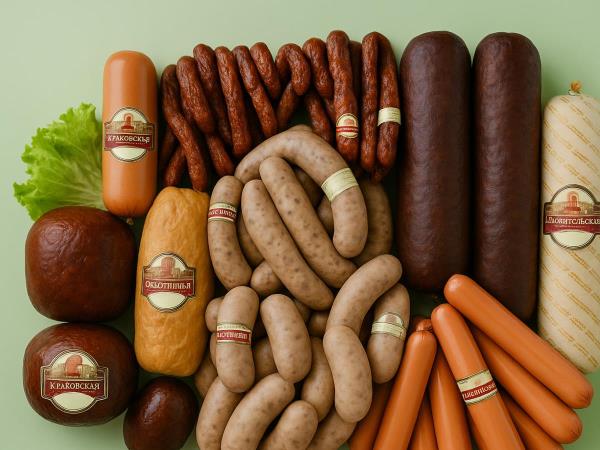
In October 2015, a working group of 22 scientists from ten countries reviewed more than 800 studies. They concluded that processed meat belongs in Group 1, based on sufficient evidence for colorectal cancer. The findings were published in The Lancet Oncology and summarized in the WHO's official Q&A. Processed meat means meat that has been salted, cured, fermented, smoked or otherwise treated to improve flavor or preservation. Examples include bacon, ham, hot dogs, salami, sausages, corned beef, canned meat and meat-based spreads such as p{-15454}t{-15447}.
The headline figure comes from an analysis of ten studies: each 50-gram portion of processed meat eaten daily was associated with about an 18% higher risk of colorectal cancer. Keep that in mind the next time you spread p{-15454}t{-15447} on your bread. Remember, too, that this is a relative increase. Cancer Research UK explains that the absolute change for an individual is modest. Even so, the risk tends to grow with the amount eaten, and experts have not identified a clearly "safe" daily threshold.
Why might processed meat behave this way? Researchers point mainly to N-nitroso compounds formed from curing salts (nitrites). They also highlight heterocyclic amines and polycyclic aromatic hydrocarbons, which can form when meat is smoked or cooked at very high temperatures. A large prospective U.S. study of women also linked bacon and breakfast sausage intake with higher colorectal cancer risk.
What about fresh red meat? Contrary to many reports, unprocessed red meat (beef, pork, lamb, veal, goat) was not placed in Group 1. It sits one step lower, in Group 2A, as "probably carcinogenic." In the same evaluation, each 100 grams of red meat eaten daily was associated with an estimated 17% higher risk of colorectal cancer. Links with pancreatic and prostate cancer were also observed, but the evidence was weaker. Red meat also provides valuable protein, iron, zinc and vitamin B12. Many health authorities therefore recommend moderation rather than avoidance. Diets very high in red and processed meat have also been associated with cardiovascular disease and shorter life expectancy, as summarized by the Mayo Clinic.
Not everyone agreed with the classification. The North American Meat Institute argued that cancer is a complex disease that cannot be blamed on a single food. On one point both sides largely agree: the overall pattern of your diet and lifestyle matters more than any one meal.
For more on everyday foods worth limiting, read 5 Foods That Shorten Your Lifespan. If bacon and sausages are part of your morning routine, you may also find Why is it dangerous to eat these foods for breakfast useful.
A detailed list of agents in this group is available HERE. The official, regularly updated list is on the IARC Monographs website.
GROUP 2A – Probably Carcinogenic to Humans
Red meat, emissions from high-temperature frying, anabolic steroids, working as a hairdresser or barber, very hot beverages ...
There is strong evidence that the agents in this group can cause cancer in humans, but the evidence is not yet conclusive. The kitchen is well represented here. Fumes released when frying at very high temperatures are included. So are drinks consumed very hot, above about 65 {-15696}C. Meat, oil and heat seem to be a recurring theme, which is one more reason to prefer gentler cooking methods and to go easy on heavily fried foods. On that topic, see Does French fries really increase the risk of anxiety and depression?
The list of agents in this group is available HERE.
GROUP 2B – Possibly Carcinogenic to Humans
Gasoline engine exhaust, traditional Asian pickled vegetables, whole-leaf aloe vera extract ...
There is some evidence that agents in this group may cause cancer, but it is far from conclusive. This group is a good reminder of how classifications change as science advances. Coffee sat here for many years. In 2016, after reviewing more than 1,000 studies, the IARC moved coffee down to Group 3. In 2025, automotive gasoline itself was evaluated again and moved up to Group 1, as recorded on the IARC classification list.
The list of agents in this group is available HERE.
GROUP 3 – Not Classifiable
Tea, coffee, polyethylene, fluorescent lighting, static magnetic fields ...
For agents in this group, there is no evidence that they cause cancer in humans. However, there is not yet enough research to declare them safe. This is by far the largest group, with around 500 entries. Good news for tea and coffee lovers: your morning cup is in this category.
The list of agents in this group is available HERE.
What Happened to GROUP 4?
For decades, Group 4 was reserved for agents with strong evidence that they are probably not carcinogenic to humans. Only one substance was ever placed there: caprolactam. This compound was first described in the late 19th century. Today it is used almost entirely to make nylon 6, and it also serves as a building block in the synthesis of certain pharmaceutical drugs. In the U.S., it was once listed as a hazardous air pollutant before being removed from the list by the Environmental Protection Agency (EPA). In large quantities, caprolactam is an irritant and mildly toxic.
When the IARC revised its Preamble in 2019, it abolished Group 4 altogether. Caprolactam now sits in Group 3. Today the system has four categories: 1, 2A, 2B and 3.
A Nutritionist's Perspective: What Should You Actually Do?
None of this means you must never touch a slice of ham again. Readers often tell us that the hardest part is not giving up meat but breaking automatic habits: the sausage at every barbecue, the cold cuts in every sandwich. Small, steady changes tend to last longer than dramatic bans. A few practical ideas, in line with advice from the World Cancer Research Fund and the American Cancer Society:
- Treat processed meat as an occasional food, not a daily staple. Save bacon or salami for the weekend rather than every breakfast.
- Keep fresh red meat moderate. The WCRF suggests no more than about three portions a week, roughly 350 to 500 grams of cooked meat.
- Rotate your protein sources: fish, poultry, eggs, beans, lentils, chickpeas and tofu.
- Cook more gently. Avoid charring, take meat off the heat before it blackens, and prefer stewing, steaming or baking over very hot frying and grilling.
- Build your plate around plants. Vegetables, fruit, whole grains and legumes provide fiber, which is generally associated with better gut health.
- Read labels. Look for added nitrites or nitrates (E249–E252) and high salt content.
The bottom line: bacon is not "as dangerous as cigarettes." Scientists are simply as sure that regular, high intake of processed meat can raise cancer risk as they are about tobacco. The size of that risk is much smaller, and it is largely within your control. Enjoy the occasional treat, fill most of your plate with plants, and let moderation, not fear, guide your choices.
Information on this website is for educational purposes only and is not medical advice.
expert, nutritionist
 Would you like to be informed about news on the website?











|

