





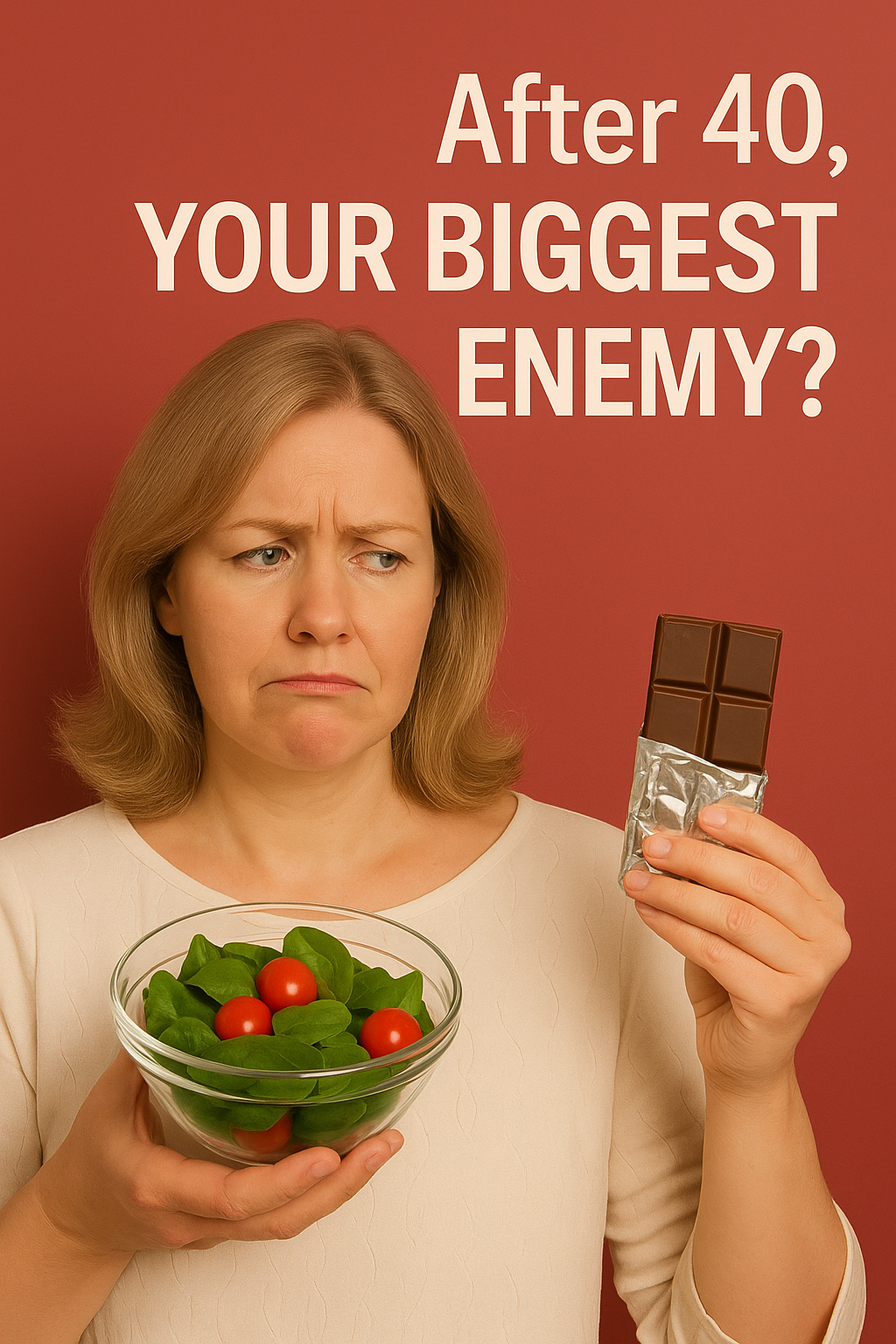

After 40, Your Body Handles Sugar Differently – Which Carbohydrates Are Now Your Biggest Enemy?
expert, nutritionist
That slice of white toast with jam, the "just one" chocolate bar at 4 p.m., the sweet fizzy drink with lunch: in your twenties, your body barely seemed to notice them. After 40, many people find that the very same habits quietly show up on the scales, around the waistline and in their afternoon energy slumps. The reason is not that your metabolism suddenly "switches off". The real issue is that your body becomes less forgiving, and refined carbohydrates are usually the first to expose that.
Hollywood legend Tom Hanks knows this story well. In 2013 he told David Letterman that his doctor had been watching his elevated blood sugar numbers since he was 36, and that by 57 he had "graduated" to a diagnosis of type 2 diabetes. Hanks has since said, with typical self-deprecating humour, that years of poor eating habits played their part, and that he now pays far more attention to his weight and what is on his plate (ABC News). His experience shows something many people overlook: blood sugar problems rarely appear overnight. They build up slowly over years, often starting in our late thirties and forties.
Everything we eat after the age of 40 tends to be used more slowly, and if we consistently eat more than we need, the extra energy is easily stored as fat. Interestingly, a landmark study published in Science (Pontzer et al., 2021), which analysed energy expenditure in more than 6,000 people, found that basic metabolism stays surprisingly stable between the ages of 20 and 60. So what changes? Most of us gradually lose muscle, move less and sleep worse, and our cells may respond less efficiently to insulin. The result feels exactly like a "slower metabolism".
This is precisely why, after 40, it matters even more to ask not only how much you eat, but also what you eat. The biggest trap is carbohydrates, especially those found in highly processed foods.
Why Are Sugar and Refined Flour the Biggest Risk After 40?
Carbohydrates themselves are not bad. Your body needs them for energy. The difference lies in where they come from. When you get them from whole grains, legumes or vegetables, your body releases energy slowly, and you also get fibre, vitamins and minerals. When they come from sweets, white baked goods, sugary drinks and chocolate bars, you mainly get a quick rise in blood sugar with very few nutrients.
Such a rapid rise triggers the release of insulin, the hormone your body uses to regulate blood sugar levels. If this happens very often, the body may gradually become less sensitive to insulin. This is known as insulin resistance, and according to the U.S. National Institute of Diabetes and Digestive and Kidney Diseases (NIDDK), it is closely linked to a higher risk of prediabetes and type 2 diabetes.
Registered dietitian Tara Collingwood, speaking to Eat This, Not That!, explains that refined carbohydrates are digested very quickly, causing blood sugar to spike and then crash, a cycle that can contribute to weight gain. Such carbohydrates are not ideal at any age, but they become even less helpful after 40. Why? Because they bring little of value: very few vitamins, minerals or antioxidants. Instead of nourishing the body, they mainly add extra calories.
If you want to know which other everyday foods deserve a closer look, read 5 Foods That Shorten Your Lifespan and Hello, and Fattening: Foods that Sabotage Your Diet.
Numbers That Say Much More Than Words
According to the U.S. Centers for Disease Control and Prevention (CDC), adults consume an average of about 17 teaspoons of added sugar per day, roughly 19 for men and 15 for women. That is well above most recommendations.
The World Health Organization (WHO) recommends keeping free sugars below 10% of daily energy intake, which is about 50 grams (12 teaspoons) for an average adult. It also suggests that reducing this to below 5%, around 25 grams or roughly 6 teaspoons a day, may bring additional benefits.
Cutting back really does seem to make a difference. A meta-analysis of randomised trials published in the BMJ (Te Morenga et al., 2013) found that adults who reduced their sugar intake tended to lose some weight, while those who increased it tended to gain weight. The changes were modest but consistent, mainly because less sugar usually means fewer calories without any special diet.
This clearly shows that sugar is not just a cosmetic issue. It is closely connected to overall wellbeing and to how we age.
How Might Sugar Affect the Way Your Body Ages?
A diet rich in sugary, highly processed carbohydrates is associated with low-grade inflammation in the body. Inflammation means the body behaves as though it is fighting an infection, even when there is none. Over time, this persistent state is thought to contribute to wear and tear on the skin, joints and blood vessels.
Sugar may also affect the skin directly. A review in the journal Clinics in Dermatology (Danby, 2010) describes a process called glycation, in which excess sugar molecules attach to collagen and elastin, the proteins that keep skin firm and supple. The resulting compounds may make skin stiffer and contribute to wrinkles and loss of elasticity.
The heart may be affected too. A large U.S. study published in JAMA Internal Medicine (Yang et al., 2014) found that people who got 17 to 21% of their calories from added sugar had about a 38% higher risk of dying from cardiovascular disease than those who got around 8%. The Harvard T.H. Chan School of Public Health also points out that the body does not actually need any carbohydrates from added sugars to function.
Folk wisdom knew this long ago. Our ancestors barely knew refined sugar. They used honey, and even that only occasionally. Their diets were also built around simple, unprocessed foods, which is one reason why obesity and many chronic conditions we now call "diseases of modern life" were far less common.
What Can You Do?
The most important rule is simple: limit processed carbohydrates. That means cutting back on sugary drinks, chocolate bars, white bread and pastries. You don't need to ban them completely, but save them for special occasions.
Instead, choose foods that keep you full and nourished: nuts, legumes, fruit and vegetables. These foods contain fibre, which helps sugar from your meal enter the bloodstream more slowly. As a result, you avoid big swings in insulin and energy, and you feel satisfied for longer.
Example: if you eat a slice of white bread on its own, you may feel hungry again within an hour or so. If you eat wholegrain bread with hummus and vegetables, many people find they stay full for up to three hours. Breakfast is where this matters most, so it's worth reading Why is it dangerous to eat these foods for breakfast.
And don't forget about sleep. Short, restless nights can increase cravings for sweet, quick-energy foods, as explained in When you sleep too little, your belly grows.
What Countries Have Learned About Sugar
Whole countries have tried to nudge people towards less sugar. In 2014, Mexico introduced a tax on sugar-sweetened beverages. A study published in the BMJ (Colchero et al., 2016) found that purchases of taxed drinks fell by an average of 6% in the first year, with the biggest drop, around 12% by the end of the year, and the largest declines among lower-income households. At the same time, people bought more bottled water.
In 2018, the United Kingdom introduced the Soft Drinks Industry Levy, which charges manufacturers based on how much sugar their drinks contain. Many producers responded by reformulating their recipes, significantly lowering the sugar content of popular soft drinks before the levy even took effect. Results like these show that even small, steady changes across a whole population can add up to a great deal.
Cheap Homemade Solutions
You don't need expensive substitutes. The best solutions are the ones that have always been at hand:
- Instead of sugar in your tea, add a small teaspoon of honey, or gradually get used to unsweetened tea. Honey offers more flavour, so you may need less, but remember that it still counts as added sugar, so moderation is key.
- Replace sugary drinks with water flavoured with a slice of lemon or a few mint leaves.
- When a sweet craving strikes, eat an apple or a handful of walnuts. The fibre, healthy fats and protein help you feel full for longer, and the craving for sugar usually fades.
Looking for a gentle way to eat better without strict rules? You may enjoy Diet without dieting and 2 kg less per week.
Our ancestors often said: sweets are for holidays, not for every day. If you follow that rule, you may notice a difference sooner than you think.
After 40, Every Choice Counts
Sugar and refined carbohydrates are tempting, but they are also among the main obstacles to healthy ageing. After 40, when muscle mass tends to decline and the body handles sugar less efficiently, it becomes even more worthwhile to keep them in check. This is not about total deprivation, but about balance and smart choices.
By reducing your sugar intake, you may not only lose a few kilograms, but also support healthier blood sugar levels, a healthier heart and possibly even fresher-looking skin. If you have concerns about your blood sugar, a simple check-up with your doctor is always a good idea.
Don't let sweet flavours fool you. The truly sweet life begins when you take good care of your health.
Information on this website is for educational purposes only and is not medical advice.
expert, nutritionist
 Would you like to be informed about news on the website?















|

