




A Cube of Cheese in Your Coffee? This Unusual Pairing Might Change the Way You See Your Morning Cup
expert, nutritionist
Cheese. In coffee. Yes, really. Before you wrinkle your nose, consider this: in Lapland and in the Colombian Andes, people have started their mornings this way for generations. The cheese in hot coffee softens slightly and gives the coffee a richer, fuller taste. Much of the world has never heard of the combination, but it is definitely worth a try.
One food and travel writer tried it for the first time in an unlikely place. She was on the fifth connection of a long journey from southern Patagonia to Colorado, waiting at Bogot{-15455}'s El Dorado International Airport. There she ordered her first caf{-15447} con queso: spiced coffee poured into a to-go cup over cubes of fresh white cheese. She spooned the softened cheese onto small pieces of bread between sips, alongside a warm, crispy arepa. She later wrote that the coffee was fragrant and slightly velvety, and the whole thing felt more like breakfast than a drink. (You can read her account in culture: the word on cheese.)
Not everyone gets it right on the first attempt. One reader who tried to recreate the drink at home wrote that her cubes of queso blanco simply refused to melt. They didn't melt after reheating the coffee, and they didn't melt even when she shaved the cheese thin. Her experience shows the most important rule of cheese coffee: the type of cheese and the temperature of the coffee matter more than anything else. More on that below.
Where does this strange habit come from?
In most parts of the world, drinking coffee with cheese is rare, maybe even a little eccentric. In some places, though, it is perfectly normal.
Northern Scandinavia. In Swedish, the habit is called kaffeost, meaning "coffee cheese." The cheese itself is Finnish leipäjuusto, or bread cheese, sometimes sold in the United States as "Finnish squeaky cheese." It is a mild fresh cheese that is baked and often dried. According to Atlas Obscura, the traditional version starts with a cube of cheese at the bottom of a wooden cup carved from a birch burl. Boiling coffee is poured over it, and the softened pieces are spooned out while you sip. Among the S{-15455}mi people of Lapland, sharing a cup like this is a gesture of hospitality. Cheese Connoisseur notes that the S{-15455}mi were trading reindeer pelts for coffee as early as the 1700s. Even Sweden's official account on X once greeted followers with a photo of kaffeost for "Fika Friday."
Colombia. In the Andes, fresh cheese goes into sweetened coffee, and even more often into hot chocolate. The chocolate version, known as chocolate santafereño, is a beloved Bogot{-15455} breakfast. It is usually served with cheese bread or almoj{-15455}banas for dipping.
The modern twist. Caf{-15447}s in Asia and the United States have popularized a new variation: coffee or tea topped with a sweet-salty cream-cheese foam. TODAY reported on one Los Angeles chain serving cold brew under a layer of lightly sweetened cream cheese and whipped cream. That version is a dessert rather than a tradition, but it shows that the idea keeps coming back.
How to do it: simpler than it sounds
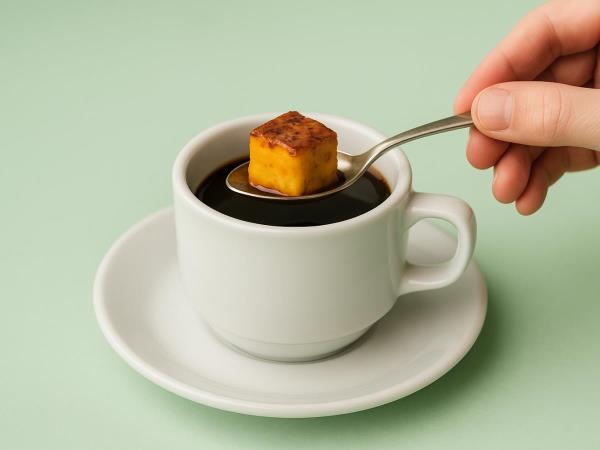
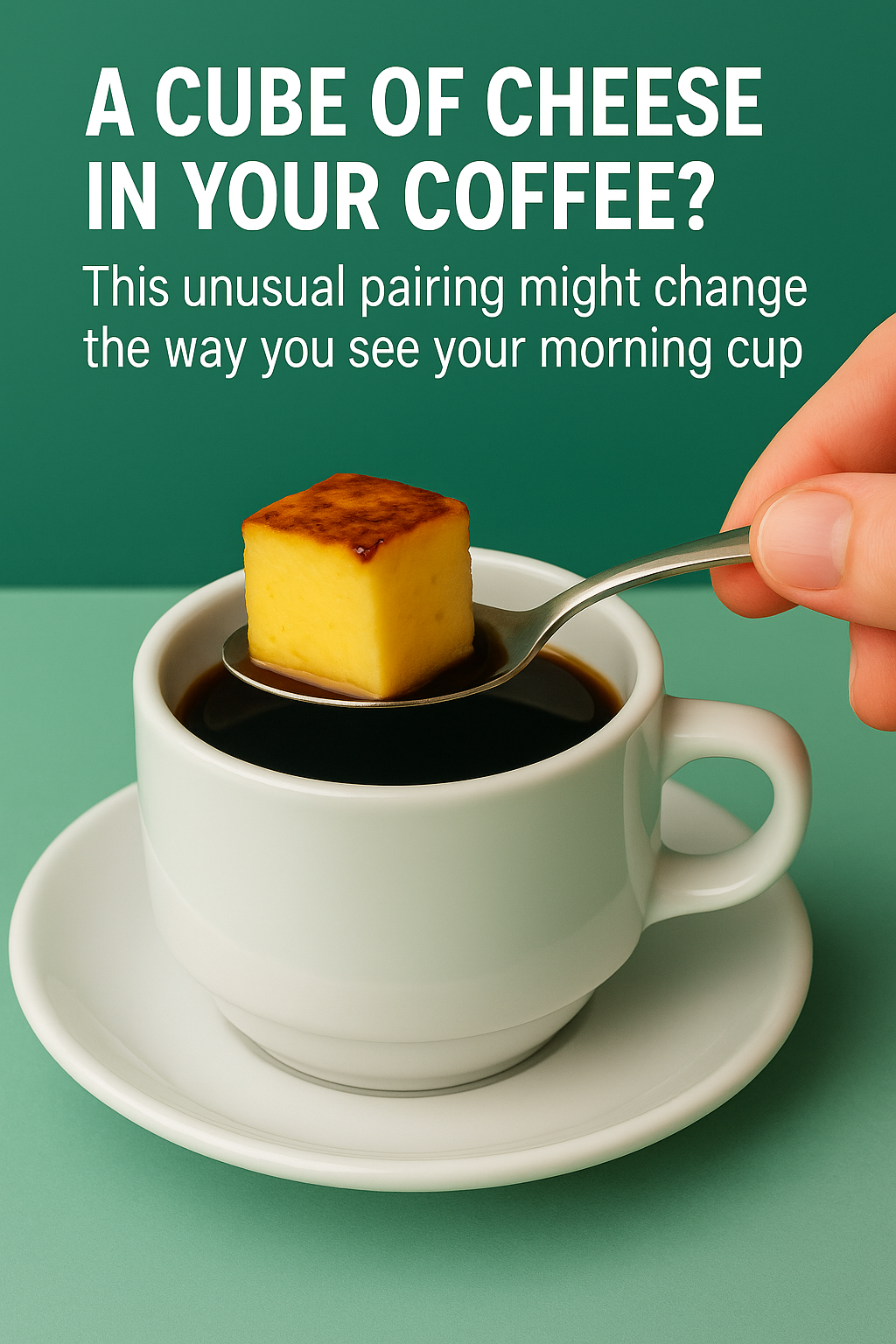
The method is simple: put a cube of cheese into a cup of hot coffee. Wait for the cheese to soften a little, then fish it out with a teaspoon and eat it.
A few practical tips will help your first cup succeed:
- Use freshly brewed, really hot coffee. Lukewarm coffee won't soften the cheese at all, and the combination tastes noticeably less pleasant once the coffee cools.
- Cut small cubes of about 1–2 cm. They warm through faster and are easier to spoon out.
- Give it a minute or two. Don't stir right away. Let the cheese sit and soak up the coffee.
- Keep it plain or lightly sweetened. Black coffee works for the Nordic version, and Colombians usually sweeten theirs a little.
What does it taste like?
The taste of cheese with coffee is surprising: richer and more pronounced. The coffee takes on a slightly silky, rounded, almost buttery note. It is like drinking a completely different coffee. The fat in the cheese smooths out some of the bitterness, much as a splash of milk or cream would. Meanwhile, the cheese absorbs the roasted aroma of the coffee. Some people who try it say the cheese ends up tasting almost lightly smoked.
Which cheese works best?
You can experiment with different types of cheese, but mild cheeses that soften without falling apart work best. Here is what to know:
- Bread cheese (leipäjuusto / juustoleipä) is the classic choice. It doesn't truly melt. Instead, it turns soft and spongy and soaks up the coffee. You can sometimes find it in Scandinavian delis or larger supermarkets.
- Fresh, mild white cheeses, such as Colombian-style queso campesino, fresh farmer's cheese, or young mozzarella, soften nicely and add a gentle salty contrast.
- Soft, creamy cheeses melt more readily and give the coffee a richer, fuller body. They are ideal if you prefer a smoother, almost latte-like result.
- Hard, aged cheeses such as Parmesan or aged Manchego are usually too firm and too intense. They are better enjoyed next to your coffee than in it.
Remember the reader whose queso blanco refused to melt? Some fresh cheeses are made so that they hold their shape under heat. For those cheeses, "softened and warm" is the goal, not "melted." If you want a melting effect, choose a softer, creamier cheese.
A nutritionist's view: a small snack, not a miracle
Beyond the taste, this combination also has a practical side. With a cube or two of cheese, your coffee becomes more than just a drink. It turns into a small snack that contains protein and calcium.
Protein and satiety. Cow's milk cheeses are rich in casein, the main protein in milk. Casein is often described as a "slow" protein. In a well-known study published in Proceedings of the National Academy of Sciences, researchers found that casein released amino acids into the blood more gradually and for a longer time than whey protein, probably because it leaves the stomach more slowly. A later study in the British Journal of Nutrition found that participants felt fuller after a breakfast higher in casein. This does not mean a cube of cheese will control your appetite. It may, however, help a morning coffee feel a little more satisfying than coffee alone. The same principle explains why, as we wrote in When Vegetables Become a Meal: What Is Salad Missing To Really Fill You Up, a few pieces of cheese can turn a light dish into a proper meal.
Calcium. Cheese is a well-known dietary source of calcium, a mineral that supports healthy bones and teeth. You can check the values for specific cheeses in the USDA FoodData Central database. Content varies a lot, and fresh cheeses usually contain less than hard, aged ones.
Keep it balanced. Cheese also contains saturated fat, salt, and a fair number of calories. That is why a cube or two is plenty. The World Health Organization recommends that adults keep their salt intake moderate, and salty cheeses add up quickly over a day. As for the coffee itself, the European Food Safety Authority (EFSA) considers up to about 400 mg of caffeine per day generally safe for healthy adults, with lower limits advised during pregnancy. If you have a medical condition, a lactose intolerance, or a milk allergy, check with your doctor or a dietitian first.
Coffee has other side effects worth knowing about, too. Its natural tannins can reduce how well you absorb iron from a meal. If that interests you, read Too much iron in the blood can also be a problem. To separate coffee facts from myths, such as whether darker roasts are really stronger, see When salad isn't healthy, and coffee isn't what you think.
When is the best time to try it?
Cheese coffee fits best in a relaxed morning or a mid-morning break, when you want something a little more filling than a plain cup. If your stomach is sensitive early in the day, keep the portion small and have it with some bread, the way Colombians do. For more on what your body handles well early in the day, read What not to eat early in the morning (or late at night).
Frequently asked questions
Does the cheese melt completely?
Usually not. Traditional bread cheese softens and absorbs the coffee but keeps its shape. Softer, creamier cheeses melt more.
Should I drink the coffee first or eat the cheese first?
Either way works. Many people sip the coffee and spoon out the cheese as they go. Others save the coffee-soaked cheese for the end.
Does it work with espresso or cold brew?
With espresso, yes, if you use a smaller piece of cheese. Cold coffee won't soften the cheese, so cold versions usually use a whipped cream-cheese foam on top instead.
When you try it, you may be surprised by how both the coffee and the cheese change. Start with one small cube of a mild cheese and really hot coffee, and see whether this old Nordic and Colombian habit earns a place in your own morning routine.
Information on this website is for educational purposes only and is not medical advice.
expert, nutritionist
 Would you like to be informed about news on the website?















|

