





The Sweet Trap in Your Pantry: Why Corn Syrup Is One of the Most Controversial Ingredients in Your Food
expert, nutritionist
You opened the box for just one biscuit. Ten minutes later, the box is empty and you are not quite sure how it happened. Before you blame your willpower, turn the package over and read the ingredients list. There is a good chance you will find a sweetener that most of us have never knowingly bought, yet eat almost every day: high-fructose corn syrup.
In 2019, researchers publishing in the journal Science reported that animal models showed high-fructose corn syrup encouraging the growth of intestinal tumors. It is important to be clear: this was research on mice, and a cause-and-effect link in humans has not been established. But it was enough to put this cheap, everywhere-at-once sweetener firmly back in the spotlight.
One Actor, 40 Teaspoons a Day, and a Surprising Result
Australian actor and filmmaker Damon Gameau decided to find out what "hidden" sugar really does. For his documentary That Sugar Film, he spent 60 days eating around 40 teaspoons of sugar a day, roughly what an average Australian teenager consumes. The twist? He avoided chocolate, ice cream, soft drinks and sweets entirely. All of his sugar came from foods that most people consider healthy: low-fat yogurt, breakfast cereals, muesli bars, fruit juices, sports drinks and sauces.
In his own account for the World Cancer Research Fund, Gameau described how the idea started in a supermarket aisle, when he read the labels and realised that barbecue, hoisin and sweet chilli sauces contained more sugar per serving than chocolate sauce. Although he kept his usual calorie intake and exercise routine, he reported gaining weight, feeling tired and moody, and his doctors noted early signs of fatty liver. His experiment was a personal one, not a scientific study, but it shows how easily added sugars accumulate when we are not paying attention.
What Exactly Is High-Fructose Corn Syrup?
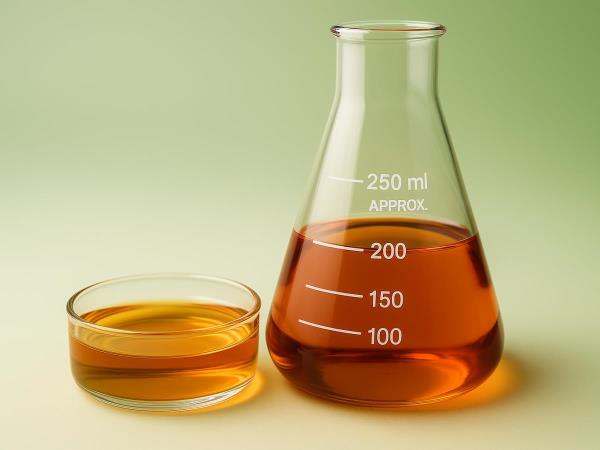
If you are wondering which ingredient deserves your attention, start looking for high-fructose corn syrup (HFCS), which very often appears as a replacement for ordinary sugar. It is made from corn starch: according to the U.S. Food and Drug Administration (FDA), the starch is first broken down into glucose, and enzymes then convert part of that glucose into fructose. The finished product is a liquid made of glucose, fructose and roughly 20–25% water.
Unlike table sugar, in which glucose and fructose are bound together, in HFCS the two sugars float freely. Its big advantage for manufacturers is price: high-fructose corn syrup has long been noticeably cheaper than sugar, especially in the United States, and it is easy to mix into drinks, sauces and baked goods.
Read the Label: It Is Hiding in Places You Would Never Expect
Food manufacturers use corn syrup on a massive scale. Read the labels and you will be surprised where it turns up. Nutrition resources such as Healthline list soft drinks, fruit-flavoured juices, ketchup, salad dressings, breakfast cereals, packaged bread, sweetened yogurts, cereal bars, ice cream, pancake syrups and even applesauce among common sources.
The World Health Organization (WHO) points out that much of the sugar we eat today is "hidden" in processed foods that we do not think of as sweets. One tablespoon of ketchup can contain about a teaspoon of sugar, and a single can of a sugar-sweetened soft drink up to ten teaspoons.
When you read the ingredients, pay attention to one more thing. In Europe, corn syrup often appears under different names. It may be listed as glucose-fructose syrup, which corresponds to HFCS 42 (about 42% fructose), or as fructose-glucose syrup, which corresponds to HFCS 55 (about 55% fructose). You may also see the older term isoglucose. The rule of thumb is simple: the name that comes first shows which sugar is present in the larger amount.
What Does the Research Actually Say?
The study that made headlines was led by Dr. Marcus Goncalves and Dr. Lewis Cantley at Weill Cornell Medicine and published in Science. Mice genetically predisposed to intestinal tumors received a modest daily dose of HFCS, comparable to a person drinking about one can of a sweetened soft drink a day. The tumors in these mice grew larger and more aggressive, even though the animals did not become obese.
The researchers themselves urged caution. They noted that they could not show that the syrup causes new tumors, because these mice develop tumors even on a sugar-free diet. The study suggests a possible mechanism, not a proven risk for people, and more human research is needed.
Another area researchers are watching is the liver. Fructose is processed mainly in the liver, and large amounts may encourage the liver to produce more fat. The Cleveland Clinic therefore recommends eating foods sweetened with HFCS only sparingly. At the same time, the FDA notes that the ratio of fructose to glucose in HFCS 42 and HFCS 55 is similar to that of ordinary sugar, so many experts believe the main issue is simply too much added sugar of any kind, rather than corn syrup alone.
Why Is It So Hard to Stop at One?
There is one more thing typical of foods sweetened with corn syrup: they can be very hard to put down.
Surely you have experienced it: you start with one biscuit and end up finishing the whole box. Check the label again, and there is a very good chance you will find corn syrup, often alongside fat and salt, a combination food technologists know is especially hard to resist.
Scientists have been debating for years whether sugar can be "addictive." In a well-known experiment published in PLoS ONE, researchers at the University of Bordeaux found that when rats could choose between sweetened water and intravenous cocaine, 94% preferred the sweet taste. The authors suggested that our sweet-taste receptors evolved in an environment where sugar was scarce and may not be well adapted to today's intensely sweet foods.
However, the picture in humans is more nuanced. As experts explained to the Harvard Gazette, sugar can increase cravings and encourage compulsive eating, but by current clinical criteria it is not classified as an addictive substance like alcohol or nicotine. A review in the International Journal of Environmental Research and Public Health goes further, arguing that the pleasure of sweet taste should not be confused with true addiction. What most experts agree on is that sweet, highly processed foods are designed to make us want more, and that our habits around them can be retrained.
How Much Sugar Is Too Much?
The WHO guideline recommends that both adults and children limit free sugars to less than 10% of their daily energy intake, and suggests that reducing this to below 5%, roughly 25 grams or six teaspoons a day, may bring additional benefits. This includes corn syrup, table sugar, honey, syrups and fruit juices, but not the natural sugars found in whole fruit, vegetables and milk.
Practical Tips from a Nutritionist
- Read the ingredients list, not just the front of the pack. Look for "glucose-fructose syrup", "fructose-glucose syrup", "corn syrup" or "isoglucose".
- Be wary of "light" and "low-fat" labels. When fat is removed, sugar is often added to restore flavour, exactly the trap Damon Gameau set out to expose.
- Swap sweet drinks for water, mineral water or unsweetened tea. Drinks are one of the largest sources of added sugar.
- Choose plain yogurt and sweeten it yourself with fresh fruit or a little cinnamon.
- Make your own sauces and dressings from simple ingredients; it takes minutes and puts you in control.
- Cut back gradually. Many readers tell us that after a few weeks with less sugar, foods they once loved suddenly taste far too sweet.
One of our readers, a mother of two, shared that she started checking labels after noticing that her children's "fruit" yogurt listed glucose-fructose syrup as the second ingredient. "I switched to plain yogurt with berries and a drizzle of honey on weekends," she wrote. "At first they complained, but within a month they no longer asked for the old one."
Keep Reading on Foodwhisper
- 5 Foods That Shorten Your Lifespan
- Hello, and Fattening: Foods that Sabotage Your Diet
- Why is it dangerous to eat these foods for breakfast
Information on this website is for educational purposes only and is not medical advice.
expert, nutritionist
 Would you like to be informed about news on the website?














|

