


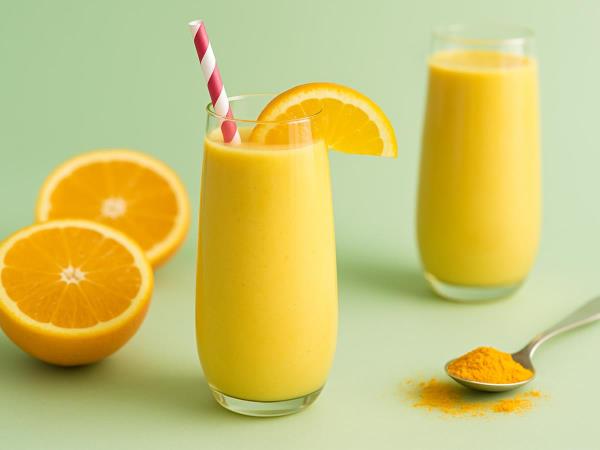



Turmeric in a Glass of Orange Juice: A Morning Habit That May Do More for Your Body Than You Think
expert, nutritionist
What if one of the easiest upgrades to your morning routine was already sitting in your spice cupboard? A Japanese study found that women who took curcumin, the active compound in turmeric, for eight weeks saw an improvement in blood vessel function that matched the improvement seen in women who exercised regularly over the same period. That finding helped turn a humble kitchen spice into one of the most talked-about breakfast additions of the last decade. There is an important catch, though, and we will get to it.
A Hollywood Legend's Golden Habit
Turmeric has quietly found its way into many famous kitchens. According to HELLO! magazine, Sir Michael Caine learned about turmeric from his wife Shakira, who grew up with the spice as part of her family traditions. The same report lists Gwyneth Paltrow, Victoria Beckham and Daisy Ridley among other well-known fans of the "golden spice." Their habits are not proof of anything medical, of course. Still, they show how a tradition that is thousands of years old in South Asian kitchens has become an everyday ritual for people around the world.
Nothing Miraculous, Just a Good Habit
There is nothing miraculous about this tip. You mix freshly squeezed orange juice with turmeric and drink it with your breakfast. Many people who try it say it gives them a pleasant, bright start to the day. The drink combines the natural vitamin C of oranges with the polyphenols of turmeric, so it can be a valuable part of a varied diet that supports energy, a healthy metabolism, normal immune function and overall well-being.
Orange juice brings more than color to the glass. Oranges are an excellent source of vitamin C, a nutrient that contributes to the normal function of the immune system and helps protect cells from oxidative stress, as explained by the NIH Office of Dietary Supplements. Turmeric adds curcumin, a natural yellow pigment that researchers have studied extensively for its antioxidant and anti-inflammatory properties. A review published in the journal Foods summarizes this research.
What the 2012 Study Really Found
The research most often quoted in connection with this drink was published in 2012 in the journal Nutrition Research. Scientists from the University of Tsukuba in Japan divided 32 postmenopausal women into three groups. One group made no changes, one group did moderate aerobic exercise training, and one group took a daily curcumin supplement for eight weeks.
The result was striking. Flow-mediated dilation, a measure of how well blood vessels relax and widen, improved to a similar degree in both the curcumin group and the exercise group. The control group showed no change. As NutraIngredients reported at the time, the researchers themselves said the mechanism was still unclear and that further studies were needed.
A few details matter here. The study used a specially formulated, highly absorbable curcumin supplement, not orange juice with kitchen turmeric. It was also a small study focused on one group of women. It does not prove that the drink prevents heart disease. It does suggest that curcumin is an interesting compound for blood vessel health and deserves more research.
What Else Research Is Exploring
Turmeric and curcumin have been studied in many areas. Laboratory and early human studies have looked at their possible role in:
- supporting the body's natural defenses against bacteria and viruses,
- comfort during the cold and flu season,
- normal liver function,
- brain health and memory with aging,
- balancing inflammation and supporting joint comfort, including in people with arthritis,
- easing stiffness and discomfort in the joints.
These are promising areas, but most results are preliminary. The National Center for Complementary and Integrative Health (NCCIH) notes that turmeric has been studied for many conditions but that strong evidence is still limited for most of them. A comprehensive review in Frontiers in Nutrition reached a similar conclusion, highlighting the antioxidant and anti-inflammatory potential of curcumin while calling for more well-designed human trials. If you are interested in other ways to enjoy this spice, read our article Warm Water with Turmeric Against Winter Troubles.
How Much Turmeric Should You Use?
Older versions of this recipe often call for 20 grams of turmeric per glass, which is roughly three tablespoons. That is far more than the amounts normally used in cooking. It also makes the drink very bitter and can upset the stomach. As a nutritionist, I recommend a much gentler approach:
- 1 glass (about 250 ml) of freshly squeezed orange juice
- ½ to 1 teaspoon of ground turmeric, or a thumb-sized piece of fresh turmeric root, grated
- a pinch of freshly ground black pepper
- optionally, a few drops of lemon juice or a little grated ginger
Why black pepper? Curcumin on its own is poorly absorbed. A frequently cited study in Planta Medica showed that piperine, the natural compound in black pepper, can greatly increase curcumin's availability in the body. Curcumin is also fat-soluble, so drinking the juice alongside a breakfast that contains some healthy fat, such as yogurt, nuts or an egg, may help too. Stir the drink well before every sip, because turmeric tends to settle at the bottom.
Timing matters as well. Citrus juice on an empty stomach does not suit everyone, especially people with a sensitive stomach, so it is best enjoyed with your breakfast rather than before it. You can read more about this in our article Why is it dangerous to eat these foods for breakfast.
What Readers Tell Us
A reader in her sixties told us she swapped her usual glass of plain orange juice for the golden version two winters ago. "I can't say it changed my life," she wrote, "but it became a little ritual I look forward to. It made me pay more attention to the rest of my breakfast, too." Another reader, a keen amateur cyclist, likes to drink it after his morning ride. He admits the first attempt, with far too much turmeric, "tasted like drinking curry," so he now sticks to half a teaspoon.
These experiences reflect what most nutrition experts would say. The value of the habit lies less in one magic ingredient and more in building a colorful, plant-rich routine that you actually enjoy and keep up. For more ideas on getting the most out of everyday ingredients, see Foods We Use Incorrectly.
Who Should Be Careful
Turmeric used in normal food amounts is generally considered safe for most people. Concentrated supplements and very large amounts are a different story. The LiverTox database of the U.S. National Institutes of Health describes rare cases of liver problems linked to turmeric and curcumin supplements. Talk to your doctor or pharmacist before making turmeric a daily habit if you:
- take blood-thinning medication or medication for diabetes,
- have gallbladder problems or gallstones,
- are pregnant or breastfeeding,
- are scheduled for surgery,
- have a liver condition.
Keep in mind that orange juice also contains natural sugars. One glass a day with a meal fits well into a balanced diet. People who watch their blood sugar may prefer a smaller glass or juice diluted with water.
A Useful Addition, Not a Shortcut
Of course, this does not mean you can drink a glass of this juice and then stop being active. It is, however, a pleasant and potentially beneficial addition to your daily diet. The same Japanese researchers who studied curcumin also confirmed the benefits of regular exercise, and the American Heart Association still recommends at least 150 minutes of moderate physical activity per week for adults. So pour yourself a golden glass, enjoy your breakfast, and then lace up your shoes. Whatever you do, don't skip your morning exercise.
Information on this website is for educational purposes only and is not medical advice.
expert, nutritionist
 Would you like to be informed about news on the website?














|

