





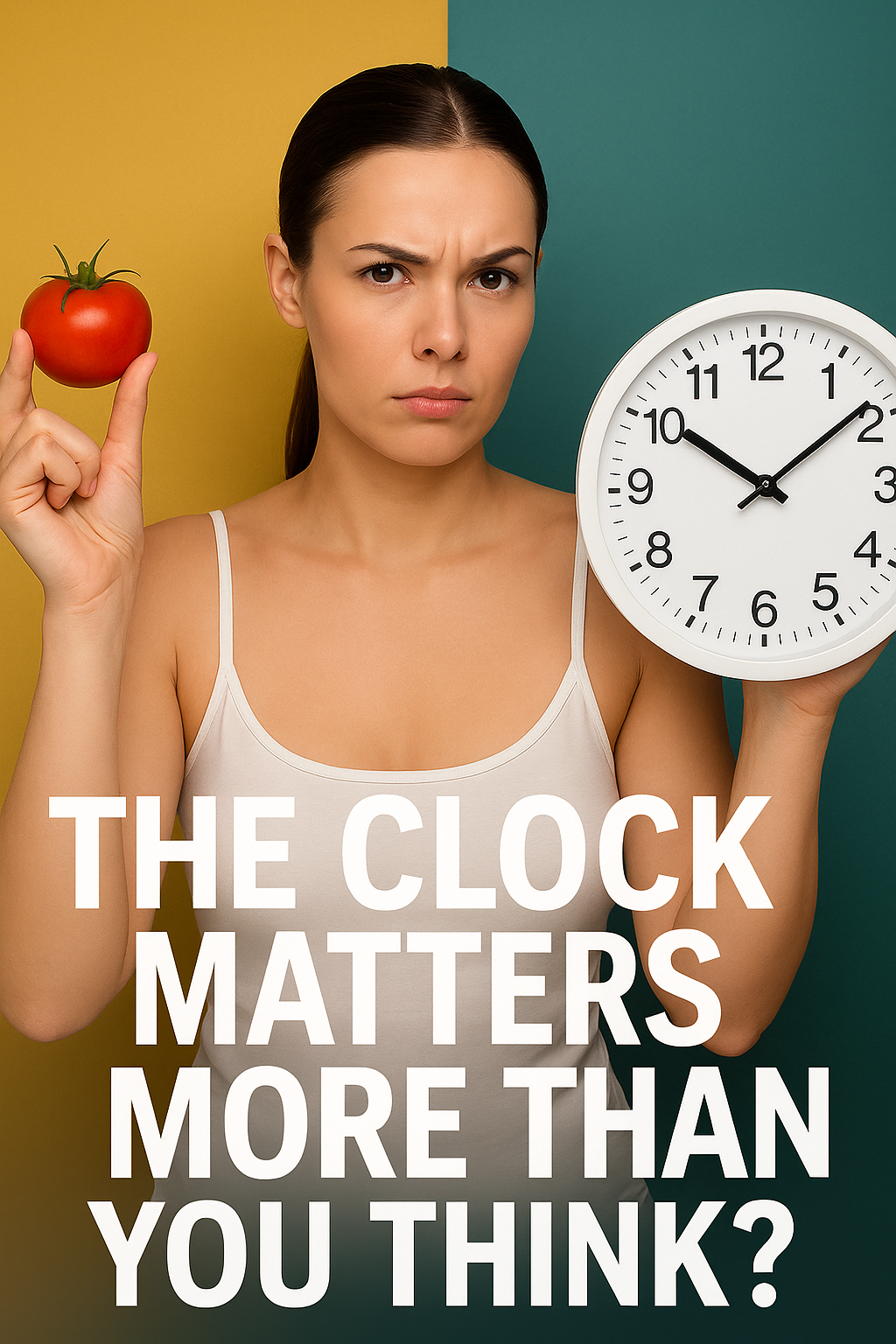


What Time Should You Eat Breakfast, Lunch and Dinner? The Clock Matters More Than You Think
expert, nutritionist
What Time Should You Eat Breakfast, Lunch and Dinner? The Clock Matters More Than You Think
A widely reported survey of British eating habits, backed by a growing body of chrononutrition research, suggests that when we eat may influence how our body handles food. Breakfast shortly after 7 am, lunch around 12:30 pm and dinner before 6:30 pm could be a simple, gentle way to work with your internal clock rather than against it.
Two people eat exactly the same meal, with the same calories and the same ingredients. One finishes it at 6 pm, the other at 10 pm. According to researchers at Brigham and Women's Hospital and Harvard Medical School, their bodies may not treat that meal the same way. In a carefully controlled trial, published in Cell Metabolism in 2022, eating later in the day was linked to stronger hunger, fewer calories burned while awake and changes in fat tissue that favored storage. The menu stayed the same. Only the clock changed.
So what time is best for breakfast, lunch and dinner? The answer is more precise than most of us would expect.
How a Football Legend Built His Day Around the Clock
Few athletes have been as open about living by the clock as seven-time Super Bowl champion Tom Brady. His own company, TB12, has described a typical day that begins around 6 am, with dinner served at about 6 pm and lights out around 9 pm. In his book The TB12 Method, Brady explained that dinner is the last thing he eats each day, and that if he has dessert at all, he prefers to have it after lunch so the extra sugar does not keep him awake at night, as reported by CNBC. Whatever you think of some of his stricter food rules, the rhythm is striking: early meals, a consistent bedtime and the same wake-up time, day after day, well into his forties.
Most of us are not professional athletes, but readers who have tried something similar often describe the same experience. One reader told us that after moving her dinner from 8:30 pm to just after 6 pm, she stopped raiding the fridge at night, slept more soundly and woke up actually hungry for breakfast for the first time in years. "I didn't change what I ate," she said. "I only changed when."
Your Body Runs on a Schedule, Day and Night
We have written before about waking up suddenly in the middle of the night and how the body carries out carefully timed tasks while we sleep: the liver and kidneys keep working, tissues repair themselves and the body clears away the by-products of the day. But just as these processes follow a set timetable at night, there are also processes during the day that seem to be "pre-programmed."
Scientists call this the circadian rhythm, an internal clock of roughly 24 hours that influences hormones, body temperature, digestion and how we handle blood sugar. Researchers such as Satchin Panda at the Salk Institute have spent years studying how the timing of meals interacts with this clock, and a whole new field, often called chrononutrition, has grown out of that work.
That is why there are certain hours of the day when our body appears to be better prepared to deal with food. Popular articles sometimes claim that at these "safe" hours you can eat as much as you like without gaining weight. That is an exaggeration: the total amount and quality of what you eat still matters most. But good timing may give your body a helpful advantage.
Take Note!
Keep in mind that the times below are set for people who wake up around 7 am. If you got up at 6 am today, there is no need to rush to the table. You can wait for the ideal time to come. However, if you regularly sleep until around 8 am (what counts is the rhythm you keep for more than three days in a row), simply add one hour to each of the times below.
The Ideal Times to Eat, According to the Survey
Breakfast: The most important rule is not to eat breakfast before 7 am. The optimal time is said to be 7:11 am.
Lunch: Have lunch between noon and 1 pm, with the optimal time being 12:38 pm.
Snacks: The ideal snack times are 11:01 am, 3:14 pm and 9:31 pm (if you are still awake). The late-evening one should be light, such as a few nuts, a small yogurt or a piece of fruit, rather than a second dinner.
Dinner: And dinner? Eat no later than 6:14 pm.
These times were widely reported in the British press and later summarized by outlets such as GoodtoKnow. They came from an analysis of the eating habits of more than 800 Britons, who were followed for almost a year, with no notable differences between the seasons. The minute-by-minute precision makes a great headline, but it is best to read these figures as a friendly guide rather than a strict rule. Being within half an hour or so of these times is what really counts.
If breakfast worries you, it is worth knowing which foods make a poor start to the day. We covered this in Why is it dangerous to eat these foods for breakfast.
What Science Says About Meal Timing
The survey figures are not the only reason to think about the clock. Several well-designed studies point in the same direction:
An earlier lunch may support weight management. A study led by Professor Marta Garaulet of the University of Murcia followed 420 people on a 20-week weight-loss program. Those who ate their main meal before 3 pm lost more weight than those who ate it later, even though their calorie intake and activity levels were similar. The results were published in the International Journal of Obesity.
A bigger breakfast and a lighter dinner. In a study published in the journal Obesity, women who ate a larger share of their daily calories at breakfast rather than at dinner achieved better results in weight loss and blood sugar levels over 12 weeks. The old saying "eat breakfast like a king, lunch like a prince and dinner like a pauper" suddenly sounds less like folk wisdom and more like science.
Late dinners and blood sugar. A randomized trial published in The Journal of Clinical Endocrinology & Metabolism compared the same dinner eaten at 6 pm and at 10 pm. After the late meal, participants had higher blood sugar levels and burned less of the fat from their meal overnight.
Eating earlier in the day. A small but carefully controlled study published in Cell Metabolism in 2018 found that when men with prediabetes ate all their meals within a six-hour window ending in mid-afternoon, their insulin sensitivity and blood pressure improved, even without losing weight.
A thorough review in the journal Nutrients brings much of this together, noting that late meals, especially those eaten within two hours of bedtime, may reduce the body's ability to handle glucose. It also highlights that people differ: "morning types" and "night owls" may respond to meal timing in different ways.
These studies are often small, and many were carried out in people with overweight, so they do not prove that the clock alone determines your weight. But taken together, they suggest that meal timing is a factor worth paying attention to, alongside what and how much we eat.
Why a Regular Sleep Schedule Matters Just as Much
Because meal timing is tied to our inner rhythm, it is important to go to bed at roughly the same time every evening and to wake up at the same time every morning. Don't forget that the body appears to adjust to changes after about three consecutive days. That is why it matters just as much to always go to bed and get up at roughly the same time as it does to eat at the right hour.
Sleep and appetite are closely connected. Short or irregular sleep can affect the hormones that control hunger and fullness, which may make evening cravings harder to resist. We explored this in more detail in When you sleep too little, your belly grows.
How to Put This Into Practice
Start with dinner. If you usually eat late, try moving your evening meal 15 to 30 minutes earlier each week until it lands closer to 6 or 7 pm.
Make breakfast count. A breakfast with protein and fiber, such as eggs with whole-grain bread, oatmeal with nuts or yogurt with fruit, tends to keep you full longer and may reduce the urge to snack later.
Keep lunch in the early afternoon. Aim for noon to 1 pm, and try not to push your main meal past 3 pm.
Choose smart snacks. Mid-morning and mid-afternoon snacks can help you avoid arriving at the dinner table ravenous. Just watch out for the usual traps described in Hello, and Fattening: Foods that Sabotage Your Diet.
Protect your sleep. Keep a steady bedtime and wake-up time, even at weekends, so your body's clock has a stable rhythm to follow.
Adapt to your life. Shift workers, parents of young children and people with particular health needs may not be able to follow a textbook schedule. Consistency within your own routine is more realistic, and still worthwhile.
The Bottom Line
The exact minute on the clock is less important than the overall pattern: a regular breakfast, lunch in the early afternoon, a lighter and earlier dinner, and steady sleep habits. What you eat will always matter most, but when you eat may be the small adjustment that helps everything else work a little better.
Information on this website is for educational purposes only and is not medical advice.
expert, nutritionist
 Would you like to be informed about news on the website?















|

