





The Blood Cancer Medicine Learned to Control: How Targeted Drugs Changed the Outlook for Chronic Myeloid Leukemia Patients
expert, nutritionist
Twenty years ago, a diagnosis of chronic myeloid leukemia (CML) meant patients had, on average, only a few years left. Today, thanks to a class of drugs called targeted therapies, many people with CML take a daily tablet, attend periodic check-ups, and otherwise get on with full, active lives. It's one of the stories oncologists themselves point to as a genuine turning point in modern cancer care — while stressing that "manageable" is not the same as "cured," and that every patient's course is different.
But the story starts much earlier than the medicine itself.
A Discovery Made in 1960
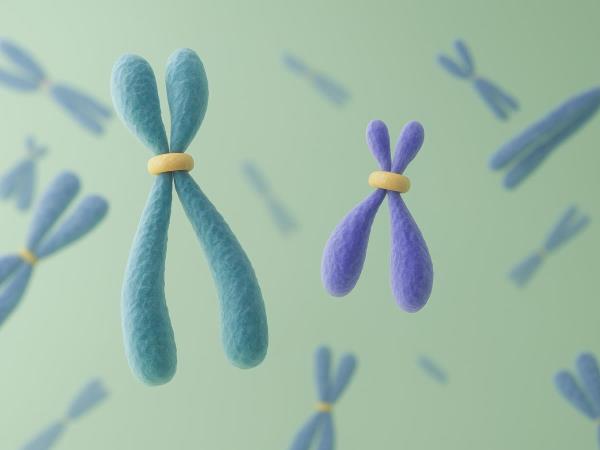
Back in 1960 — the same year the world was fixated on the space race — researchers Peter Nowell and David Hungerford at institutions in Philadelphia noticed something odd while studying leukemia cells: one chromosome, number 22, looked abnormally short in patients with CML. It became known as the Philadelphia chromosome, and it was the first time scientists had linked a specific chromosomal change to a specific cancer.
CML develops from a single mutated blood stem cell, which is why it can take three to five years before it's even picked up, often incidentally, on a routine blood test. In its early, chronic phase, most patients have no symptoms at all. As the disease can progress — through an accelerated phase and, in some cases, into a phase resembling acute leukemia — patients may develop anemia, changes in white blood cell and platelet counts, and an enlarged spleen, which can cause abdominal pressure and early fullness. Early warning signs tend to be vague and easy to dismiss: fatigue, bloating, low-grade fever, night sweats, breathlessness, and unexplained weight loss.
The disease remains uncommon — Slovenia records around 20 new cases a year, keeping the total patient population at roughly 300 — but it is now considered one of the more manageable forms of leukemia when caught and treated appropriately.
"I Was Diagnosed Extremely Late"
At a press conference marking World CML Day, observed every September 22 in reference to the two chromosomes involved in the disease, patients have shared what the diagnosis actually feels like from the inside. Among them is Milena Remic, diagnosed with CML back in 2006, who has described how unremarkable her early symptoms seemed: persistent tiredness, some fluid retention in her legs — something she hadn't even experienced during pregnancy — and mild anemia. A blood test flagged abnormal cell counts, and she was referred urgently to hematology, by which point the disease had already progressed to its acute phase.
She began targeted therapy immediately to slow the disease, but by then a stem cell transplant was necessary. None of her closest relatives — her mother, her sister, or her then eight-year-old daughter — were a match. A donor was eventually found through the German donor registry, and three months after diagnosis she received a stem cell transplant at the Department of Hematology at Ljubljana's University Medical Centre (UKC Ljubljana). Recovery meant a heavily suppressed immune system and months of precautions, including sending her daughter to stay with relatives to reduce infection risk. Two years after the transplant, the disease returned — but targeted drugs brought it back under control.
Remic now serves as vice-president of the Slovenian Association of Lymphoma and Leukemia Patients (L&L), which connects Slovenian patients with the international CML Advocates Network, a global platform where patients exchange experiences — a connection the association sees as essential, since access to the best available medicines shouldn't depend on where a patient happens to live.
A More Public Story: Tanja Fajon
An even more widely known account belongs to Tanja Fajon, the Slovenian politician and former Member of the European Parliament who has served as the country's Minister of Foreign and European Affairs. Fajon was diagnosed with CML in 1995 and has spoken publicly, including around Rare Disease Day, about living with the condition ever since.
She has described how a routine referral for recurring abdominal pain led to a sharply elevated white blood cell count and, within a week, her diagnosis. At the time, she says, doctors were candid that patients with CML typically survived around seven years. Early treatment involved daily injections that brought flu-like symptoms, fever, and joint pain. For years no matching stem cell donor could be found, and when one eventually was, she weighed a high-risk transplant abroad against an experimental option: a newly developed targeted drug being tested in the United States.
She chose to wait, and was among the first patients in Slovenia to receive that targeted therapy — the medication that, by her account, halted her disease. She still takes it daily, and describes her CML as having been in sustained remission for years, with checkups every four months. She has also spoken about trade-offs that came with those decisions, including not having children, while describing a full and active life since — something she attributes as much to medicine as to sport, work, and the people around her.
From Injections to a Daily Pill
The treatment that changed both of these stories has a name: imatinib, sold as Gleevec. It emerged from decades of basic research into the Philadelphia chromosome, culminating in the 1990s when researcher Brian Druker and colleagues developed a compound designed to switch off the specific enzyme the mutation produces. According to the American Society of Hematology, it was one of the first cancer drugs designed to target a specific molecular driver of a disease rather than attacking all rapidly dividing cells indiscriminately — the approach now known as targeted therapy, which has since been applied well beyond CML. It was approved by U.S. regulators in 2001. Slovenian hematologists began treating patients with imatinib shortly after, and an early clinical follow-up published through Slovenia's digital library, dLib, documented good early responses among the first Slovenian patients treated.
Because of drugs like this, stem cell transplants — once close to the only option in advanced cases — are now reserved for a minority of patients, and some who respond exceptionally well are even evaluated for carefully monitored treatment pauses under specialist supervision. Where an active flare can involve a mass of leukemic cells roughly the size of a melon, sustained response to treatment can bring that down to something closer to the size of a peppercorn.
None of this happens without ongoing specialist care and monitoring — treatment decisions, dosing, and any change of course sit firmly with a patient's own hematology team, not with general advice. Slovenian hematologists have also cautioned that stopping or skipping targeted therapy without medical supervision carries real risk: in comments reported by 24ur, hematologist Dr. Irena Preložnik Zupan of UKC Ljubljana's Department of Hematology noted that unmanaged progression from chronic to acute-phase disease can happen within a few years, after which the disease behaves far more aggressively.
The People Behind the Progress
Slovenia's position among the more advanced countries in CML care is credited in large part to the clinical and research work of specialists at the Department of Hematology at UKC Ljubljana — among them Dr. Irena Preložnik Zupan, Dr. Matjaž Sever, Dr. Tadej Pajič, and Dr. Helena Podgornik — alongside the patient advocacy and fundraising work of the L&L Association, which has helped fund equipment and rehabilitation programs for blood cancer patients in Slovenia over the past two decades.
Information on this website is for educational purposes only and is not medical advice.
expert, nutritionist
 Would you like to be informed about news on the website?















|

