


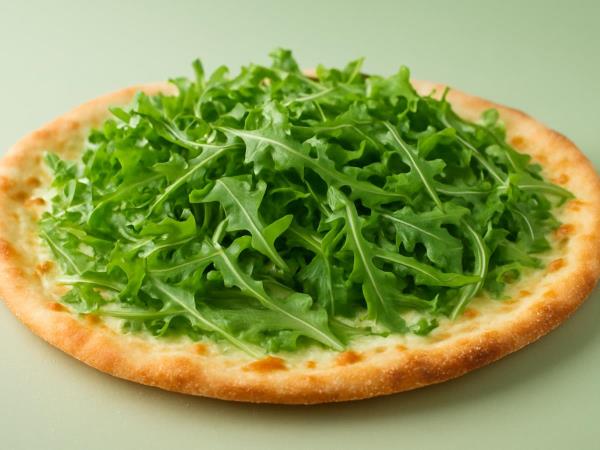



This Humble Salad Leaf Might Be the Most Overlooked "Superfood" on Your Plate
expert, nutritionist
Most of us treat arugula as an afterthought — a peppery garnish scattered on top of a pizza or tossed into a salad bowl almost as decoration. Few people stop to think that this modest little leaf is, gram for gram, one of the most nutrient-dense vegetables you can buy. According to the U.S. Department of Agriculture's FoodData Central database, 100 grams of raw arugula contains roughly 25 calories alongside meaningful amounts of vitamin A, vitamin C, vitamin K, folate, calcium, potassium, iron and magnesium. That's an unusual amount of nutritional value for something so light and so cheap.
It turns out arugula's fan club is older — and more famous — than you might expect. Frank Sinatra was, by several accounts, a creature of habit at Patsy's Italian Restaurant in Manhattan, and one of his standing orders was a simple arugula salad tossed with olive oil, red wine vinegar and basil. He returned to it again and again over the years, and Patsy's still marks his birthday every December by serving the dishes he loved — arugula salad included. It's a small reminder that this "plain" green has been quietly earning devoted fans, famous and otherwise, for a very long time. (Read more about Sinatra's arugula salad at Patsy's.)
Why Arugula Deserves More Credit Than a Simple Garnish
Don't let its delicate appearance fool you. Arugula contains vitamin A (in the form of beta-carotene, important for skin and eye health), vitamin C (which supports normal immune function), vitamin K (involved in blood clotting and bone metabolism), and a spread of B vitamins. Add to that magnesium, calcium, iron, potassium, zinc, copper and selenium, and you have a genuinely impressive nutrient profile for a leaf that's mostly water.
If you tried to replicate that spread of nutrients with supplements, you'd likely need several different bottles from the pharmacy. Arugula offers a portion of them in one naturally occurring package — no additives, no fillers.
A Low-Calorie Addition to a Balanced Plate
When people think about eating lighter, bread, sweets and fried food are usually the first things to go. A simpler, gentler habit is to bulk up meals with leaves like arugula: because it's so low in calories, you can add a generous handful to almost any dish without meaningfully changing its calorie count.
Leafy vegetables in general are widely recommended by nutrition authorities as part of a healthy, balanced diet, partly because their fiber content can contribute to a feeling of fullness without adding many calories. Arugula fits that pattern well. It's also worth noting that arugula has long been a fixture of Italian home cooking — and a diet built around vegetables, olive oil, legumes and modest portions, in the Mediterranean style, is one of the more consistently well-regarded eating patterns among nutrition researchers. That's a lifestyle pattern, though, not a single ingredient doing the work — no one food is a shortcut to weight loss on its own.
What Arugula May Offer Your Eyes
Vision problems affect an enormous number of people worldwide. The World Health Organization estimates that at least 2.2 billion people globally live with some form of vision impairment, with age-related macular degeneration among the leading causes of blindness in older adults.
Arugula contains carotenoids — natural plant pigments, including lutein and zeaxanthin, which the eye's macula uses directly and which are thought to help protect retinal cells from oxidative stress. Their role in eye health has real scientific backing: in the National Eye Institute's large AREDS2 trial, a supplement formulation containing lutein and zeaxanthin was found to reduce the risk of AMD progressing to a more advanced stage by about 26% in people who already had signs of the disease. That trial was about a specific supplement formula in an at-risk population, not a claim that eating a salad prevents blindness — but it does help explain why nutritionists generally encourage getting carotenoids from a varied diet, arugula included, as part of overall eye health.
Supporting Strong Bones — and Possibly a Sharper Mind
Bone health conversations usually start and end with calcium, but vitamin K plays an important supporting role too, helping the body direct calcium into bone tissue. A 100-gram serving of arugula provides a substantial share of the recommended daily vitamin K intake.
Vitamin K's story doesn't stop at the skeleton. A pair of 2022 studies published in Frontiers in Nutrition looked at the relationship between vitamin K status and cognitive function in older adults. One, led by researchers at the Tokyo Metropolitan Institute of Gerontology, found that people with markers of lower vitamin K status were more likely to show signs of impaired cognitive performance on standard tests. (Read the study in Frontiers in Nutrition.) These are observational associations, not proof that eating more arugula will prevent memory loss — but they add to a broader, still-developing body of research suggesting that overall diet quality, including vitamin K intake, may be one small piece of healthy brain aging.
Cognitive decline is a significant global concern: the World Health Organization reports that more than 55 million people currently live with dementia worldwide, a figure projected to reach 139 million by 2050 as populations age. No single food changes that trajectory, but public health guidance consistently points to overall diet — rich in vegetables among other things — as one of several modifiable factors worth paying attention to.
Why Arugula Can Be a Thoughtful Addition During Pregnancy
Pregnancy places extra demands on the body, and folate — a B vitamin also known in its synthetic form as folic acid — is one of the more talked-about nutrients for expectant mothers, because adequate intake before and during early pregnancy is linked to a lower risk of neural tube defects in the developing baby.
Arugula is a natural source of folate. The U.S. Centers for Disease Control and Prevention notes that adequate folic acid intake before and during early pregnancy can help prevent many neural tube defects, which is why health authorities recommend women who could become pregnant get enough folate or folic acid from food, fortified products, or a supplement as advised by their doctor. Arugula can be a pleasant, natural contributor to that intake as part of a varied diet — though it isn't a substitute for prenatal supplementation or medical guidance, which is why any pregnancy nutrition plan is best discussed directly with a healthcare provider.
Easy Ways to Eat More Arugula
Despite its slightly exotic reputation, arugula is genuinely simple to use — and often cheaper than a bottle of supplements. A few easy ways to work it in:
- Toss it into a salad with tomatoes and a drizzle of olive oil.
- Layer a few leaves onto a sandwich in place of lettuce.
- Stir it into pasta right at the end of cooking, so it wilts gently and keeps its peppery bite.
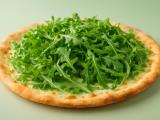
In Italian kitchens, arugula is a familiar pizza topping — the arugula-and-prosciutto combination in particular has become popular well beyond Italy's borders over the past several years. It's also the base of the simple, classic salad Frank Sinatra kept ordering at Patsy's: arugula, olive oil, red wine vinegar and a little basil.
A Green With a Long History
Arugula's popularity isn't new. Food historians trace its cultivation back to the Mediterranean and note that it was already valued in Roman antiquity for its culinary and medicinal reputation, long before it became a familiar bagged salad green in supermarkets around the world. Traditional folk use often credited it with supporting digestion — a claim that lines up reasonably well with what we now understand about its fiber content, which can support regular digestion as part of a varied diet. Some of the more colorful old claims about arugula as an aphrodisiac are better understood as culinary folklore than established science, though it's a fun piece of food history nonetheless.
A Small, Realistic Addition to Your Plate
Arugula isn't a miracle food, and no single ingredient is a substitute for an overall balanced diet, regular movement, and medical care when you need it. What it is, though, is an easy, inexpensive, low-calorie way to add real nutritional value to meals you're already making — a source of vitamins A, C and K, folate, and a handful of minerals, all wrapped in a leaf that costs a fraction of a supplement bottle.
You don't need to overhaul your diet to benefit. Working a handful of arugula into a salad, a sandwich or a bowl of pasta a few times a week is a modest, sustainable habit — and, if a certain blue-eyed crooner's decades-long order at Patsy's is anything to go by, a genuinely enjoyable one too.
Information on this website is for educational purposes only and is not medical advice.
expert, nutritionist
 Would you like to be informed about news on the website?











|

