





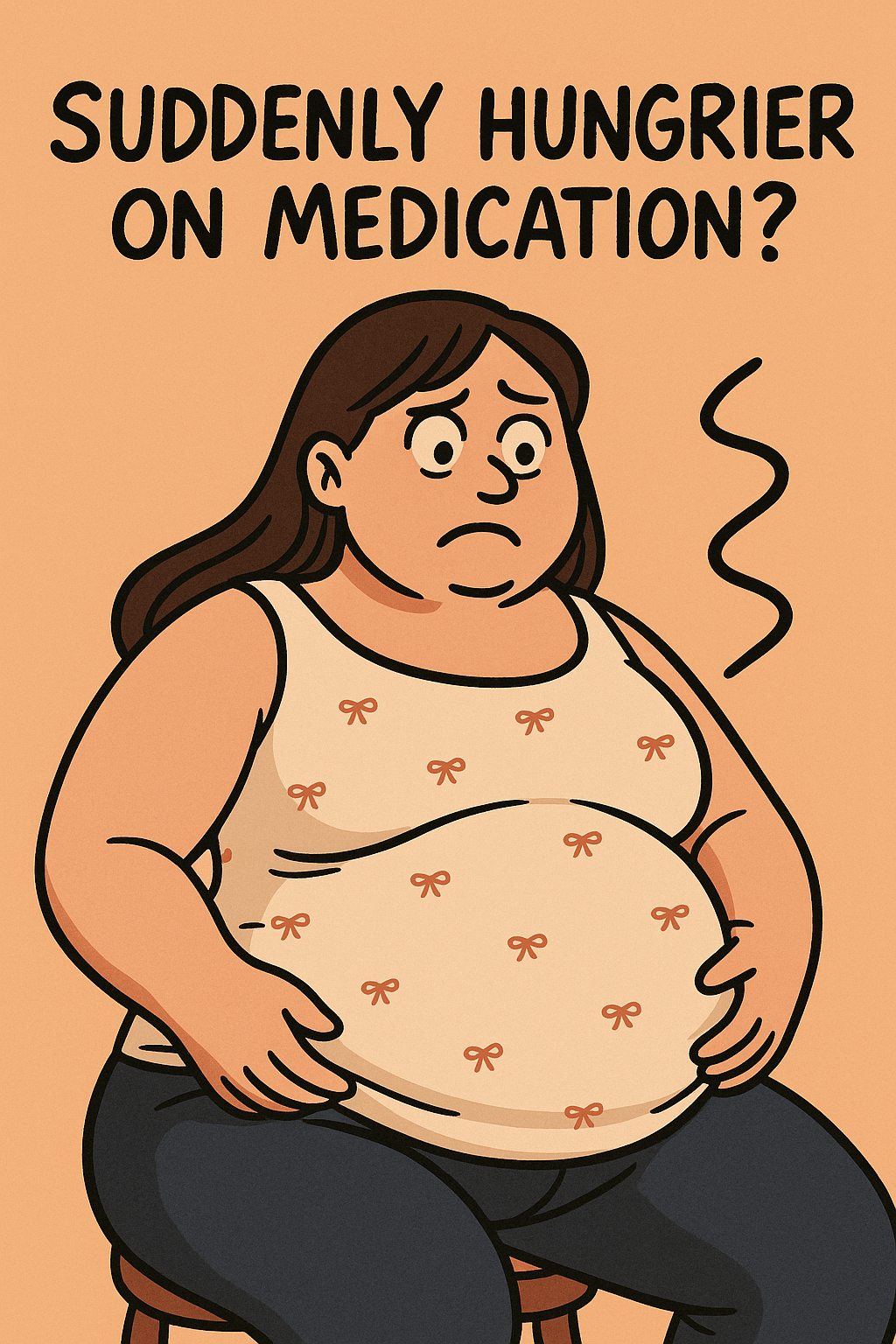
Fit, Frozen, and Medicated: Why Your Appetite May Be Working Against You
expert, nutritionist
You skip the donuts, you show up for your workouts, you take your supplements like a responsible adult — and yet your stomach seems to have other plans. If that sounds familiar, you're not imagining things and you're definitely not alone. Appetite is influenced by far more than what's on your plate: temperature, medication, and even your own fitness routine can all quietly turn up the volume on hunger.
When a Calmer Mind Comes With a Bigger Appetite
TV host Carson Daly went public about noticing weight gain after starting a new anti-anxiety medication, and initially assumed the drug itself was to blame. His doctor offered a different explanation: as his anxiety eased and his mood lifted, his appetite naturally picked back up along with it. It's a good reminder that "why am I suddenly hungrier?" doesn't always have an obvious answer — sometimes it's the medication, sometimes it's the improved wellbeing the medication brings, and often it's some combination of both.
1. Dietary Supplements: A Hunger Boost That May Not Be What It Seems
If you're someone who reaches for effervescent vitamin tablets or mineral supplements, you may have noticed your appetite creeping up shortly after. It's a common observation, but the science behind it is more nuanced than "too much of a nutrient triggers hunger." According to a review of the evidence on vitamins and appetite, taking a multivitamin shouldn't meaningfully increase hunger under normal circumstances — in fact, one study cited found women taking multivitamins reported slightly less hunger, not more. What often seems to be happening instead is that a supplement corrects an underlying shortfall (say, in B-vitamins or vitamin D), and as the deficiency resolves, appetite simply returns to its normal baseline. The same rebound effect is sometimes reported with flavor-heavy pantry staples like bouillon, seasoning mixes, and pre-made sauce bases — foods that make meals more appealing can naturally nudge you to eat a bit more of them. None of this means supplements are "bad" for your waistline; it just means the hunger you're feeling may be your body recalibrating rather than a straightforward side effect.
2. Medications: A Well-Documented Side Effect Worth Knowing About
This is the one with the strongest research behind it. Certain everyday medications are genuinely associated with increased appetite as a side effect, and it's worth knowing which ones, even if the decision to keep taking them is entirely between you and your doctor. Mayo Clinic explains that several antidepressants — including some tricyclics, certain MAOIs, and mirtazapine — are more likely than others to be linked with appetite increases and weight gain, partly through improved mood and partly through the medication's own effects on brain chemistry. Interestingly, the same pattern shows up with some headache and migraine-prevention medications: a 2008 review published in Clinical Therapeutics found that widely used migraine-preventive drugs such as amitriptyline are associated with a tendency toward weight gain, while others, like topiramate, tend to have the opposite effect. If you've started a new prescription and noticed your appetite creeping up, it's a legitimate and well-documented possibility — and a good conversation to have with your prescriber rather than something to just white-knuckle through alone.
3. Your Fitness Routine: The Body Adjusting to a New Normal
Here's a twist that catches a lot of newly motivated gym-goers off guard: starting or ramping up a workout routine can genuinely make you hungrier, at least at first. A study published in the American Journal of Clinical Nutrition, "Dual-process action of exercise on appetite control", found that regular exercise can increase the body's underlying drive to eat, even while simultaneously improving how satisfied you feel after a meal. In other words, your body isn't sabotaging your progress — it's adapting to a new level of energy demand and, over time, tends to find a more manageable equilibrium as your appetite regulation adjusts to the new routine. If you've just started training and feel like you could eat a horse, that's a normal adjustment phase, not a sign that something is wrong or that exercise "doesn't work."
4. Cold Weather: An Old Survival Instinct That's Still Switched On
Long before central heating, colder months meant one thing for early humans: eat more, store more fat, survive the winter. That instinct hasn't disappeared just because most of us now live in heated homes. Research from Maastricht University on how ambient temperature affects the body notes that a drop in core body temperature in colder conditions can nudge the body to seek ways to warm back up — including, for some people, reaching for more food. Interestingly, the reverse also seems to hold: a study from the University of Bedfordshire on ambient temperature and energy intake found that participants resting in a hot room (30{-15696}C) ate noticeably less at a later meal than those in cooler or thermoneutral conditions. So stepping from a sweltering summer day into an over-air-conditioned office may trigger a bit of the same appetite response as stepping outside on a frosty morning — which makes for a fun bit of trivia: in a roundabout way, your air conditioner might be quietly nudging your appetite too.
The Takeaway
None of this is cause for alarm, and it's certainly not a reason to abandon your vitamins, your medication, or your workouts. It's simply a reminder that appetite is a moving target, shaped by chemistry, temperature, and training — not just discipline. If your hunger changes suddenly or dramatically, especially alongside a new prescription, it's always worth a quick chat with your doctor or a registered dietitian rather than guessing on your own.
Information on this website is for educational purposes only and is not medical advice.
expert, nutritionist
 Would you like to be informed about news on the website?















|

