





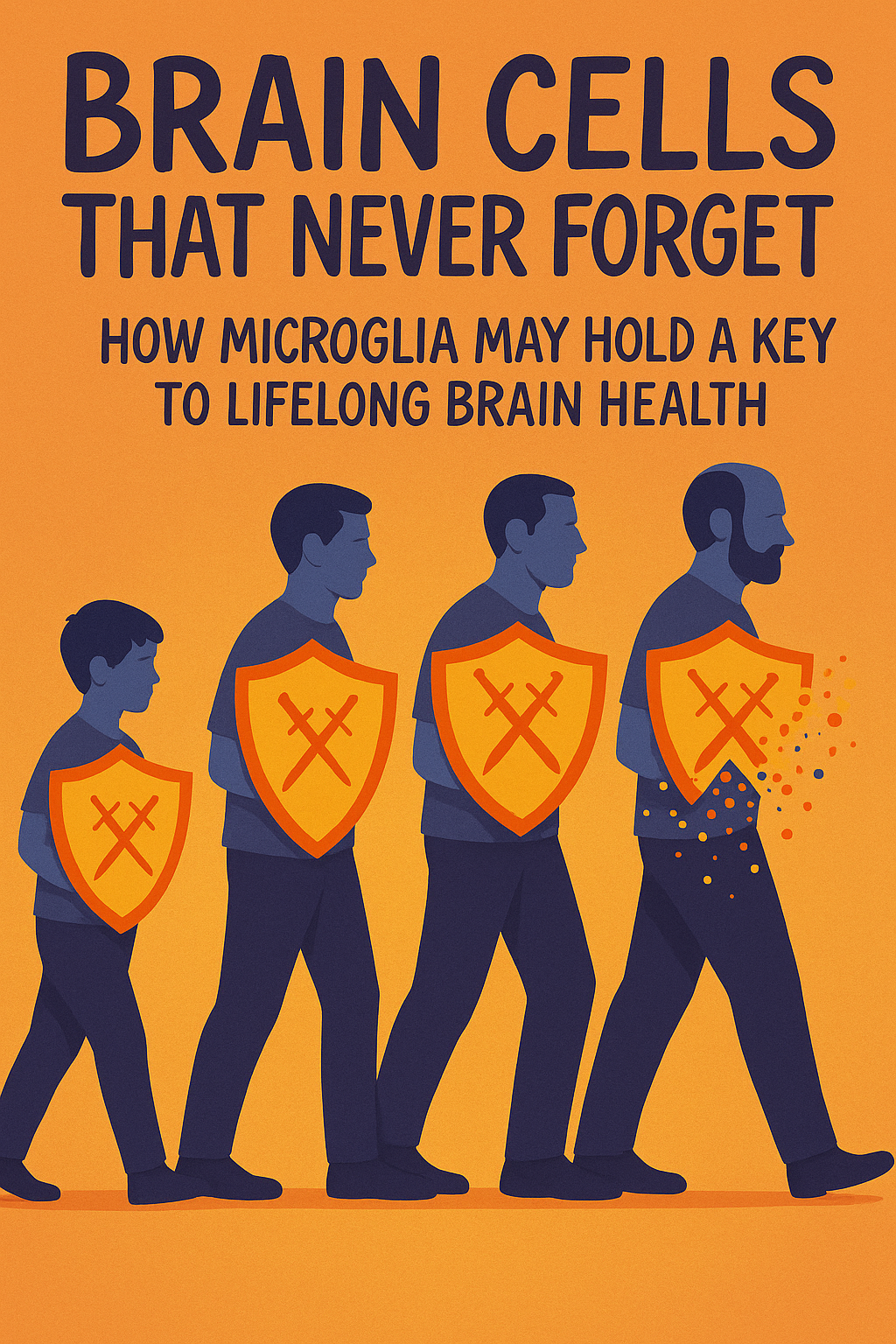
Brain Cells That Never Forget: How Microglia May Hold a Key to Lifelong Brain Health
expert, nutritionist
Imagine a cell in your brain that has been quietly on duty since before you were born, keeping a private record of every infection, every wave of inflammation, every difficult season your body has lived through. That is roughly the picture that has emerged from a growing body of neuroscience research into cells called microglia — and it may eventually help explain why some people's brains seem to age more gracefully than others.
When a Hollywood superstar found out his brain was at risk
In 2022, actor Chris Hemsworth learned, while filming the documentary series Limitless, that he carries two copies of the APOE4 gene, the variant most strongly associated with a higher lifetime risk of Alzheimer's disease. Rather than keep the news private, Hemsworth chose to share it publicly, saying he hoped it would motivate others to take preventive steps early. Since then, he has spoken openly about reshaping his daily routine around stress reduction, better sleep, and regular movement — habits that align closely with what brain-immune researchers are now investigating at the cellular level.
A memory system built into your immune defenses
Most vaccines work on a simple principle: they leave a "trace" in the immune system so that, the next time a particular virus shows up, the body already knows how to fight back. That trace is only possible because the immune system has a built-in capacity for memory. The catch is that this same memory doesn't just store useful defenses — it also holds onto the traumas, stress responses, and fears the body has experienced along the way. These aren't purely negative; a certain amount of "learned" immune caution can help the body respond faster the next time it faces a similar threat.
Something similar happens with selective memory in the mind, which helps us set aside the hardest experiences, or with reflexive responses we're not even consciously aware of, but which matter enormously in critical moments. Researchers are finding that the immune system appears to run on a comparable logic.
What the Tübingen researchers actually found
A team at the German Center for Neurodegenerative Diseases (DZNE), working with the Hertie Institute for Clinical Brain Research and the University of Tübingen, published a widely discussed study in the journal Nature showing that microglia — the brain's resident immune cells — can be reshaped for a long time by earlier episodes of inflammation. Because microglia live for years inside the brain, the researchers wanted to know whether inflammation experienced elsewhere in the body could leave a lasting imprint on these cells, and whether that imprint might later influence brain health.
As summarized by the research news outlet Alzforum, the team found that repeated inflammatory triggers could shift microglia into two very different long-term states: some became more prone to inflammation and less effective at clearing harmful amyloid deposits, while others settled into a calmer, more protective mode. In animal models of Alzheimer's-type pathology, these shifts measurably changed how the disease progressed — evidence that the brain's immune memory isn't just a curiosity, but something that may genuinely shape long-term brain health.
It's worth being clear about what this research does not show: it doesn't mean stress or past illness causes Alzheimer's disease, and much of the work so far has been done in animal models. But it does add weight to something researchers have suspected for a while — that chronic inflammation and microglial activity are closely intertwined with neurodegenerative processes, which is why interest in this field keeps growing.
Can calming the mind help calm the immune system?
One of the more intriguing threads researchers are pulling on is whether practices like meditation, yoga, or breathing exercises can influence this same stress–immune relationship. A review published in the International Journal of Yoga found that relaxation-based techniques appear to help regulate the hormonal and cytokine signals that connect the nervous system to the immune system, particularly under conditions of chronic stress. Exactly how — and how much — this translates into brain-level changes in humans is still being worked out, but it's a promising enough area that it continues to draw scientific attention.
If stress management is something you're looking to build into daily life, our piece on whether fried foods may be linked to anxiety and depression covers some simple, accessible techniques — including breathing exercises and short meditations — that are often recommended alongside a balanced diet.
Supporting the body's inflammation response through everyday choices
While no food or habit can "reset" immune memory on its own, general inflammation-related research has looked at several everyday choices that may support the body's overall balance. Diets rich in polyphenols and healthy fats, for instance, are a recurring theme — our article on olive oil and its effect on the body when taken on an empty stomach outlines some of the findings on oxidative stress, and our piece on what happens to the body when pears are eaten regularly looks at antioxidant-rich foods more broadly. For an immune-focused angle, our recipe for a quick immune-supporting smoothie is a simple way to work more of these ingredients into a daily routine.
Plenty of open questions remain
Scientists are still working out exactly how signals from the rest of the body reach and reshape these long-lived immune cells in the brain, and how much of this process can realistically be influenced through lifestyle. What is becoming clearer is that the brain's relationship with the immune system is far more dynamic — and far more shaped by lived experience — than researchers once assumed. As Chris Hemsworth's own approach shows, the response many experts currently recommend isn't a single magic fix, but a combination of stress management, movement, sleep, and diet, applied consistently over time.
Information on this website is for educational purposes only and is not medical advice.
expert, nutritionist
 Would you like to be informed about news on the website?















|

