





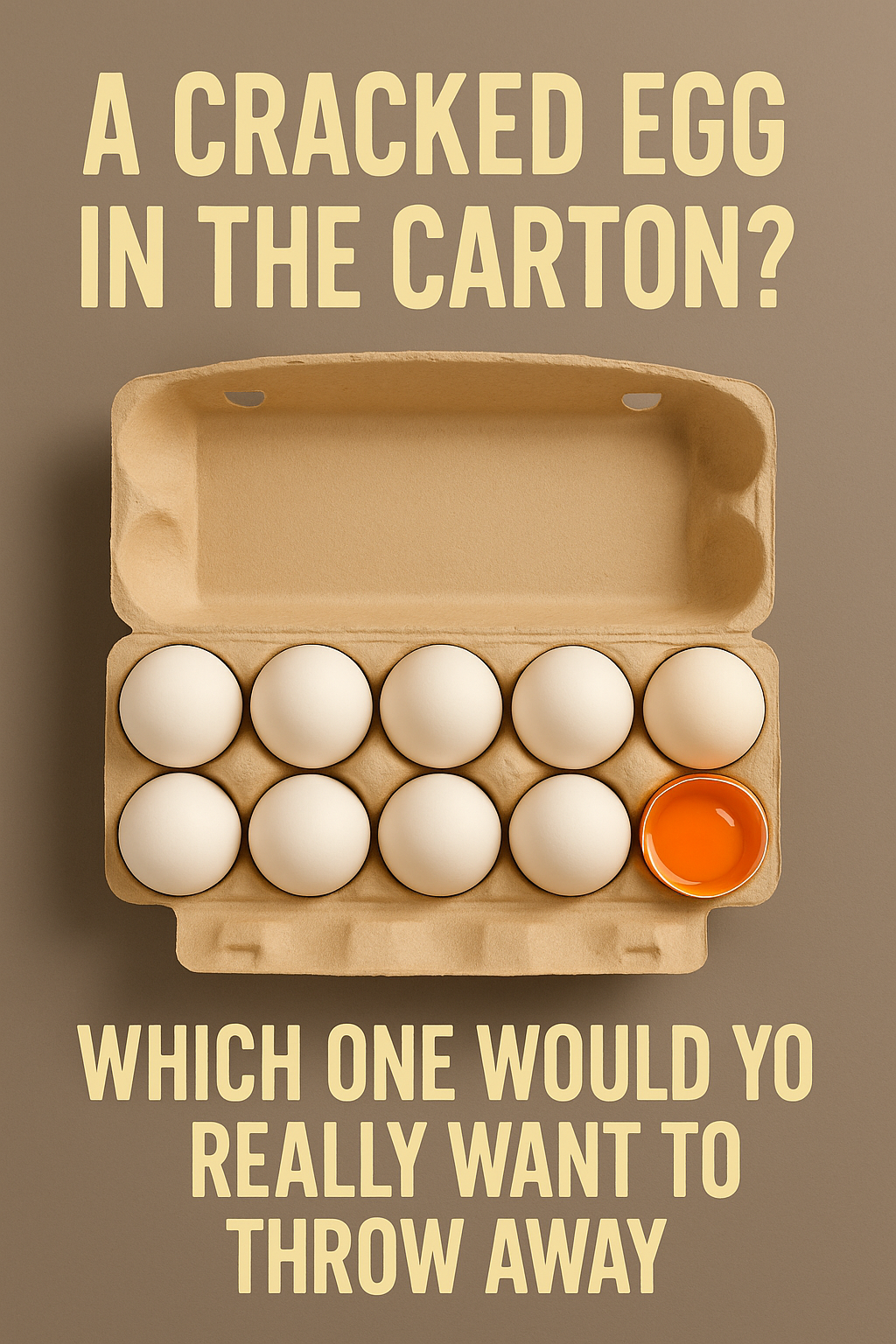

A Cracked Egg in the Carton Isn't Just Ugly — Here's Why It's the One You Really Want to Throw Away
expert, nutritionist
You reach into the fridge, grab a carton of eggs, and notice one shell has a hairline crack. It looks harmless enough — the egg is still intact, nothing is leaking, nothing smells off. Most people shrug and use it anyway. That instinct, it turns out, is exactly backwards, and understanding why is a genuinely useful piece of kitchen knowledge.
When One Bad Egg Became a National Scandal
Few stories illustrate how seriously food authorities take egg contamination better than what happened in the United Kingdom in December 1988. Edwina Currie, then a junior health minister, told a television interviewer that most of the country's egg production was affected by salmonella. The remark — which she later said overstated the situation because of a slip of the tongue — wiped out a large share of the egg market almost overnight and eventually cost her the job. The scandal remains one of the most cited examples of how fast public trust in a basic food item can collapse once bacterial contamination enters the conversation — and how carefully food safety claims need to be worded.
You don't need a national scandal to have a personal one, though. Plenty of home cooks have quietly dealt with a bout of stomach trouble after using an egg that "looked fine," never realizing the carton itself may have been the problem.
Why Eggs Shouldn't Touch — And Definitely Shouldn't Be Mixed Between Cartons
Here's the detail most people never learn: eggs are not supposed to touch each other, and they're not supposed to be moved between cartons. If even one egg in a box is cracked or damaged, food safety practice calls for the entire carton to be pulled and returned — even though the other eggs look completely normal. That's not overcaution. It's because a damaged shell is a doorway, not just a cosmetic flaw.
Salmonella: The Familiar Culprit
Salmonella is the bacterium most people associate with eggs, and for good reason — it's one of the leading causes of foodborne illness linked to undercooked animal-derived foods, including eggs, milk, dairy products, and meat. According to the U.S. Food and Drug Administration, even eggs with clean, uncracked shells can carry Salmonella bacteria that cause foodborne illness, which is why the agency recommends refrigerating eggs, cooking yolks until firm, and never buying eggs with visibly cracked or dirty shells.
Typical symptoms — stomach cramps, a mild fever, general malaise — usually resolve on their own within about a week, according to the U.S. Centers for Disease Control and Prevention. But some infections are so mild that a person never realizes what caused a few uncomfortable days, and the body simply fights it off unnoticed. That's part of why food safety experts don't treat "no obvious symptoms" as the same thing as "no exposure."
The Less Familiar Threat: Campylobacter
Wherever Salmonella shows up, another, less talked-about bacterium often isn't far behind: Campylobacter. It's actually the most commonly identified cause of bacterial foodborne illness in the United States, according to CDC surveillance data, even though it gets far less public attention than Salmonella. Campylobacter can sometimes alter the smell or appearance of a damaged egg in ways that are detectable only to a very practiced eye — which, in practice, means most people will never notice anything unusual at all, as described in the CDC's overview of Campylobacter infection.
Research on how the bacterium behaves inside eggs backs this up: studies have found that Campylobacter has only a limited ability to penetrate an intact eggshell on its own, but once inside — through a crack, for instance — it can persist for a notable stretch of time depending on storage conditions. Food safety researchers at Germany's Federal Institute for Risk Assessment have gone further, specifically recommending that consumers store raw eggs separately from other foods and thoroughly clean any utensils or surfaces that touch eggshells, precisely because contamination can spread invisibly.
This is the quietly unsettling part: an egg carrying Campylobacter can look completely normal — right up until the organism has already settled into someone's gut, where its effects may not become noticeable for some time. So a health issue can develop well after the "harmless-looking" egg is long gone, making the connection hard for anyone to trace back to its source.
Why This Matters for How Stores — and Kitchens — Are Set Up
Some nutrition and food-safety professionals have floated a simple idea worth considering: if hand sanitizer stations make sense at a store's entrance, they arguably make just as much sense at the exit, right where shoppers are handling raw eggs, poultry, and other items that go into their bags and, soon after, their kitchens. A retailer genuinely looking out for its customers might extend that same courtesy for the trip home, not just the trip in.
The Practical Takeaway
- Never combine eggs from different cartons, and never let eggs from a damaged carton touch eggs from an intact one.
- If even one egg in a carton is cracked, treat the whole carton as compromised rather than salvaging the "good-looking" ones.
- Store eggs in their original carton, refrigerated, rather than loose in a fridge door tray, to limit cross-contamination and temperature swings.
- Wash hands and clean any surface or utensil that has touched raw shell eggs, especially a cracked one.
- Cook eggs until the yolk is firm, particularly for children, older adults, pregnant women, or anyone with a weakened immune system.
Information on this website is for educational purposes only and is not medical advice.
expert, nutritionist
 Would you like to be informed about news on the website?















|

