



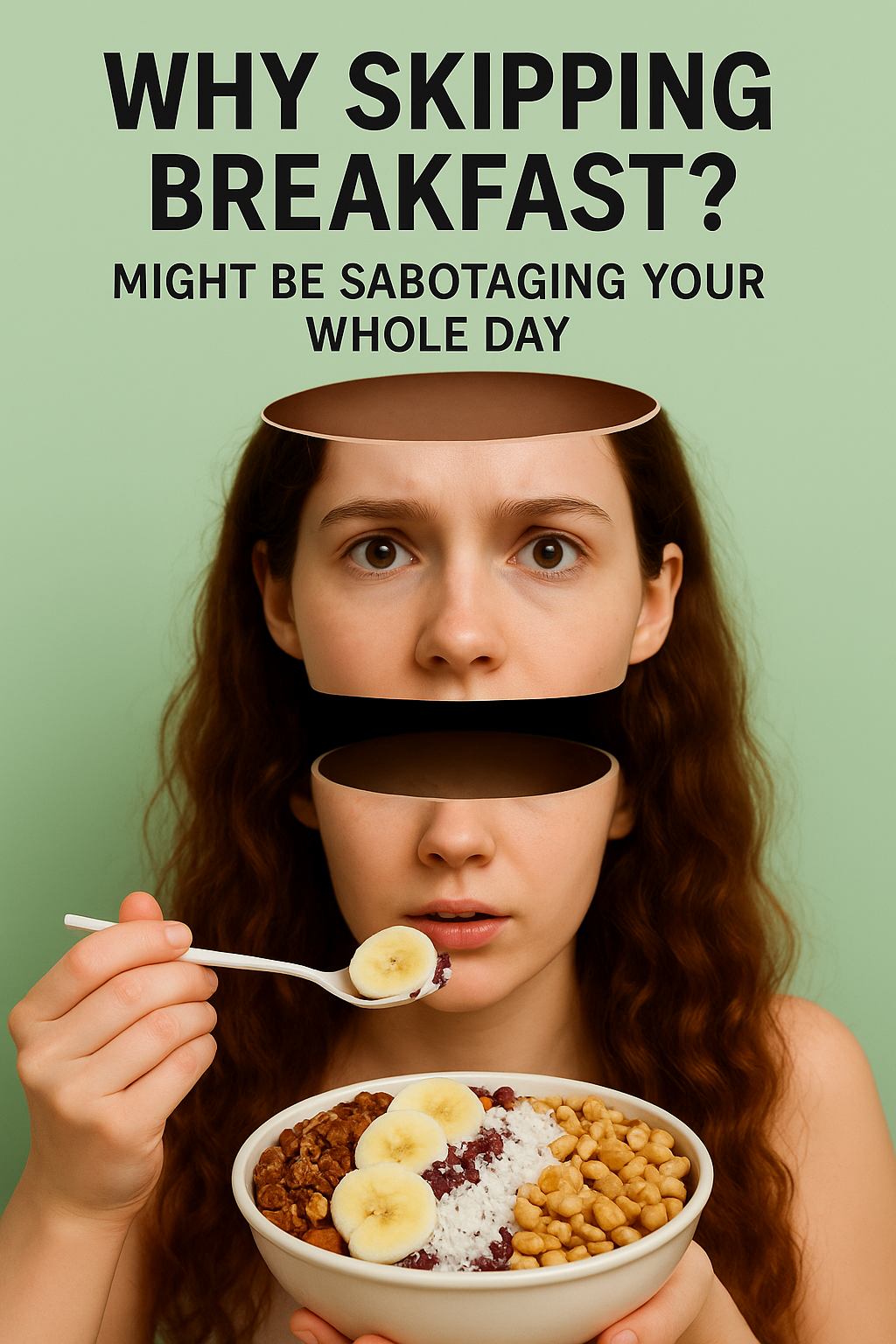


Why Skipping Breakfast Might Be Sabotaging Your Whole Day: 5 Reasons to Rethink Your Morning
expert, nutritionist
It's 3 p.m., you haven't eaten since dinner last night, and suddenly you're standing in front of the office vending machine eyeing everything at once. Sound familiar? That mid-afternoon spiral — snapping at coworkers, inhaling anything within reach, then crashing an hour later — is one of the most common complaints nutritionists hear from people who skip breakfast "to save calories." Ironically, it's often the exact opposite of what actually happens.
Even celebrities argue about this
The debate over breakfast isn't just for dietitians — it once became a very public Hollywood spat. When television physician Dr. Mehmet Oz announced he was "banning breakfast" as part of a new intermittent-fasting program, actor Mark Wahlberg — known for his famously disciplined 4 a.m. workout routine — pushed back hard. He told CNBC that he needed breakfast before training, and the disagreement escalated into a good-natured but very public back-and-forth on Instagram, eventually settled with a joint gym session covered by TODAY. Neither side "won" outright — but the episode is a good reminder that even health experts don't fully agree, and that what works for one body doesn't automatically work for another. What the two men did agree on, eventually, is less important than what it revealed: our morning eating habits genuinely affect how we feel, and that's worth taking seriously.
With that in mind, here are five reasons a regular breakfast tends to make people feel — and function — noticeably better.
1. Fatigue sets in earlier than you'd expect
The most immediate effect people notice is tiredness. When the body hasn't received fuel since the previous evening, it tends to run in a lower gear: concentration slips, reaction time slows, and that mid-morning fog rolls in earlier than it should. Some research links regular breakfast skipping to lower alertness and mood later in the day, though findings vary from person to person and study to study — this is an area where the American Heart Association's 2017 scientific statement on meal timing notes more research is still needed. What tends to follow the fatigue, for many people, is a much stronger appetite later on — by mid-afternoon, it's easy to eat past the point of comfort simply because you're playing catch-up. If mornings already feel rushed, a fast option like the one in Breakfast for more energy before a physically demanding day can help close that gap without adding much prep time.
2. An irregular routine can throw hormones off balance
Eating breakfast some days and skipping it on others keeps the body guessing, and that unpredictability may make it harder to maintain steady hormone levels. Being hungry and active early in the day is also associated with a temporary rise in cortisol, the body's main stress hormone — and elevated cortisol is linked, in some studies, to increased tension and blood sugar fluctuations over time. A Frontiers for Young Minds review by neuroscientist Sarah J. Spencer explains that while short bursts of stress can suppress appetite, cortisol's longer-term role tends to be the opposite — nudging the body to eat more to "replace" the energy it thinks it has used. A related six-month cohort study found that people with higher baseline cortisol and insulin levels were more likely to gain weight over time, though stress, sleep, and genetics all play a role too — it's rarely down to one habit alone. Poor sleep interacts with this cycle as well; the effects are explored further in When you sleep too little, your belly grows — and you won't even notice this on the scale.
3. The body may hold onto fat stores more tightly
When the body senses it's under strain — including the mild physiological stress of prolonged hunger — it tends to prioritize protecting its energy reserves rather than releasing them. This is a normal survival mechanism, not a sign anything is wrong, but it can work against weight-management goals if it happens repeatedly. Chronically elevated blood sugar and insulin resistance are well-documented long-term risk factors tracked by health authorities such as the World Health Organization, whose figures show diabetes prevalence has risen sharply worldwide in recent decades. That said, one skipped breakfast won't undo anyone's health — it's the long-term, repeated pattern that researchers focus on, not any single morning.
4. Mood dips and "hangry" overeating are real, if often exaggerated
The idea that you're "hangry" — hungry enough to feel genuinely irritable — has some grounding in how blood sugar and hunger hormones like ghrelin behave. Show up to work on an empty stomach and it's common to spend the morning thinking about food more than the task at hand, reach for coffee as a stand-in, and then, once food is finally available, eat quickly and past the point of fullness. For many people this pattern feels like flooring the accelerator on a cold engine — uncomfortable, and not particularly efficient. Choosing food thoughtfully in that first hour after waking, rather than grabbing the sweetest option in sight, tends to soften this swing considerably; What not to eat early in the morning (or late at night) goes into which choices tend to help and which tend to backfire.
5. A sensible breakfast is unlikely to be the reason for weight gain
The calories eaten in the morning aren't inherently more "fattening" than calories eaten later — what matters more is your overall pattern across the day. Some dietitians suggest front-loading a larger share of daily intake earlier, when activity levels are usually higher, though the science here is genuinely mixed. A 2014 Frontiers in Public Health review found breakfast skipping was linked to higher obesity rates in some countries but not others, and a randomized trial from the University of Bedfordshire and Loughborough University, published in the British Journal of Nutrition, found teenage girls who skipped breakfast didn't necessarily eat more overall afterward. So rather than a hard rule, it's more accurate to say: if you tend to overeat later in the day when you skip breakfast, a modest morning meal may help smooth that out — and the AHA's statement above notes that regular breakfast eaters tend to show somewhat better markers for blood sugar and insulin management on average.
The takeaway
Breakfast isn't a magic switch, and skipping it once in a while won't derail your health. But for a lot of people, a simple, balanced first meal — rather than nothing, or a sugar-heavy grab-and-go — seems to translate into steadier energy, fewer afternoon cravings, and less of that frantic "hangry" scramble by evening. As with most nutrition questions, what works best comes down to your own body, schedule, and how you feel when you experiment with it.
Information on this website is for educational purposes only and is not medical advice.
expert, nutritionist
 Would you like to be informed about news on the website?















|

