


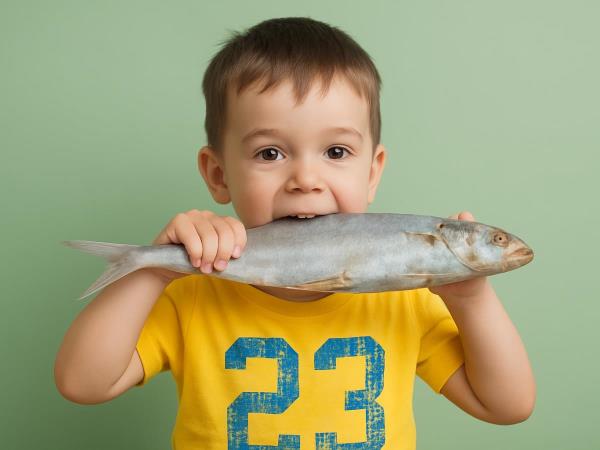


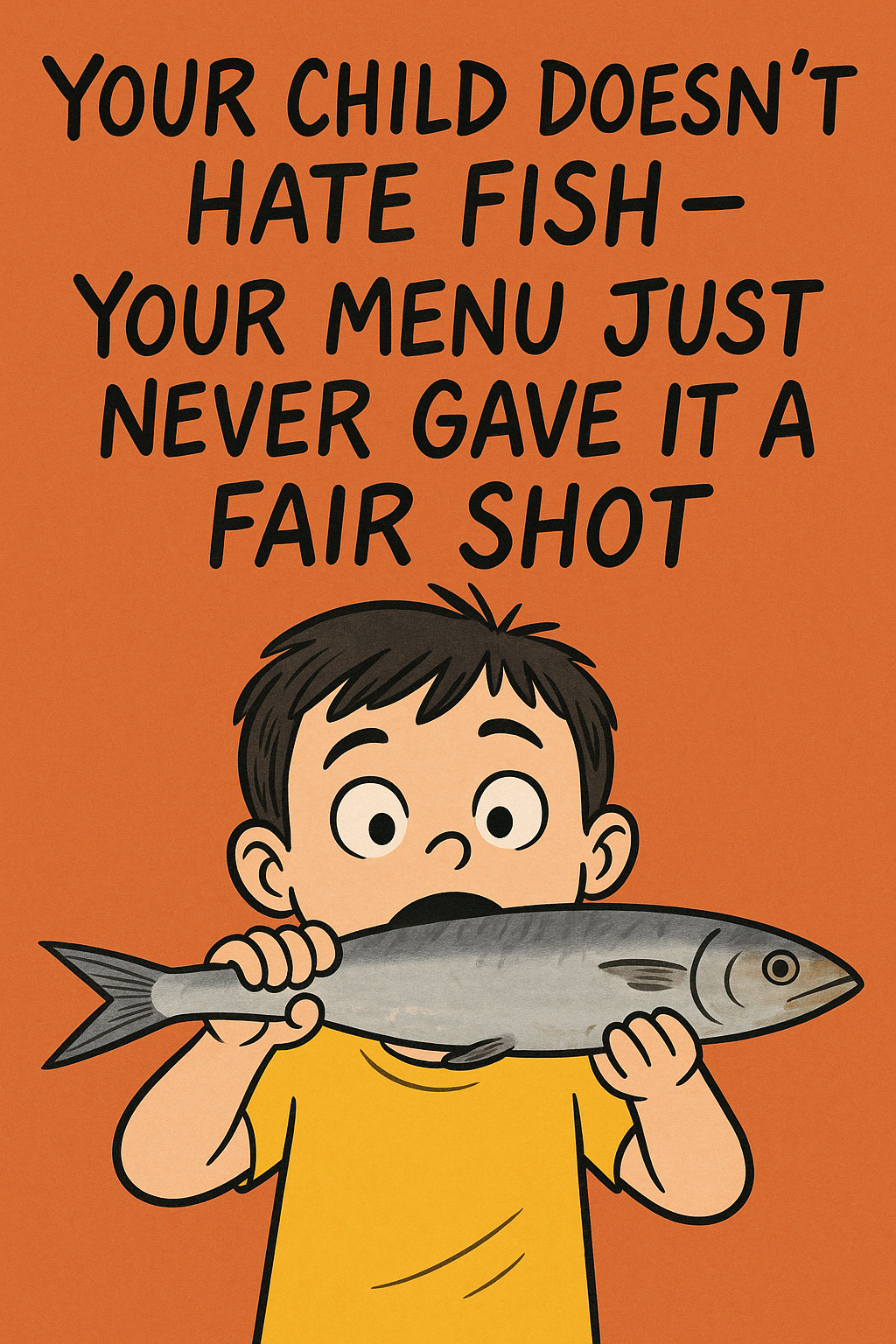
Your Child Doesn't Hate Fish — Your Menu Just Never Gave It a Fair Shot
expert, nutritionist
Picture a five-year-old staring down a piece of baked salmon like it just insulted him personally. Arms crossed. Lips sealed. You could set a clock by the standoff. If this scene sounds familiar, you're not alone — and, more importantly, it's probably not about the fish at all.
One parent, a home cook who blogs about weeknight dinners for a living, has written openly about spending nearly two years unable to get her toddler to touch anything green. She assumed it was a phase, or maybe just her son's personality. It wasn't until she started reading about how food preferences actually form in early childhood that she realized the problem wasn't him — it was the rotation. The same five "safe" meals, on repeat, meant vegetables and fish never had a real chance to become familiar. Once she started quietly reintroducing a new food alongside familiar favorites, without pressure or fanfare, things slowly began to shift.
It's Not a Personality Trait — It's Exposure
Roughly a third of children dislike fish. Nearly half aren't keen on vegetables. Steak, bread, and roast potatoes tend to win by a landslide. At first glance, this looks like kids simply gravitating toward "kid food." But researchers who study eating behavior in early childhood describe something more specific: food neophobia — a wariness of unfamiliar foods that typically peaks between the ages of two and six. It's thought to be an evolutionary hand-me-down: a built-in caution toward new substances, which once may have helped protect young children from eating something harmful before they had the judgment to know better. In a modern kitchen, though, that same caution mostly just means a lot of untouched broccoli.
Put simply, children tend to like what shows up most often on their plate, and treat rarely-served foods with suspicion. A 2012 study published in the journal Appetite followed two-year-olds and found that food neophobia was linked to trying — and liking — fewer vegetables and fruits overall, and that a mother's own food preferences tended to be mirrored in her child's. In other words, a family's everyday menu isn't just feeding a child — it's actively teaching their palate what counts as "normal."
Why "Just One Bite" Rarely Works — and What Does
It's tempting to think a single stern dinner-table standoff will do the trick. The research says otherwise. A classic study by researcher Leann Birch and colleagues, published back in 1987, found that simply looking at a new food repeatedly does very little — but tasting it repeatedly, even in small amounts, gradually shifts a child's liking for it. That's the basis for what nutrition researchers now call the "repeated exposure" approach.
More recent work backs this up. A 2023 study in Child & Family Behavior Therapy had children with a tendency toward food neophobia taste an unfamiliar vegetable eight separate times, spaced a couple of days apart. By the end, both intake and liking had increased significantly — the vegetable had, quite literally, grown on them. A broader review published by Aprifel's food and health newsletter puts a number on it: infants may shift their preference after a single exposure, but older children and adults often need somewhere in the range of 10 to 15 tries before a new food starts to feel familiar rather than foreign. One awkward dinner is never going to be a fair test.
None of this is a guarantee, and it's not a substitute for professional guidance if a child's eating is genuinely restrictive or a source of ongoing concern — that's a conversation worth having with a pediatrician or a registered dietitian rather than a blog post. But for typical, garden-variety pickiness, the pattern researchers describe is encouraging: dislike is often provisional, not permanent.
The Family Menu Is a Mirror
If a child refuses to eat something, it's rarely just about that one food. It's usually a reflection of what the whole household eats, how often, and how it's presented. A pantry stocked mostly with familiar, ultra-safe options — however understandable that is on a busy weeknight — quietly narrows a child's sense of what's edible in the first place.
This is also where the clock matters. Many researchers in this field describe early childhood, roughly up to around age five, as the period when taste preferences are most flexible and most open to influence from what's actually served at home. That doesn't mean the door slams shut on a sixth birthday — but it does mean the effort tends to pay off more, for less resistance, the earlier it starts.
What Might Actually Help
- Serve it more than once — a lot more than once. A new food deserves closer to a dozen quiet appearances before you draw conclusions about whether a child likes it.
- Skip the standoff. Pressuring, bribing, or negotiating over a single bite tends to build tension around a food rather than familiarity with it.
- Let them see it before they're asked to eat it. Involving kids in shopping or simple prep — rinsing vegetables, plating fish fillets — builds familiarity that can make tasting feel like less of a leap.
- Model it yourself. Children are far more likely to try what they regularly see the adults around them actually eating and enjoying.
- Rotate the "safe" foods too. A wider baseline rotation, even among familiar foods, keeps mealtimes from narrowing further over time.
Why Fish Specifically Is Worth the Effort
Fish tends to get singled out by picky eaters more than most foods, likely thanks to its texture and smell being less familiar than, say, chicken or pasta. That's a shame nutritionally, since fish is one of the main food sources of long-chain omega-3 fatty acids. According to a 2019 clinical report from the American Academy of Pediatrics, most children eat far less fish and shellfish than recommended, even though these foods are described as valuable sources of protein, vitamin D, and those omega-3 fats — with the AAP generally suggesting one to two weekly servings, adjusted to a child's age. As always, parents should check current guidance from their own pediatrician on serving sizes and safe choices, since recommendations can vary by fish type and a child's age.
Give It Time, Not Pressure
A child who turns their nose up at fish today isn't making a final decision — they're reacting to something unfamiliar, the same way most of us might eye a strange dish warily before trying it. Force rarely works, but patience, repetition, and a bit of modeling from the adults at the table often do. And if the fish still isn't a hit by the time a child hits their teenage years and starts branching out on their own? That's a perfectly normal timeline too — plenty of adventurous eaters start exploring flavors more on their own terms as they get older.
Information on this website is for educational purposes only and is not medical advice.
expert, nutritionist
 Would you like to be informed about news on the website?













|

