


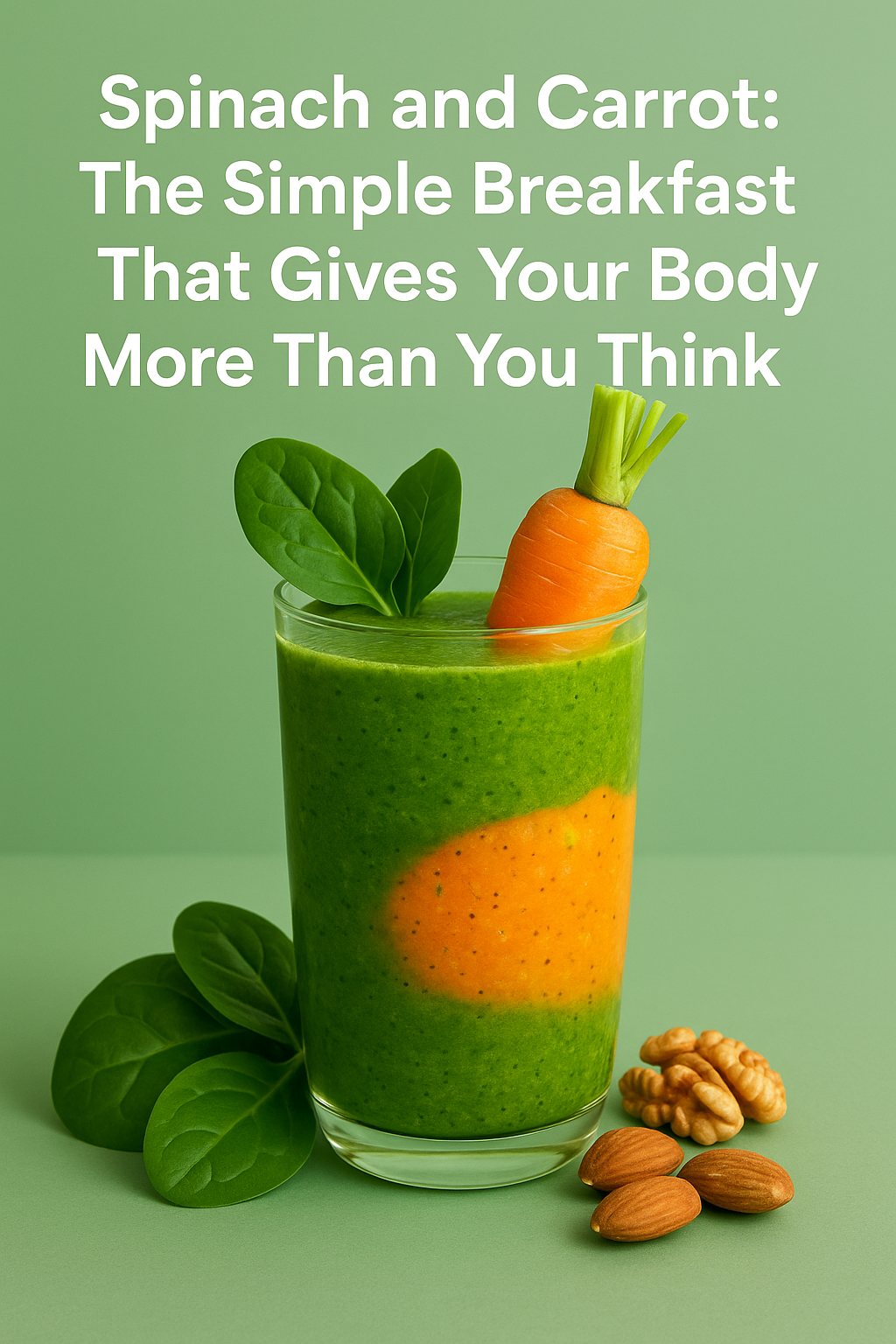


Spinach and Carrot: The Simple Breakfast That Gives Your Body More Than You Think
expert, nutritionist
Some mornings, toast and coffee just don't cut it. Your eyelids feel heavy, your focus is foggy, and by 11 a.m. you're already reaching for a second cup. What if the fix wasn't more caffeine, but a five-minute plate of green leaves, orange root, and a handful of nuts?
Home cooks who've swapped their usual breakfast for a spinach-and-carrot plate a few times a week often describe feeling noticeably steadier through the morning — less of that mid-morning slump, more of a calm, sustained kind of energy. That everyday observation lines up neatly with what nutrition science already tells us about iron, vitamin C, and plant antioxidants working together.
Why Spinach Deserves a Spot on Your Plate
We all know spinach is an excellent source of plant-based iron, magnesium, B vitamins, and protein. According to the NIH Office of Dietary Supplements, green leafy vegetables such as spinach are among the best natural sources of magnesium, a mineral involved in muscle function, nerve signaling, and energy production. Spinach also contains a remarkable amount of vitamin C, which — as explained in 7 types of vegetables that heal the body — helps the body absorb non-heme iron, the type of iron found in plant foods. On top of that, spinach is simply delicious: mildly sweet, with a soft, almost buttery texture once lightly cooked.
And there's more. Spinach is rich in healthy fiber and is remarkably versatile — enjoy it raw or cooked, stirred into soups and sauces, served alongside meat dishes, or blended into a smoothie. If you want to get the most out of its folate content too, pairing spinach with a source of vitamin C (like a squeeze of lemon) can meaningfully boost absorption, as outlined in Foods That Improve Nutrient Absorption.
The Upgrade: Spinach, Carrot, and Nuts Together
On its own, spinach is already a nutritional powerhouse. But combine it with fresh carrot and a small handful of unsalted nuts, and you get a genuinely well-rounded, energy-dense, vitamin-rich meal with an excellent flavor.
Carrots contribute beta-carotene, which the body converts into vitamin A — the NIH's vitamin and mineral fact sheets list carrots and spinach together as two of the richest natural sources of this nutrient. Nuts like almonds and walnuts round out the plate with healthy fats, plant protein, and minerals such as magnesium and manganese, and — as noted in 3 tricks to never be hungry — a small handful is enough to keep you satisfied for hours, which makes this combination a smart choice if you're also trying to avoid mid-morning snacking.
Ingredients
- Fresh spinach
- Fresh carrot
- Unsalted nuts (almonds or walnuts recommended)
Preparation
The simplest option: put all the ingredients into a blender, add a little warm water if needed, and blend into a smooth, vibrant juice.
Alternatively, lightly steam the carrot, top it with crushed nuts, drizzle with olive oil, and enjoy it as a warm salad — a slice of whole-grain bread on the side makes it a complete, satisfying meal.
What About the Chlorophyll?
One notable feature of this kind of green, leafy meal is its chlorophyll content — the pigment that gives spinach its deep green color. Chlorophyll has drawn growing scientific interest for its antioxidant properties. Early laboratory and animal research, including a study published in the journal PeerJ, found that chlorophyll improved resistance to oxidative stress and extended lifespan in a model organism, while a broader scientific review in Frontiers in Nutrition summarizes chlorophyll's antioxidant and anti-inflammatory activity observed in laboratory studies. It's worth being clear, though, that most of this evidence still comes from cell, animal, or early-stage research rather than large human clinical trials — so it's best to think of chlorophyll-rich greens as a welcome part of a varied diet rather than a treatment for any condition.
That said, a colorful, vegetable-forward plate like this one can be a genuinely pleasant way to give your body a nutritional boost — whether you're feeling low on energy in the afternoon or simply want a lighter option before bed.
The Science Behind Pairing Spinach With Vitamin C
The idea of eating iron-rich greens alongside a vitamin C source isn't just a kitchen tradition — it's backed by decades of nutrition research. A classic study published in the American Journal of Clinical Nutrition found that ascorbic acid (vitamin C) has a key physiological role in facilitating the absorption of non-heme iron from food. More recent overviews, such as this explainer from The Blood Project, describe how vitamin C helps convert iron into a form the body can absorb more easily in the small intestine. This is exactly why combining spinach with carrot — itself a source of vitamin C — makes nutritional sense, beyond just taste.
A Simple Habit Worth Trying
Try this plate the next time you're feeling tired, whether at breakfast or even as a light meal before bed. It won't replace a balanced diet or medical advice for ongoing fatigue, but as an easy, tasty addition to your weekly routine, it's hard to beat: a few fresh ingredients, five minutes of prep, and a plate that genuinely gives your body more than you might expect.
Give it a try. Enjoy your meal!
Information on this website is for educational purposes only and is not medical advice.
expert, nutritionist
 Would you like to be informed about news on the website?















|

