





You Believed Them Your Whole Life, but They're Lies: 5 Health Myths It's Time to Bury
expert, nutritionist
Some health advice gets repeated so often, by so many well-meaning parents, teachers and grandparents, that it eventually starts to feel less like folklore and more like established science. But when researchers have actually gone looking for evidence behind these familiar warnings, several of them have quietly fallen apart. Here are five of the most persistent ones — and what the data really shows.
1. You Have to Drink 8 Glasses of Water a Day
This one is only half wrong. Water genuinely does a lot of heavy lifting in the body: it helps regulate essential processes, dilutes excess sodium, and supports the removal of waste products. So the instinct behind "drink more water" isn't misplaced. The catch is the specific number. According to the EFSA and NASEM hydration guidelines, total daily fluid needs vary by age, sex, activity level and climate — and a large share of that fluid already comes from food and other drinks, not just glasses of plain water. In fact, as a physician quoted by UCHealth explains, the "eight glasses" figure appears to trace back to a 1940s recommendation whose fine print — that food-derived water counts too — got lost somewhere along the way.
The practical takeaway: thirst and the color of your urine are generally better day-to-day guides than a fixed glass count, and it is possible to overdo plain water intake to the point of straining the kidneys. If you're curious how hydration habits connect to weight and metabolism, Foodwhisper has previously looked at this in Fight kilograms with water, but not just ordinary water!
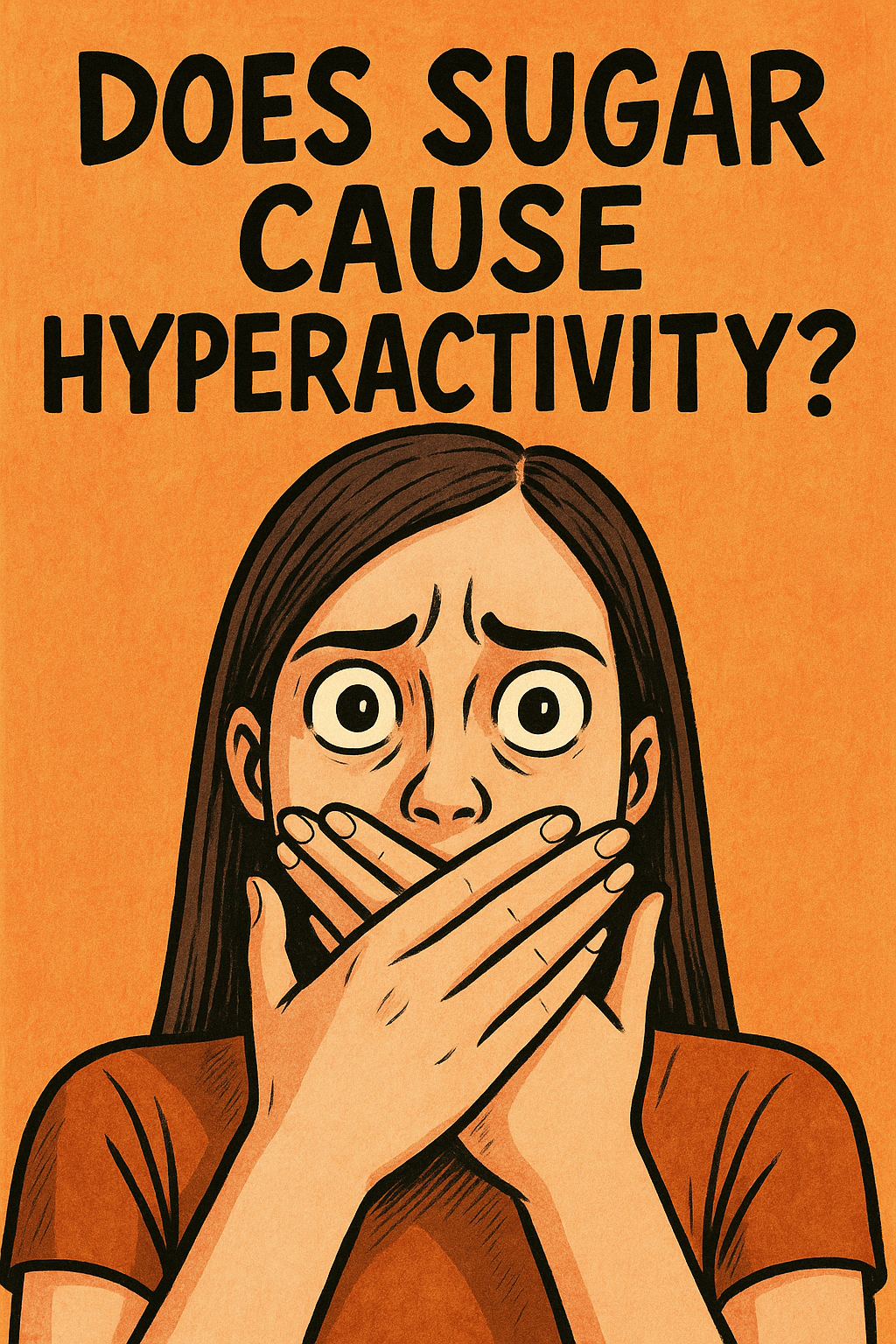
2. Sugar Causes Hyperactivity in Children
Ask any parent who has survived a children's birthday party, and they'll swear sugar turns kids into tiny chaos engines. Yet this is one of the most thoroughly tested claims in pediatric nutrition — and it hasn't held up. A landmark meta-analysis published in JAMA, which pooled 23 controlled experiments, found no meaningful link between sugar intake and hyperactive or disruptive behavior in children, a conclusion later echoed by follow-up research summarized by the World Sugar Research Organisation.
So why does the myth feel so true? Researchers point to expectation bias: in one study, parents who were simply told their child had eaten sugar rated them as more hyperactive — even when the child had actually received a sugar-free placebo. Add a room full of cake, balloons and excited friends, and it's easy to see how sugar got blamed for what is really just a stimulating environment. Some nutrition scientists have also proposed that carbohydrates may support the production of calming neurotransmitters rather than agitating ones, though this remains an area of ongoing research rather than settled fact.
3. Reading in Dim Light Ruins Your Eyesight
Every parent, and seemingly every optician, has said it: don't read in the dark, you'll wreck your eyes. It's true that reading in low light isn't the most comfortable habit — your pupils have to dilate further and your eyes work harder to compensate. But according to the American Academy of Ophthalmology, dim lighting does not cause lasting damage to healthy eyes; at most, it leads to temporary strain, tiredness or a mild headache that resolves with rest or better lighting.
It's also worth remembering that our ancestors did plenty of close-up work by firelight long before electric lamps existed, without evidence of population-wide vision loss. Ironically, ophthalmologists today are more concerned about a different kind of light exposure: staring directly into a bright phone or computer screen for hours, which is a more modern strain on the eyes than a low-lit book ever was.
4. Swallowed Chewing Gum Causes Intestinal Blockage
Nearly every parent's nightmare: a child accidentally swallows a piece of gum, and somewhere along the way it turns into "it will sit in your stomach for seven years." According to Mayo Clinic, that's simply not true. While the body genuinely can't digest gum base, a swallowed piece typically moves through the digestive tract largely intact and exits normally within a day or two, just like other indigestible fibers such as corn kernels or seeds.
That said, the myth isn't built on nothing. Mayo Clinic notes that on rare occasions, swallowing large amounts of gum, especially combined with constipation, has been linked to intestinal blockages in children — which is why it's still sensible advice to chew, not swallow, and to keep an eye on younger kids around gum.
5. Too Much Chocolate Causes Acne
The world's most beloved treat has been unfairly blamed for teenage breakouts for decades. Acne is actually driven by a mix of factors — hormonal fluctuations, genetics, clogged pores, and overactive oil glands — and, as nutrition professor Clare Collins pointed out in an analysis discussed by Visible Body, the original studies that seemed to link chocolate and skin problems were small and methodologically weak, some involving as few as eight participants. Modern reviews haven't found the strong causal link the myth implies.
If anything, chocolate — especially the dark variety with a high cocoa content — may work in the opposite direction: it has a generally calming effect on mood and contains antioxidant compounds. Foodwhisper has covered this angle in more depth, including how excess sugar (rather than cocoa itself) is more plausibly tied to skin aging, in Food That Makes You Age Faster. Where chocolate does deserve some caution is in its usual companions: added sugar and milk fillers, which are more likely culprits than the cocoa itself.
The Bigger Picture
What connects all five of these myths is that they weren't invented out of thin air — each one started from a kernel of real concern (hydration matters, sugar isn't great for kids in excess, reading comfort matters, gum genuinely can't be digested, hormones do affect skin). Somewhere along the way, that reasonable caution hardened into an absolute rule that outran the actual evidence. As with most nutrition and health topics, the honest answer is rarely "always" or "never" — it's "it depends, and probably not as much as you think." If you're managing a specific health condition, it's still worth checking any of these points with your own doctor or a registered dietitian, since individual circumstances can change the advice.
Information on this website is for educational purposes only and is not medical advice.
expert, nutritionist
 Would you like to be informed about news on the website?















|

