




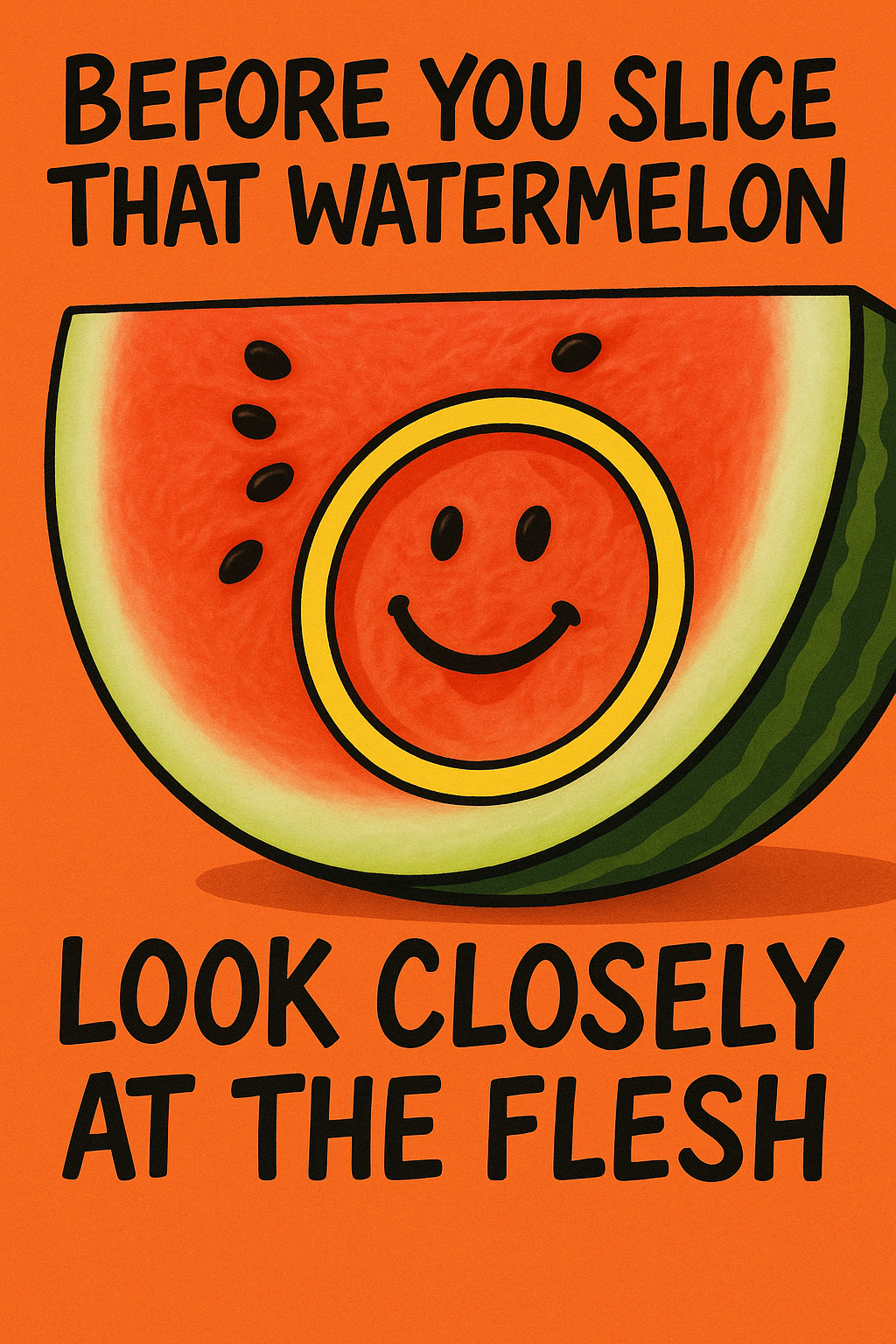
Before You Slice That Watermelon, Look Closely at the Flesh
expert, nutritionist
Picture rows of watermelons in a field suddenly splitting open, one after another, like a string of small explosions. It sounds like something out of a disaster film — but it actually happened. In May 2011, around twenty farmers near Danyang, in China's Jiangsu province, watched roughly 115 acres of their watermelon crop burst open in their fields after heavy rain, an incident Chinese state broadcaster CCTV described as turning the farmland into a field of "land mines" (CBS News). One of the affected growers, Liu Mingsuo, told CCTV that watching eight acres of his crop split open felt "like a knife cutting his heart" (Deseret News).
The cause wasn't a mystery chemical cocktail. It was forchlorfenuron, a plant growth regulator that speeds up cell division so fruit grows bigger and ripens faster. Used correctly, agricultural regulators consider it a legitimate tool — it's approved for use on kiwifruit and table grapes in the United States, and the European Food Safety Authority's 2017 peer-reviewed risk assessment found no critical safety or efficacy concerns when it's applied according to good agricultural practice. The problem in Danyang was misuse: the growers were first-time users of the chemical, applied it too late in the season, and then got hit with heavy rain — a combination a horticulture professor from Nanjing Agricultural University told the Associated Press was largely responsible for the bursting, along with the thin-rind variety of melon they'd planted (Arkansas Democrat-Gazette).
What a Cracked or Fibrous Watermelon Is Actually Telling You
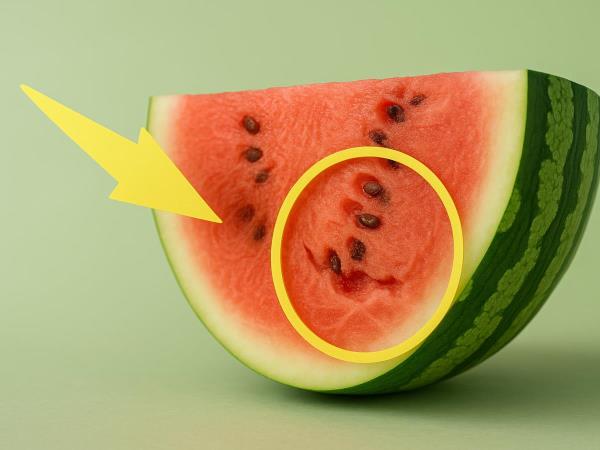
So does this mean every watermelon with a crack, a hollow patch, or pale, stringy flesh has been dosed with growth chemicals? Not necessarily — natural causes like uneven watering, temperature swings, or simple genetics can also produce hollow-heart or radial cracking. But it is one of the visible clues worth knowing. According to reporting at the time, even the intact melons sold at a wholesale market near the affected region showed a telltale pattern: fibrous, misshapen flesh with mostly white seeds instead of the usual black ones — a sign of overuse of the growth accelerator (CBS News).
The takeaway for shoppers isn't to panic — it's to use your eyes. A watermelon that's naturally ripened is generally firm and evenly textured throughout, without deep cracks running through the flesh. If you regularly notice fibrous texture, unusually pale seeds, or cracking in melons from the same source, it's reasonable to look elsewhere, the same way you might skip produce that looks bruised or overripe.
The Nutrition That Makes Watermelon Worth the Trouble
None of this changes the basic case for watermelon as a genuinely good-for-you fruit. It's about 92% water, according to the Mayo Clinic Health System, which makes it one of the easiest ways to stay hydrated on a hot day while also taking in real nutrients — something plain water can't offer.
A two-cup serving provides about 25% of the daily value for vitamin C and 8% for vitamin A, and watermelon is considered a "Lycopene Leader," containing more of the antioxidant lycopene than any other fresh fruit or vegetable — even more than tomatoes, according to the National Watermelon Promotion Board, whose figures are drawn from USDA nutrient data. Early research has looked at whether lycopene and the amino acid citrulline found in watermelon may support healthy blood pressure and blood vessel function, though nutrition researchers are clear that larger, longer studies are still needed before drawing firm conclusions (Healthline).
Worth remembering: the pale rind isn't just packaging. It's where much of the fruit's citrulline is concentrated, and in some cuisines it's cooked, pickled, or blended into smoothies rather than thrown away.
The Bigger Question: Are We Breeding Away the Fruit's Resilience?
The Danyang story also points to a broader trend worth watching. As demand for bigger, sweeter, faster-growing produce increases worldwide, more growers turn to chemical accelerants and intensive hybrid breeding to boost yield per hectare. Agricultural researchers and food-security organizations have raised similar concerns in other crops — most notably soybeans, where genetically modified varieties now dominate global production. Whether watermelon farming moves in the same direction on a wide scale remains an open, and genuinely interesting, question for anyone who cares about where their food comes from.
How to Choose a Good Watermelon
- Look for a firm, symmetrical melon that feels heavy for its size — that usually means more water content.
- Check the underside for a creamy yellow "field spot," which indicates the melon ripened on the vine.
- Avoid melons with deep cracks, soft spots, or a dull, matte skin.
- Once cut, the flesh should look uniformly firm and richly colored, without prominent white fibrous streaks.
Information on this website is for educational purposes only and is not medical advice.
expert, nutritionist
 Would you like to be informed about news on the website?













|

