


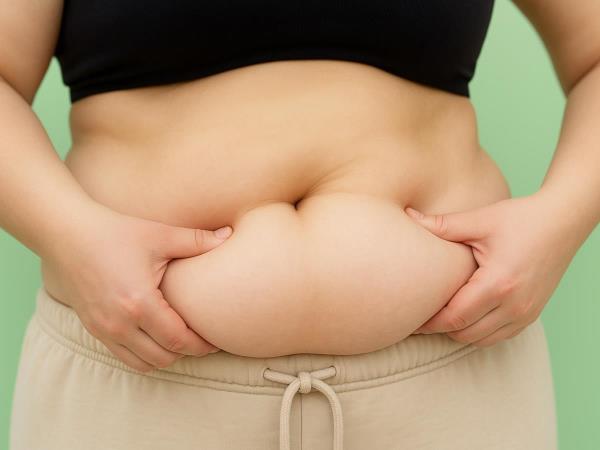




Your Weight Is Gone, But Your Skin Didn't Get the Memo - Here's How to Help It Catch Up
expert, nutritionist
Your Weight Is Gone, But Your Skin Didn't Get the Memo — Here's How to Help It Catch Up
Losing weight is a real achievement — but for many people, the skin takes its own sweet time to follow. Here's what may genuinely help it firm up naturally, and why patience beats panic every time.
You step on the scale, the number is finally where you want it — and then you catch your reflection and the skin just... hangs there. If that sounds familiar, you're far from alone, and no, it doesn't mean you did anything wrong.
Even public figures deal with this in front of an audience. Adult-film-star-turned-wellness-advocate Jenna Jameson spoke openly on Instagram about the loose skin that followed her roughly 60-pound weight loss, telling followers she was leaning on yoga to help tighten things up and wanted other mothers to see "what happens when you lose weight" — that it isn't always picture-perfect. Her honesty is a good reminder: loose skin is a normal side effect of a body that has changed, not a personal failure.
Why Skin Doesn't "Snap Back" Overnight
Most sources agree that a gradual pace — often cited as somewhere around half a kilogram to just under a kilogram a week — tends to give skin more time to adjust than very rapid loss. Foodwhisper has covered this in more depth in How to Lose Weight Without Harming Your Health, where nutritionists note that monthly loss beyond 3–4 kilograms is generally not considered ideal.
How much skin bounces back — and how quickly — seems to depend on several things: how much weight was lost, how long the extra weight was carried, age, genetics, and skin elasticity to begin with. A histological study published via PubMed comparing skin from patients after massive weight loss found real structural remodeling of collagen and elastic fibers in the dermis — which helps explain, at a biological level, why very large or very fast weight loss can leave skin that doesn't fully retract on its own, sometimes regardless of what's tried afterward. This is exactly why, for major weight loss, some people do end up considering surgical options — but for many more moderate cases, there's a lot that may help before that becomes a conversation worth having with a doctor.
With that in mind, here are five things worth building into your routine if you're in this stage of the journey.
1. Keep Moving — Especially Where You've Changed Most
There's really no version of healthy weight loss that skips exercise. Regular training builds muscle underneath the skin, which can help it look fuller and more supported, and circulation from movement may support skin's general elasticity over time. You don't need to chase a bodybuilder physique — just stay consistent, with some attention to the areas where you've lost the most.
2. Stay Genuinely Hydrated
Water is a basic building block for skin that looks and feels healthy, and staying hydrated supports the body's natural detox processes too. Two liters a day is a common starting point, though your real needs shift with activity level and weather — the goal is simply to never let yourself get properly thirsty. Foodwhisper has a couple of related reads if you want to go deeper: The Dilemma of All Diets: Have You Really Lost Weight, or Just Water? and, for a lower-calorie way to make hydration more interesting, Water With Spice: Miracle or Silly Idea?
3. Try Massage
Massage is often mentioned as something that may support circulation and, by extension, the skin's regeneration processes in areas with excess skin — and it may help support elasticity as muscle tone develops underneath. Pairing it with vitamin-E-rich foods is a popular combination; olive oil is a particularly well-studied source, and Foodwhisper's Olive Oil on an Empty Stomach: Healthy Habit or Myth? breaks down why — one tablespoon carries close to 13% of a day's recommended vitamin E. Almond or coconut oil are common at-home choices for the massage itself.
4. Exfoliate Regularly
Removing dead surface skin is generally understood to support skin's natural renewal process, and it's one of the more accessible ways to help skin look and feel firmer. Frequency really is personal — Cleveland Clinic's guidance suggests roughly two to three times a week is a reasonable range for most people, adjusting up or down based on how your skin responds, and a brisk towel dry after showering can help too.
5. Eat for Your Skin, Not Just for the Scale
A diet that's lower in saturated fat and added sugar but rich in vitamins and minerals gives your body more of what it needs for general skin repair. Omega-3 fatty acids come up often in this context too — Foodwhisper's piece on Omega-3 and Gout covers where to find them (fatty fish, flaxseed, walnuts) if you're looking for practical sources. On the supplement side, a randomized, placebo-controlled study published via PMC found collagen-peptide supplementation was linked to improvements in skin hydration and elasticity over 12 weeks — though it's worth noting evidence in this space is still mixed, and results vary between studies.
Give It Time
Dealing with loose skin can be a slow, sometimes frustrating process, and for some people a surgical option is eventually the realistic answer. But before you get to that point, it's worth genuinely trying the basics above — consistently, not just for a week or two. Keep that in mind next time you're deciding whether tonight's the night to skip the walk or the water bottle.
Information on this website is for educational purposes only and is not medical advice.
expert, nutritionist
 Would you like to be informed about news on the website?













|

