








Date: 06/11/2026 - GOOD TO KNOW
5 surprising facts about obesity
AUTHOR:
Zvone Stor
expert, nutritionist
expert, nutritionist
Obesity is not just the result of too much chocolate and not enough walking. That sounds too simple to be true. The truth is much more complicated ...
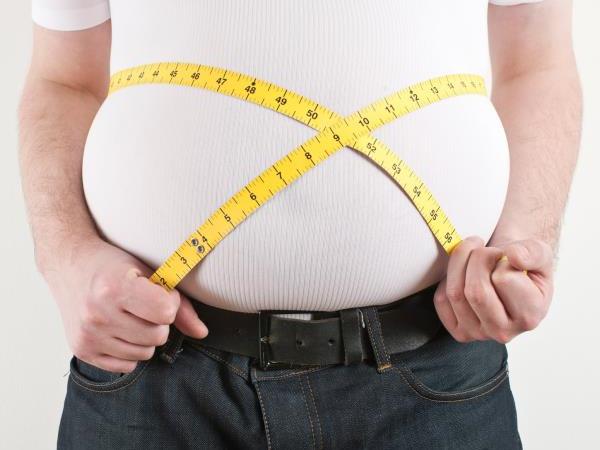
Obesity often, if not always, develops silently, like a secret guest who creeps up on you over the years without you even noticing. The recipes to get rid of it sometimes seem so simple and easy, but none of them actually work. That’s why you should consider the following facts:
By the numbers – why is obesity such a big phenomenon
WHO 2022 reports:
CDC – US Centers for Disease Control – 2017–2020 reports:
WHO 2016: globally, 39% of men and 40% of women are overweight, 11% of men and 15% of women are obese.
What do folk medicine and traditional experts say?
From folk tradition we know: a plant that regulates appetite, a root for metabolism, tea for insulin, the warmth of movement... These practices come from the observation that when digestion slows down, problems accumulate. Folk wisdom also says “the root of obesity lies in the blood and stomach,” which can be understood as a combination of genetics and lifestyle habits building up, season after season.
Beginning with natural ways
Here’s something the folk world has truly known for centuries – and now science is slowly confirming it:
What does modern science say?
Obesity can also creep up on you unknowingly
See, obesity isn’t just overeating. It’s also the result of an obesogenic environment, meaning social, genetic, and lifestyle factors working together to quietly add kilos. And it is these that silently grow.
All this breaks the belief in moral guilt and laziness – because it’s not always a sign that you’ve eaten badly or exercised too little. The answer may also be hidden in the genes and hormones. With obesity, it’s not just about blame, but understanding the risk. If you’re trying to form a plan to tackle this, be sure to include the following rules:
Dietary and medical supervision that also understands genetics and epigenetics – for example, if the MC4R mutation exists, a different approach is needed.
Information on this website is for educational purposes only and is not medical advice.
- Obesity sneaks up on you unnoticed
Professor Claude?Bouchard from the Pennington Biomedical Research Center says that people usually gain between 1-2 kg per year over a period of 15–25 years. When you break it down to 365 days, it seems trivial, but over the years this covers up many tens of kilograms. And this is what we call obesogenic potential – the brain, environment, diet, and lifestyle join forces, causing the weight to creep up slowly but steadily.
And research says that up to 70% of the differences in body weight are attributed to genetics - Genetics – do we have it in our genes?
We can say that 5% of children who develop extreme obesity have a mutation in the MC4R gene, which regulates appetite. Then there are genes like FTO, ankyrin-B – for example, with mice that have this variation, glucose gets shuttled into fat cells, despite the same food intake. In other words, genes can set up a “fat” microsystem for you – and you might not even know it.
Meta-analyses have identified over 100 gene mutations which together carry a risk for accumulating fat. - Overweight mothers – risks for children
When a woman with a high BMI – body mass index – enters pregnancy, risks come into play like a silent force. A Swedish study from 2001–2014 on over a million births showed:- The global risk for larger congenital defects is 3.5%.
- For women with a BMI over 35, the risk rises by 23%; for BMI over 40, it increases by 37%.
So, the key factor is the mother’s weight during pregnancy – the peripheral influences are clear and proven. - The global risk for larger congenital defects is 3.5%.
- Macrosomia – overweight children born from obesity
Another story: giant children. There is a clear connection between maternal obesity and increased birth weight. As early as the 21st week, ultrasound shows: longer bones, bigger bellies, heads ... Women with insulin resistance during pregnancy have babies who literally overfeed themselves and grow faster, stronger.
This brings risks of fractures during birth and caesarean section – as well as bleeding for the mother. - Inheritance through epigenetics – yes, fathers matter too
Not only are mother’s genes important – enduring epigenetic traces of life – like the mother's diet during pregnancy and breastfeeding – create permanent changes that predispose the child to obesity. Professor Mark?Vickers from Auckland describes how maternal overfeeding worsens insulin response in the child.
Epigenetic changes in sperm from fathers also carry risks. So let's not shift all the responsibility to mothers: the biological impact of both parents is at play.
By the numbers – why is obesity such a big phenomenon
WHO 2022 reports:
- 1 in 8 adults lives with obesity, adults surpass 2.5 billion; of which almost 900?million are obese.
- The prevalence of overweight adults has more than doubled between 1990 and 2022; in adolescents, it has even quadrupled.
- 35?million children under 5 are overweight (2024), and 390?million adolescents; of which 160?million are obese.
- Globally, in the USA, 39% of men and 40% of women are overweight, of which 13–15% are severely obese.
CDC – US Centers for Disease Control – 2017–2020 reports:
- 41.9% of US adults have obesity; 9.2% suffer from severe obesity, BMI >?40.
- Healthcare costs for individuals with obesity are $1,861 higher, for severe obesity even $3,097 higher – total national burden $173 billion.
WHO 2016: globally, 39% of men and 40% of women are overweight, 11% of men and 15% of women are obese.
What do folk medicine and traditional experts say?
From folk tradition we know: a plant that regulates appetite, a root for metabolism, tea for insulin, the warmth of movement... These practices come from the observation that when digestion slows down, problems accumulate. Folk wisdom also says “the root of obesity lies in the blood and stomach,” which can be understood as a combination of genetics and lifestyle habits building up, season after season.
Beginning with natural ways
Here’s something the folk world has truly known for centuries – and now science is slowly confirming it:
- Birch leaf tea (betulae folium): a gentle diuretic said to help remove excess water and fat metabolites.
- Dandelion (taraxacum officinale): the root stimulates liver and bile function, supporting fat metabolism.
- Cinnamon: regulates insulin sensitivity; people report that even half a teaspoon daily works as a natural blood sugar support.
- Inulin prebiotic from garlic root: activates the gut microbiota and helps regulate metabolism.
What does modern science say?
- Studies on mice with the ankyrin-B genetic mutation show the silent mechanism of obesity.
- The MC4R gene is crucial for appetite regulation – in 5% of acute childhood obesity cases, mutations in this gene are found.
- Maternal prenatal obesity starts showing on ultrasound: bigger heads, bones, bellies – this is an epigenetic imprint that carries risks.
Obesity can also creep up on you unknowingly
See, obesity isn’t just overeating. It’s also the result of an obesogenic environment, meaning social, genetic, and lifestyle factors working together to quietly add kilos. And it is these that silently grow.
All this breaks the belief in moral guilt and laziness – because it’s not always a sign that you’ve eaten badly or exercised too little. The answer may also be hidden in the genes and hormones. With obesity, it’s not just about blame, but understanding the risk. If you’re trying to form a plan to tackle this, be sure to include the following rules:
- The “green line” of nature (teas, roots, spices) – they complement informal small steps, but are backed by folk tradition.
- Movement – as folk wisdom says, “it moves the blood in the rhythm of the heart.”
- Awareness of family patterns – what came from your grandfather that’s passed down?
Dietary and medical supervision that also understands genetics and epigenetics – for example, if the MC4R mutation exists, a different approach is needed.
Information on this website is for educational purposes only and is not medical advice.
Author:
Zvone Stor
expert, nutritionist
expert, nutritionist
 Would you like to be informed about news on the website?
Just enter your e-mail
Surprising facts about obesity
Genetics and obesity
Risks of maternal obesity
Epigenetics and obesity inheritance
Obesity statistics 2022
Latest news





The Hidden Power of Cabbage: One Humble Kitchen Staple That Supports Your Health From Head to Toe
Read more >>

Why Do You Always Wake Up at the Same Time? Your Body Might Be Trying to Tell You Something
Read more >>


French Fries and Your Brain: What an 11-Year Study of 140,000 People Found About Fried Food and Mood
Read more >>

Selenium: The Tiny Mineral Your Body Can't Live Without — And Can Absolutely Have Too Much Of
Read more >>

A Spoonful of Coconut Oil on an Empty Stomach: The Quiet Morning Habit So Many People Swear By
Read more >>


Anemia on Your Plate: The Everyday Foods Quietly Helping — Or Sabotaging — Your Iron Levels
Read more >>

Why the Humble Egg Might Just Be Your Diet's Secret Weapon: 5 Reasons Nutritionists Keep Coming Back To
Read more >>


Yogurt, Banana or Citrus for Breakfast? Why Some "Healthy" Foods Can Backfire on an Empty Stomach
Read more >>
Interaktive Widgets:
|

