


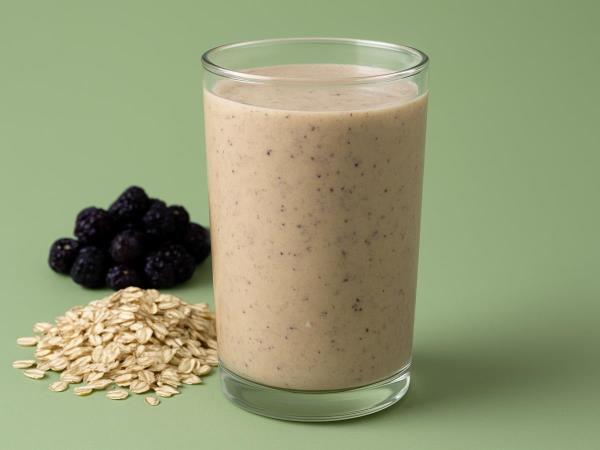




Kefir, Oats, Flaxseed, Cocoa and Prunes: The Five-Ingredient Breakfast That Gets a Sluggish Gut Moving
expert, nutritionist
For generations, grandmothers have told us that prunes keep you regular. Science has now caught up with them. In a randomised crossover trial at the University of Iowa, 40 people with chronic constipation ate either dried plums or psyllium, the fibre in many over-the-counter bulk laxatives, for three weeks each. Prunes did at least as well as psyllium, and they came out ahead on the number of complete bowel movements per week and on stool consistency. (The trial is registered as NCT01180725 and was co-funded by the California Dried Plum Board.) Combine prunes with kefir, oats, flaxseed and cocoa and you have a breakfast built to wake up a lazy gut.
Why breakfast matters for your gut
How you start the day shapes more than your mood. A good morning meal also sets the rhythm for your digestion, and regular, comfortable bowel movements are part of feeling well overall.
You've probably heard that a morning trip to the bathroom "flushes toxins" out of the body. That idea needs correcting. Your liver and kidneys clear waste products from the blood around the clock. A missed bowel movement doesn't poison you or turn into belly fat. Constipation is still worth tackling, though, because it's uncomfortable and it makes many people feel heavy, bloated and sluggish. The most reliable dietary fixes are the ones this breakfast offers: more fibre, more fluid and a steady routine.
Many of us also sit for most of the day, and lack of movement doesn't help digestion. Honestly, no single breakfast can make you lose fat from your belly and hips in particular. What a fibre-rich breakfast can do is keep you full and your digestion regular, and both make healthy eating easier to stick with.
What each ingredient brings
Prunes: the best-studied part of the bowl
Prunes work in several ways at once. They contain fibre, the natural sugar alcohol sorbitol (which draws water into the bowel) and polyphenols. Besides the Iowa trial, a King's College London study put 120 healthy adults with low fibre intake and three to six bowel movements a week on 80 g or 120 g of prunes a day, or on water alone, for four weeks. Prunes significantly increased stool weight and frequency and were well tolerated.
Keep the dose in mind. Five to seven prunes weigh roughly 40 to 60 g, which is less than most trials used. The Iowa participants ate about 50 g twice a day. That means this breakfast gives a gentler version of what was tested. Prunes are also energy-dense: a dozen contain around 260 calories, although their glycaemic index is low. Prunes may help more than your gut, too. A Foodwhisper article looks at the evidence for bone health in Five Foods Nutritionists Recommend for Everyone: Legumes, Tomatoes, Mushrooms, Prunes and Kale for Your Heart, Bones and More.
Kefir: live cultures for your gut
Kefir is a fermented milk drink full of bacteria and yeasts. Human studies suggest it can shift the make-up of the gut microbiota. In a small pilot study in Turkey, 20 patients with chronic constipation drank 500 ml of kefir a day for four weeks. Their stool frequency, consistency and bowel satisfaction improved, and colonic transit sped up in those with slow transit. The study had no control group, so the authors themselves called for controlled trials to confirm the results. Homemade kefir works best here, but a lower-fat plain yoghurt will do if that's what you have. For more on pairing kefir with seeds, see Kefir and Flaxseed: The Old-Fashioned Morning Habit People Keep Coming Back To.
Ground flaxseed: soluble fibre that swells
Flaxseed holds plenty of soluble fibre, which forms a gel with liquid and softens stools. In a Chinese randomised trial, 90 adults with functional constipation took either flaxseed flour or the laxative lactulose for four weeks. Both groups improved, and the flaxseed group's median bowel movements rose from two to seven a week. That study used 50 g of flaxseed flour a day, much more than the single tablespoon in this recipe. In another trial, constipated patients with type 2 diabetes ate 10 g of flaxseed baked into cookies twice a day for 12 weeks. Their constipation symptoms improved, and they lost more weight than the placebo group. Use ground seeds, since whole ones often pass through undigested, and drink enough water with them.
Oats: gentle bulk
Oats add fibre that bulks up stools. The European Food Safety Authority has assessed the evidence linking oat and barley grain fibre to increased faecal bulk. Two tablespoons is a modest amount, but it makes the bowl more filling. Choose plain oats rather than flavoured instant sachets, as explained in Oats: Superfood or Hidden Trap? It All Depends on What You Put in Your Shopping Cart.
Cocoa: flavour with a bonus
Unsweetened cocoa powder keeps the bran of the cocoa bean, so it supplies some fibre. In a randomised crossover study, 44 healthy adults regularly drank soluble cocoa products. The product with the most fibre improved bowel habits. In another double-blind trial, 22 healthy volunteers drank a high-flavanol cocoa beverage for four weeks. They had more bifidobacteria and lactobacilli in their gut than when they drank a low-flavanol version. That study used a specially made drink with 494 mg of flavanols a day. Ordinary cocoa powder varies widely, so treat this as a promising hint rather than a guarantee. Make sure you use plain cocoa, not a sweetened drinking-chocolate mix.
Ingredients for one serving
- 300 ml kefir (about 1{-15486}{-15171} cups). Homemade is even better, or use a lower-fat plain yoghurt.
- 2 tablespoons rolled oats
- 1 tablespoon ground flaxseed
- 1 tablespoon unsweetened cocoa powder
- 5 to 7 prunes
How to make it
- Pour about 100 ml of boiling water over the prunes. Leave them for 5 to 10 minutes so they soften and the water cools a little.
- Meanwhile, put the oats, ground flaxseed and cocoa into a bowl and pour the kefir over them.
- Blend the softened prunes with their soaking water into a thick pur{-15230}Še.
- Pour the pur{-15230}Še over the other ingredients, stir well and eat.
Let this be your whole breakfast. The original recipe advises eating nothing else for about two hours afterwards. That's simply part of the routine, not a scientific requirement, but it does let the fibre and fluid do their work without extra snacking.
What to expect
Some people notice their gut becoming more active within a day or two. Others take longer, and everyone responds differently. Having the breakfast at roughly the same time every day helps, because the bowel responds well to routine. After a few days many people find their digestion settles into a more regular rhythm.
If you're not used to much fibre, start with fewer prunes and build up gradually. A sudden jump in fibre, and especially in sorbitol, can cause bloating and gas. Drink plenty of water during the day, because flaxseed and oat fibre need fluid to work.
And the weight loss?
The original Slovenian recipe claimed you could lose more than 3.5 kilograms a month with this breakfast alone, with no extra exercise, plus better skin, stronger hair and nails and a stronger immune system. No study has tested this combination, and those promises can't be verified. What research does show is more modest. In a 12-week University of Liverpool trial, 100 overweight adults followed a weight-loss programme. The group eating prunes daily lost 2 kg and 2.5 cm from their waists, compared with 1.5 kg in a group given healthy-snack advice. The published analysis concluded more cautiously that prunes did not undermine weight management and warrant further study.
So the realistic promise is this: a breakfast high in fibre and protein that keeps you full through the morning and keeps your digestion regular. That's a solid foundation for losing weight, as long as the rest of your day supports it.
Information on this website is for educational purposes only and is not medical advice.
expert, nutritionist
 Would you like to be informed about news on the website?















|

