



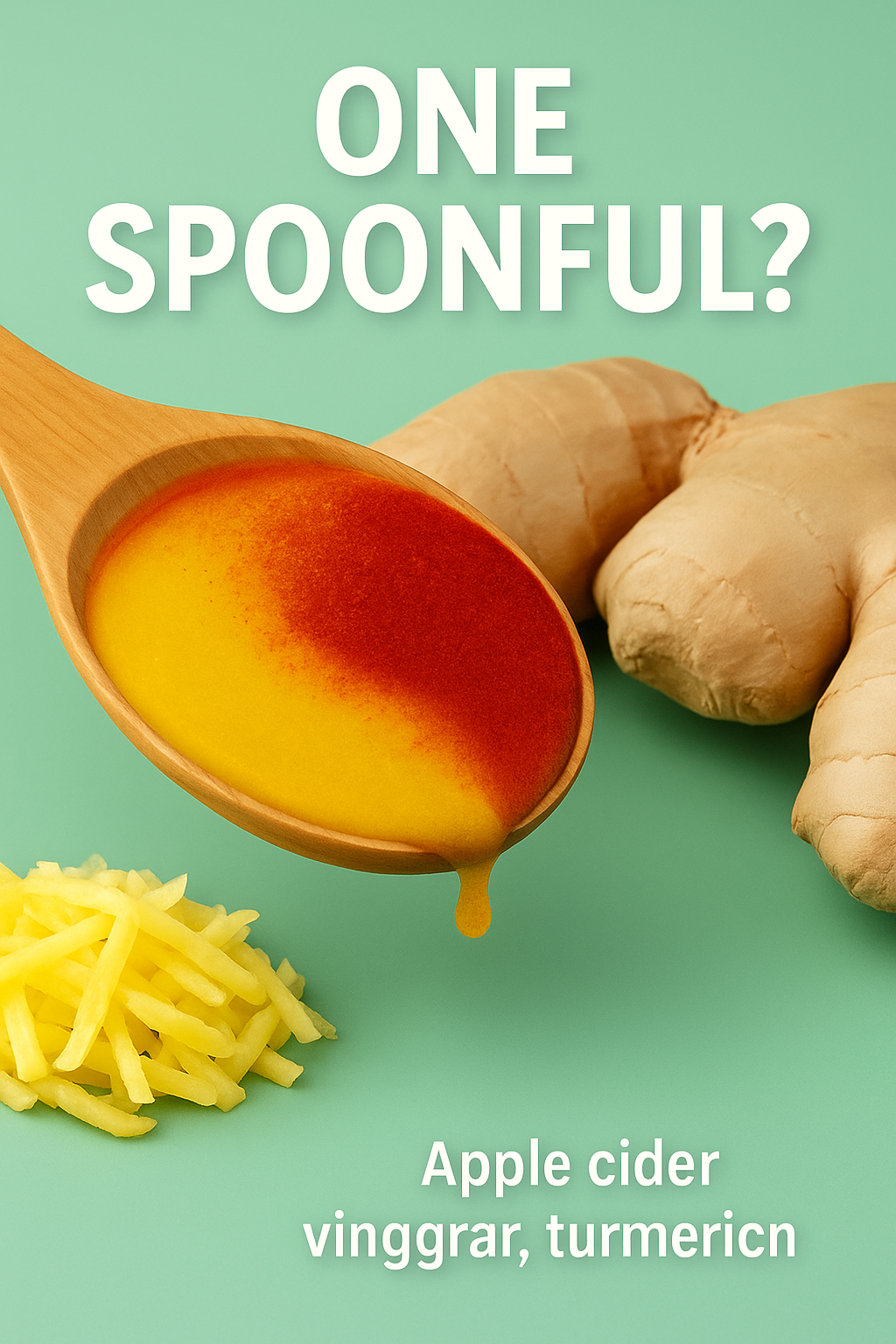


Four Ingredients to Stir Together Every Morning – So a Sniffle-Free Autumn Feels Less Like a Dream
expert, nutritionist
One spoonful. Four ingredients you probably already have in the pantry. Thirty seconds of your morning, and a fiery kick that wakes you up faster than your first coffee. As the days get shorter and the office starts echoing with coughs, this little golden ritual has quietly become a fixture in many kitchens, and once you taste it, you will understand why people talk about it.
The idea is anything but new. Bollywood actress and model Malaika Arora, known for her disciplined wellness routine, has shared her own morning drink with her followers, as reported by ELLE India. It blends amla (Indian gooseberry), fresh turmeric, ginger root, apple cider vinegar and a few peppercorns, which is almost exactly the combination you will find below. She treats it as part of a bigger lifestyle picture, not a magic bullet, and that is exactly the spirit in which we suggest you try it.
Autumn: Beautiful, Generous – and Full of Sniffles
Nature's colors are never more vivid than in autumn. Trees and fields bear their fullest fruit, and nature's gifts are everywhere. Yet autumn is also the season of colds and flu. Once again we have to adapt to cold, gloomy weather with very little sunshine.
But don't let this autumn be a gloomy one for you. Treat yourself to a simple recipe that many people turn to when they want to give their body some extra care through the cold-and-flu months.
Ingredients (one daily portion)
- 1 tablespoon of apple cider vinegar (homemade, or raw and unfiltered "with the mother")
- 1/2 tablespoon of ground ginger (or freshly grated ginger)
- 1/2 teaspoon of turmeric
- 1/2 teaspoon of cayenne pepper (beginners: start with just a pinch)
- Optional nutritionist's tip: a small pinch of freshly ground black pepper
Preparation
Preparing this cold-season helper is simple. Every morning, stir the ingredients together and take them. If you find the taste unpleasant, follow up with a sip or two of lukewarm water. The most important thing is to stay consistent and keep it up day after day.
A gentler way to take it: instead of swallowing the mixture straight from the spoon, stir it into 3–4 tablespoons of lukewarm water, drink it, and then rinse your mouth with plain water. Vinegar is quite acidic, and dilution is kinder to your throat and tooth enamel. Wait about 30 minutes before brushing your teeth.
Ideally, you would take this mixture on an empty stomach in the morning, wait until you have had a bowel movement, and only then sit down to breakfast. But you don't have to wait that long: just leave at least 10 minutes between the mixture and your breakfast (or coffee).
If your stomach is sensitive in the morning, take the mixture after a light breakfast instead. Spicy, sour foods on an empty stomach don't suit everyone, as we explain in 4 Foods Best Not Eaten on an Empty Stomach – One Is Completely Unexpected.
Why These Four? A Closer Look at Each Ingredient
All four ingredients have long been valued in traditional kitchens and folk practice for their warming, digestion-friendly character, and each contains plant compounds that scientists are actively studying. Here is what we know so far, without the hype.
Apple cider vinegar: the tangy base
Apple cider vinegar is made by fermenting apple juice, and its main active component is acetic acid. A small study from Arizona State University, published in the journal Diabetes Care in 2004, found that vinegar taken before a high-carbohydrate meal was linked to better post-meal insulin sensitivity in people with insulin resistance. The study was very small, and vinegar is no substitute for medical care. Still, it helps explain why many people like a little vinegar early in the day. Remember the downside, too: a laboratory study on extracted human teeth found that vinegar and apple cider caused some of the strongest enamel demineralization of all the acidic drinks tested. That is why dilution matters.
Ginger: the warming root
Ginger has been used in Asian cooking and traditional medicine for thousands of years. It owes its bite to compounds called gingerols and shogaols. In a 2013 study in the Journal of Ethnopharmacology, fresh ginger showed activity against a common respiratory virus in human airway cells grown in the lab. That is an interesting finding, but test-tube results don't automatically carry over to people. The U.S. National Center for Complementary and Integrative Health (NCCIH) notes that ginger is best supported for easing some types of nausea, and that research on other uses is still limited. Many people simply find that a warm, gingery drink feels soothing on a chilly morning. If you enjoy ginger in the evening as well, try A Green Drink Before Bed: What a Glass of Cucumber, Parsley and Ginger Can (and Can't) Do Before You Switch Off the Light.
Turmeric: the golden spice
Turmeric, a close relative of ginger, has a central place in Ayurvedic tradition. Its yellow pigment, curcumin, is widely studied for its anti-inflammatory and antioxidant properties. According to NCCIH, however, solid evidence for specific health benefits in people is still limited. The catch is that curcumin on its own is poorly absorbed. A classic 1998 study in Planta Medica showed that piperine, the compound that gives black pepper its bite, greatly increased curcumin absorption in human volunteers. That is why we suggest adding a tiny pinch of black pepper to your spoonful. For a gentler, milky way to enjoy turmeric on winter evenings, see Warm Water with Turmeric Against Winter Troubles.
Cayenne pepper: the fiery kick
Cayenne owes its heat to capsaicin, which is famous for making your nose run and your face flush. Researchers are interested in capsaicin for nasal symptoms: a Cochrane review found that capsaicin applied directly in the nose may help some people with non-allergic rhinitis. That is a very different situation from eating it, of course, but it is one reason chili has a long-standing reputation as a "clear-your-head" spice. Start with a pinch: too much cayenne on an empty stomach can be uncomfortable.
Traditionally Valued for Digestion, Circulation and Warmth
In folk tradition, these ingredients are credited with a long list of benefits: they are said to soothe inflammation, help keep unwanted microbes in check, support digestion, warm up circulation, balance stomach acid and support the body's natural cleansing processes. Some of these traditional uses are now being studied by scientists, while others remain unproven. The honest view is this: the mixture is a flavorful, low-cost way to bring several interesting plant compounds into your day, but it cannot replace a doctor's advice, a vaccine or medicine when you need them.
Readers' Experiences
A reader in her fifties told us she started the spoonful "as a dare" with her husband one October. The first week, she admits, was mostly coughing and laughing at the cayenne. By the third week it had become their shared morning moment before coffee. "I can't say it worked miracles," she wrote, "but I've never been so consistent about drinking water and eating breakfast at a proper time, and that alone made me feel better."
Another reader, who works night shifts, found the original version too strong on an empty stomach. He now takes a diluted version right after a small breakfast and says the warming effect is the best part of his cold early mornings. His experience is a good reminder that you can adapt the ritual to your own body.
The Spoon Is Only Part of the Story
No single food will keep autumn bugs away. What we know works much better is the whole picture:
- Sleep. In a well-known study led by researchers from the University of California, San Francisco, published in the journal Sleep, people who slept less than six hours a night were about four times more likely to develop a cold after exposure to the virus than those who slept more than seven hours.
- Clean hands. Regular handwashing is one of the simplest everyday habits recommended by the U.S. Centers for Disease Control and Prevention (CDC).
- Vaccination. The World Health Organization considers the seasonal flu vaccine the most effective way to prevent influenza. Ask your doctor whether it is right for you.
- A colorful, fiber-rich plate. Vegetables, fruit, legumes and fermented foods support a healthy gut. Try The Vegetable Compote That Wakes Up Your Gut: A 5-Ingredient Recipe to Get Ready for Winter or The Secret in a Glass: Why You Might Want to Start Your Morning with Sauerkraut Juice.
- Gentle warm drinks. If the spicy spoonful is too much for you, you will find milder ideas in Warm Water with Cinnamon, Honey or Lemon: 3 Simple Drinks to Support Digestion and Help Keep Your Appetite in Check.
Who Should Be Careful
- People with heartburn, gastritis, stomach ulcers or a sensitive stomach may find vinegar and cayenne irritating.
- Turmeric and ginger may affect blood clotting, so anyone taking blood-thinning medication should talk to a doctor first. People with gallbladder problems should also be cautious with larger amounts of turmeric.
- Vinegar may interact with some medicines, such as diabetes medication and diuretics.
- If you are pregnant, breastfeeding or under medical treatment, check with your doctor or pharmacist before starting any daily remedy.
- If you develop a high fever, breathing difficulties or symptoms that don't improve, seek medical help. Home remedies are not a substitute for care.
Enjoy the warmth, the color and the little daily ritual, and let this autumn be a bright one.
Information on this website is for educational purposes only and is not medical advice.
expert, nutritionist
 Would you like to be informed about news on the website?















|

