



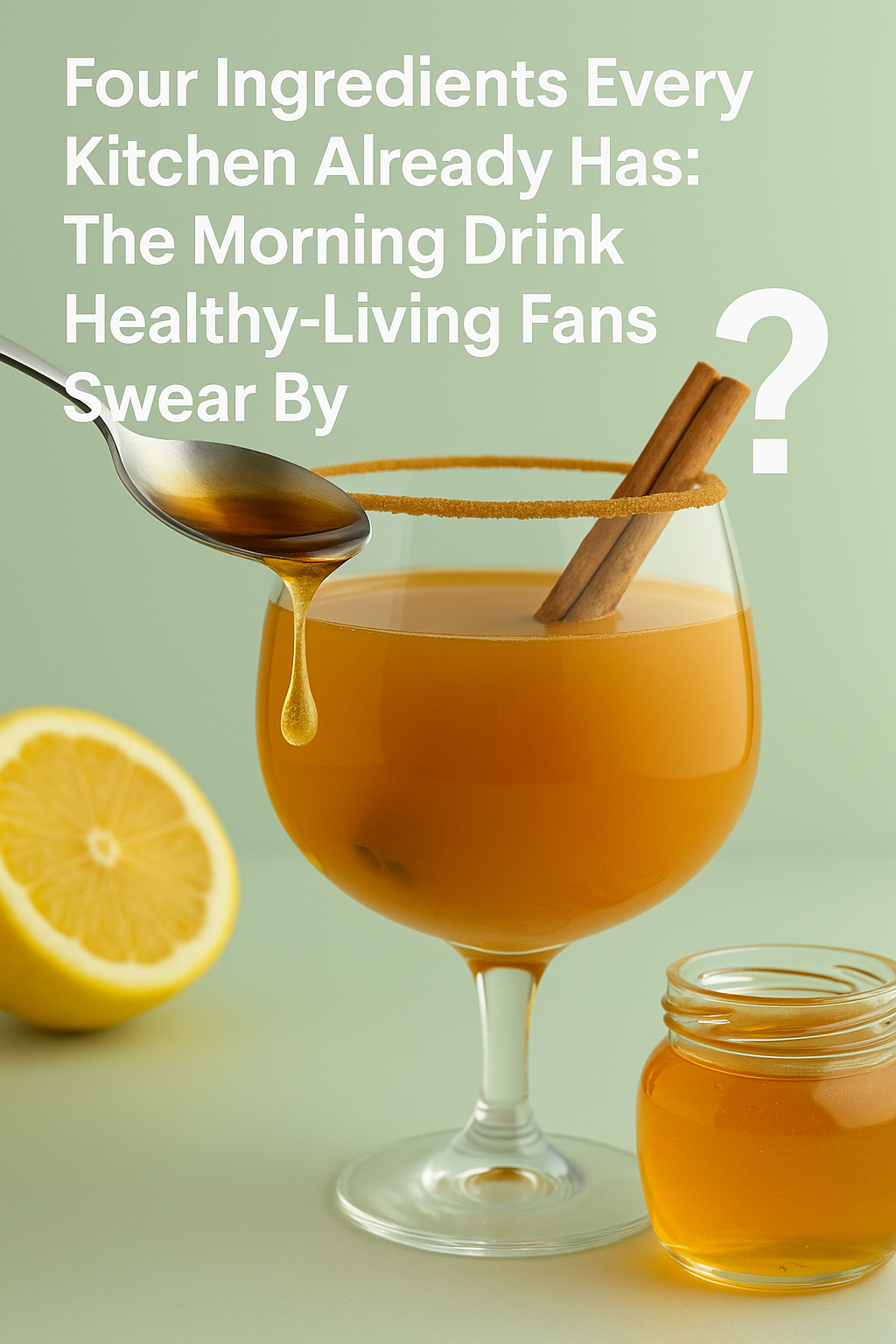


Four Ingredients Every Kitchen Already Has: The Morning Drink Healthy-Living Fans Swear By
expert, nutritionist
It costs less than a cup of coffee, takes thirty seconds to make, and you almost certainly have everything you need for it in your kitchen right now. Few home drinks have been praised, shared and debated as much as this four-ingredient mix of honey, lemon, apple cider vinegar and cinnamon. So what can it really do, what can't it do, and how do you make it so that it is pleasant and safe? Let's take a closer look.
A Spoonful of Vinegar, Celebrity Style
One of the best-known fans of apple cider vinegar is Victoria Beckham. In an Instagram Stories post about her morning routine, the former Spice Girl and fashion designer revealed that the first thing she does every day is take two teaspoons of apple cider vinegar, followed by fresh lemon squeezed into hot water, as reported by Hello! Magazine. She didn't claim any miracles. For her it is simply a small ritual that starts the day. That is exactly the right way to look at the drink below: a tasty habit that fits into an otherwise healthy routine.
Why These Four Ingredients?
For a healthy drink, you need a healthy base, and that is certainly honey. It brings natural sweetness, small amounts of antioxidants and a pleasant, rounded taste. Be realistic about it, though. According to the European Food Information Council (EUFIC), the vitamins and minerals in honey cover less than 1% of daily needs, so its main role here is flavour.
Add a little lemon and you get a refreshing, tangy note that wakes up the senses. Two tablespoons of fresh lemon juice provide roughly 11–12 mg of vitamin C, according to USDA FoodData Central. That is about a tenth of the daily recommendation for adults: a nice bonus, not a "vitamin bomb."
The key ingredient is apple cider vinegar. Its main active compound, acetic acid, is the reason most people make this drink, and it is also the ingredient with the most interesting research behind it (more on that below).
Finally, there is cinnamon, the warm spice that ties everything together. Cinnamon is rich in polyphenols with antioxidant properties. However, claims that it has powerful "detox" or "cleansing" effects are not supported by science. Your liver and kidneys do that job very well on their own. When the ingredients are mixed in the right proportions, you get a drink with a surprisingly balanced sweet, sour and spicy flavour.
Ingredients
- ½ teaspoon ground cinnamon (preferably Ceylon cinnamon)
- 1–2 tablespoons apple cider vinegar (start with 1 if you are new to it)
- 1 tablespoon honey
- 2 tablespoons fresh lemon juice
- about 200 ml (a large glass) of warm water
Preparation
It is important to use warm, but not boiling, water. That way the honey dissolves easily and the drink is comfortable to sip. Pour the water into a glass and stir in the honey first until it melts. Then add the lemon juice, apple cider vinegar and cinnamon, and stir for at least half a minute so that all the ingredients blend well. Cinnamon doesn't fully dissolve, so give the glass another stir before each sip.
Why we changed the original proportions: older versions of this recipe call for a full tablespoon of cinnamon in only 100 ml of water. That much dry spice in so little liquid is hard to swallow, can irritate the throat if inhaled, and adds unnecessary coumarin, a natural compound found mainly in cheaper cassia cinnamon. Large amounts of coumarin can strain the liver, which is why the European Food Safety Authority (EFSA) set a tolerable daily intake for it. More water also protects your teeth and throat from the acidity of the vinegar.
What Does Research Actually Say?
Apple cider vinegar and weight
The best-known study comes from Japan. In a 12-week trial published in Bioscience, Biotechnology, and Biochemistry (Kondo et al., 2009), overweight adults who drank 15–30 ml of vinegar daily lost about 1–2 kg more than those who drank a placebo. They also had slightly lower waist measurements and triglycerides. That is a modest effect over three months, not dramatic results in a few days, and the weight returned after participants stopped. Vinegar may work partly by helping you feel fuller, so it can support, but never replace, a balanced diet. If you are looking for where extra calories really hide, read Hello, and Fattening: Foods that Sabotage Your Diet.
Vinegar and blood sugar after meals
A small study in Diabetes Care (Johnston et al., 2004) found that vinegar taken before a high-carbohydrate meal improved how the body handled that meal in people with insulin resistance. This is the reason many people sip the drink before eating. These are short-term effects in small groups of people, though, and vinegar is not a treatment for diabetes.
Cinnamon
A meta-analysis in the Annals of Family Medicine (Allen et al., 2013) suggested that cinnamon may have a small effect on fasting blood sugar and blood fats. The studies varied a lot in quality and dose, however. The U.S. National Center for Complementary and Integrative Health (NCCIH) notes that the evidence is not strong enough to recommend cinnamon for any health condition.
Blood pressure, "alkalizing" and other popular claims
You may have read that this drink lowers blood pressure, "alkalizes" the body or heals sore throats and wounds. Research on vinegar and blood pressure has been done mostly in animals. The idea that food or drink can change your blood pH is a myth: your kidneys and lungs keep it within a very narrow range, as a systematic review in BMJ Open (Fenton & Huang, 2016) explains. Honey has a long tradition of soothing a scratchy throat, and a warm drink can feel comforting when you have a cold. But persistent symptoms belong with a doctor, not in a glass.
Is It Good for Weight Loss?
Many readers tell us this is their favourite "slimming drink," and it is easy to see why: it is simple, cheap and tastes good. The honest answer is that it can be a helpful companion to weight management. It is low in calories (about 70 kcal per glass, mostly from honey), it may help you feel satisfied, and it can replace a sugary juice or soda. But there are no shortcuts. Lasting results come from what you eat throughout the day, how much you move and how well you sleep. If you often feel puffy and heavy, you may also find useful tips in Get Rid of Bloating and Excess Water.
Keep in mind that honey is still sugar. The World Health Organization recommends limiting free sugars, which include honey, to less than 10% of daily energy intake. One tablespoon a day fits comfortably within that limit.
How to Drink It
Drink it in sips. From the amounts above you will get a pleasant glass that many people enjoy shortly before a meal, usually breakfast or lunch. A few simple habits make it more comfortable:
- Use a straw and rinse your mouth with plain water afterwards. Both vinegar and lemon are acidic and can soften tooth enamel. Wait at least 30 minutes before brushing your teeth.
- Never drink apple cider vinegar undiluted. It can irritate the mouth, throat and stomach.
- Start slowly with one tablespoon of vinegar and see how your stomach reacts.
- On cold days you can use the same warm-drink habit with other spices. Try our Warm Water with Turmeric Against Winter Troubles.
Who Should Be Careful
This drink is fine for most healthy adults in moderate amounts, but please talk to your doctor or pharmacist first if you:
- have acid reflux, heartburn, gastritis or stomach ulcers,
- take medicine for diabetes, insulin, diuretics or heart medication such as digoxin (vinegar may affect blood sugar and potassium levels),
- have kidney disease or sensitive teeth,
- are pregnant or breastfeeding.
Honey should never be given to babies under 12 months because of the risk of infant botulism, as warned by the U.S. Centers for Disease Control and Prevention (CDC).
The Bottom Line
Honey, lemon, apple cider vinegar and cinnamon make a simple, inexpensive and genuinely tasty drink that is easy to fit into your morning. Science supports some modest benefits, especially of vinegar on fullness and blood sugar after meals. It is not a cure for anything, and it works best alongside good food, regular movement and enough sleep. Enjoy it as a small daily ritual, just like Victoria Beckham does, and let the real work be done by your overall lifestyle.
Information on this website is for educational purposes only and is not medical advice.
expert, nutritionist
 Would you like to be informed about news on the website?













|

