




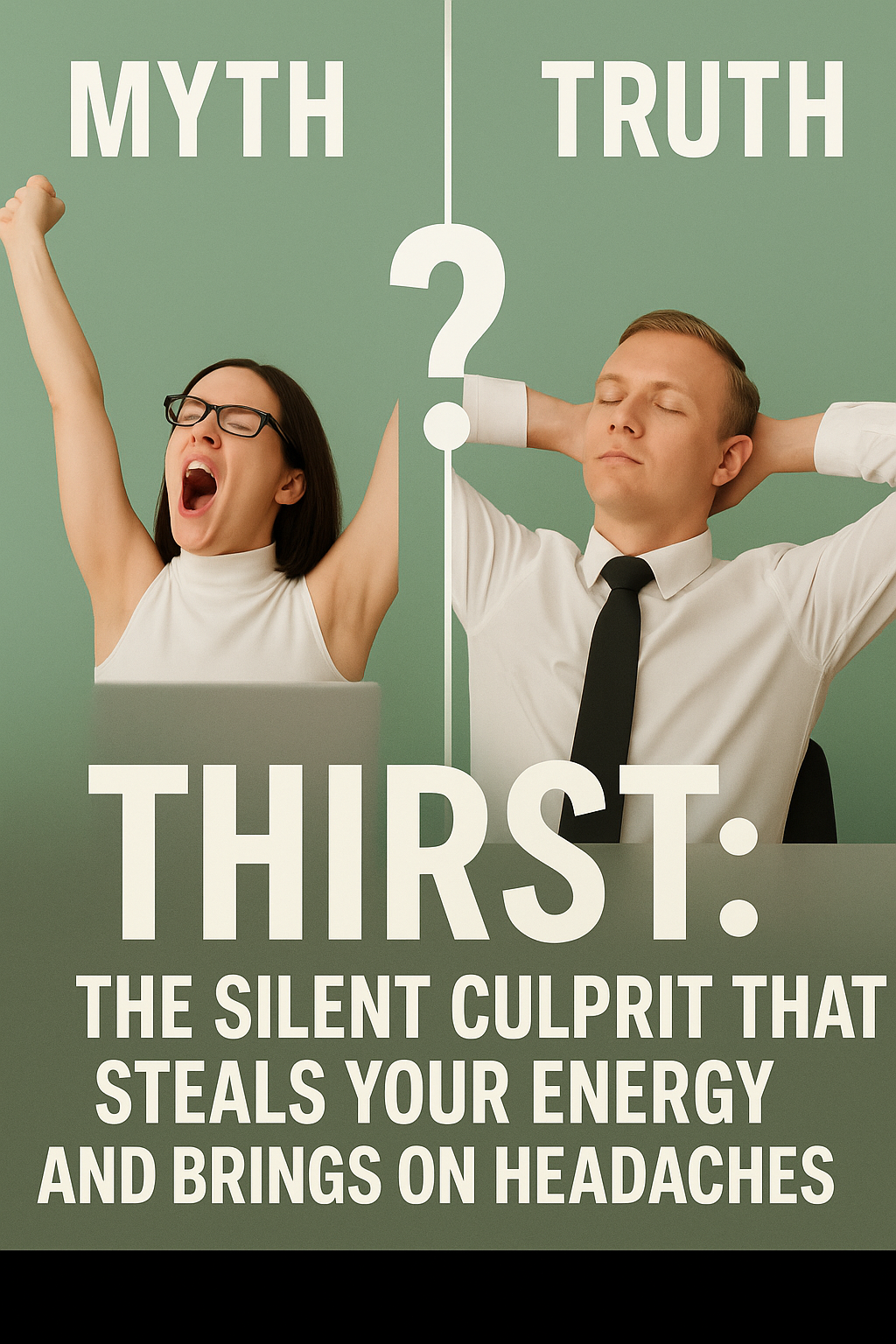


Thirst: The Silent Culprit That Steals Your Energy and Brings On Headaches – And Most People Don't Even Know It
expert, nutritionist
You slept badly, you drag yourself through the afternoon, your head is pounding, and a third coffee doesn't seem to help. Before you blame stress, the weather or your age, ask yourself one simple question: how much water have you actually had today? For many people, the honest answer is "not much." And that small, easily overlooked habit may be quietly draining their energy day after day.
What a Seven-Time Super Bowl Champion Knows About Water
Few athletes have talked about hydration as openly as American football legend Tom Brady. In his book The TB12 Method, he lists dry lips, dry skin, headaches and waking up at night with a dry throat as typical signs that the body is short on fluid. Interestingly, his routine is not about downing huge amounts at once. According to Sarasota Magazine, after a couple of glasses in the morning he simply keeps drinking one glass every hour or two, and he carries a large water bottle wherever he goes.
To be fair, his total daily amounts are far higher than most people need, and experts writing for Live Science have pointed out that his heaviest training-day intake is excessive for an ordinary person. But the core idea behind his habit – drinking steadily throughout the day instead of waiting until you are parched – is exactly what this article is about.
Tired, Irritable, Headachy? Thirst Could Be Part of the Story
If you are struggling with poor sleep, tiredness, low mood and nagging headaches, don't panic. These are very common complaints, especially in summer, and in many cases the explanation may be as ordinary as not drinking enough.
Research suggests that this is far more widespread than most of us think. British researchers in the Dehydration Recognition In our Elders (DRIE) study found that almost half of the older adults living in UK residential care were either dehydrated or on the verge of it. And it's not only a problem of old age: an analysis of U.S. national survey data, published in the journal Nutrients, reported that more than 65 percent of adults aged 51 to 70 did not meet the criteria for good hydration.
Even a small shortfall can be noticeable. In a study published in The Journal of Nutrition, healthy young women who were only mildly dehydrated reported lower mood, more difficulty concentrating, a greater sense of effort and more headache symptoms. According to Cleveland Clinic, headache, fatigue and dizziness are among the typical signs that the body is running low on fluid.
Why We Miss the Signal
Many people simply don't realize how much fluid the body needs every single day. We often ignore the feeling of thirst, push it aside during a busy day, or even mistake it for hunger and reach for a snack instead of a glass of water.
Doctors warn that a lack of fluid can be a bigger problem than it seems, because many people only drink once they feel thirsty. By that point, the body is often already slightly behind. This is especially true for older adults, whose sense of thirst tends to become weaker with age, as explained by the NHS. Hot weather, exercise, illness, air travel and even short nights can all increase fluid needs – we explored how sleep affects the body in our article When you sleep too little, your belly grows.
Gulping Half a Liter at Once Is Not the Answer
Many of us also believe that if we drink half a liter or more of water in one go, we have "caught up" for the day. Unfortunately, it doesn't work that way. When a large amount of water arrives all at once, the kidneys quickly get rid of much of the surplus, so a good part of it simply passes through. Drinking too much water at once won't make your headaches disappear.
Small, regular amounts spread across the day are far more effective. And in rare cases, drinking very large quantities in a short time can even dilute sodium levels in the blood, a condition known as hyponatremia. More is not always better – steady is better.
The Simple Habit: A Glass of Water Every Hour
For many people, headaches and tiredness linked to low fluid intake may ease within a day or two if they simply drink a glass of water roughly every hour while awake. Science offers some support for this: in a randomized trial carried out by researchers at Maastricht University and published in Family Practice, people with recurring headaches who increased their daily water intake reported an improvement in their headache-related quality of life, although the number of hours with headache did not change significantly. In other words, water is not a miracle cure, but it is a cheap, simple habit that is worth trying.
How much fluid do we actually need? The European Food Safety Authority (EFSA) considers about 2 liters of total water per day adequate for women and about 2.5 liters for men, counting water from both drinks and food. Heat, physical activity and body size can push that number up. According to Mayo Clinic, around a fifth of our daily fluid comes from food, which is why juicy fruits and vegetables are especially welcome on hot days. For summer ideas, take a look at Ideal food for vacation.
Coffee, Tea, Milk and Soups: What Really Counts?
Many people are convinced that only plain water "counts" and that coffee, tea and similar drinks actually dry the body out. Modern research paints a more nuanced picture:
- Coffee and tea: A study by researchers at the University of Birmingham, published in PLOS ONE, found no difference in hydration markers when habitual coffee drinkers had four cups of coffee a day compared with the same amount of water. Moderate amounts of coffee and tea do contribute to your daily fluid intake.
- Milk: In a study published in The American Journal of Clinical Nutrition, researchers from Loughborough University found that milk was retained in the body even better than plain water over several hours.
- Soups and juices: These also add fluid, although juices bring a lot of sugar and soups can be salty, so they are best treated as a supplement rather than your main source of hydration.
- Alcohol: This is the real exception. Alcohol suppresses the hormone that helps the kidneys hold on to water, so you lose more fluid than usual. If you drink alcohol, alternate it with water.
So, water remains the best everyday choice: it has no calories, no sugar and no caffeine. But you don't need to feel guilty about your morning coffee – just don't let it replace water entirely. If you enjoy warm drinks in colder months, you might like our recipe for Warm Water with Turmeric Against Winter Troubles.
The Easiest Hydration Test: Check the Color
You don't need any gadgets to know whether you are drinking enough. Pay attention to the color of your urine. If it is pale yellow, like light straw, you can relax – you are most likely well hydrated. If it becomes darker without an obvious reason, try drinking more fluid. The Australian government health service healthdirect offers a simple urine color chart you can use as a guide.
Keep in mind that food and supplements can change the color too: beetroot, blackberries and rhubarb can turn urine pinkish or reddish, and B vitamins can make it bright yellow. Urine is also naturally darker first thing in the morning. If the color stays unusually dark despite drinking well, or if it looks orange, brown or contains blood, it's a good idea to speak with a doctor.
What Readers Tell Us
Many of our readers have noticed the difference after making one small change. Office workers often tell us that their mid-afternoon slump became much milder once they started keeping a glass of water on their desk and refilling it every hour. Others say that setting a simple phone reminder helped them realize just how little they used to drink before. And quite a few have discovered that the "hunger" they felt between meals was, at least some of the time, actually thirst. If you often feel puffy or bloated, you may also find useful tips in our article Get Rid of Bloating and Excess Water.
Small Habits, Big Difference
- Start your day with a glass of water before your first coffee.
- Keep a bottle within reach at work, in the car and on walks.
- Drink a glass roughly every hour instead of gulping large amounts at once.
- Add slices of lemon, cucumber or a few mint leaves if plain water bores you.
- Eat plenty of water-rich foods such as cucumbers, watermelon, tomatoes and oranges.
- Drink more on hot days, during exercise, when flying and when you are unwell.
- Check the color of your urine a few times a day.
Your body often sends quiet signals long before it complains loudly. Listen to them, keep a glass of water nearby, and you may spare yourself a lot of unnecessary tiredness and discomfort.
When to See a Doctor
If headaches are severe, sudden, frequent or accompanied by other symptoms such as confusion, a very fast heartbeat, fainting, persistent vomiting or diarrhea, or very little urine, seek medical advice promptly. Constant thirst combined with frequent urination can also be a sign of a condition that should be checked by a doctor. People with heart or kidney conditions should ask their doctor how much fluid is right for them.
Information on this website is for educational purposes only and is not medical advice.
expert, nutritionist
 Would you like to be informed about news on the website?














|

