




Eggs: The Dish Everyone Knows, but Few Truly Master
expert, nutritionist
You've probably cooked thousands of eggs in your life. And there's a good chance most of them were overcooked. A gray-green ring around the yolk, a faint smell of sulfur, rubbery whites, scrambled eggs that turn dry and crumbly in seconds... These are not signs of bad eggs, but of small mistakes almost all of us make. According to American food writer Michael Ruhlman, the most common one is surprisingly simple: we usually overcook even the simplest dish of scrambled eggs.
Even one of the world's most famous chefs treats eggs with respect. Gordon Ramsay, who runs dozens of restaurants and has earned many Michelin stars, has shown millions of viewers that scrambled eggs are, for him, a small art form. His method is a lesson in patience: he cracks the eggs straight into the pan, stirs constantly, and takes the pan off the heat for short breaks as the eggs start to thicken, so they stay soft and creamy instead of dry. Many home cooks who have tried his technique say they will never go back to "fast" eggs again. And that is exactly the point: with eggs, calm and control matter more than speed.
Cooking eggs is not as simple as many people think. In reality, it involves quite precise steps that most of us either don't know at all or know only in part. That is why Michael Ruhlman, a James Beard Award-winning food writer, took a deep dive into the subject and wrote an entire book about it: Egg: A Culinary Exploration of the World's Most Versatile Ingredient. In it, he explains that the egg can be cooked in its shell or out of it, and that each method follows its own simple rules. Here are three of his most practical tips.
1. How to make perfect hard-boiled eggs
Place the eggs in a pot and pour in cold water so that it covers them by about 3 centimeters (a little over an inch). Put the pot on the heat and let the water come to a full boil. Then remove the pot from the stove, cover it with a lid and leave the eggs in the hot water for another 15 minutes. When the time is up, transfer them to cold water (ideally an ice bath) and let them cool for another 10 minutes. Cooling is a key step: it helps prevent the unusual smell and grayish-green color that hard-boiled eggs can develop if they sit too long in hot water. As a review of Ruhlman's book in The Christian Science Monitor explains, overcooking or slow cooling can lead to a greenish layer on the yolk surface, together with a sulfur smell and an off flavor.
A quick note on freshness: before cooking, it is worth checking your eggs. A fresh egg lies flat on the bottom of a glass of water, while an older egg stands upright or even floats, because the air pocket inside grows as the egg loses moisture. You can read more about this simple test in our article How to Recognize Fresh Foods. Interestingly, slightly older eggs are often easier to peel, because the white binds less tightly to the shell membrane as the egg ages.
As you can see, popular advice like "boil for 8 to 10 minutes and they're done" doesn't really hold up. The same goes for tips that adding salt to the water makes eggs easier to peel, or that a spoonful of vinegar keeps the white from leaking if the shell cracks. These are mostly shortcuts, ways to get something close enough in a hurry. Properly cooked eggs simply aren't ready in a few minutes...
Ruhlman is not alone in favoring gentle heat. Food-science author Harold McGee told The Washington Post that egg proteins set well below the boiling point of water, so long, hard boiling is simply unnecessary and is largely what makes the whites tough and rubbery. On his own website, Ruhlman also notes that the American Egg Board suggests 10 to 12 minutes of resting time, while he prefers up to 15, so it's worth experimenting to find the timing that suits your pot and your taste. Whatever you choose, food safety authorities such as the USDA Food Safety and Inspection Service generally recommend cooking eggs until both the white and the yolk are firm, especially for children, older adults and pregnant women.
2. Which pan should you choose for fried eggs?
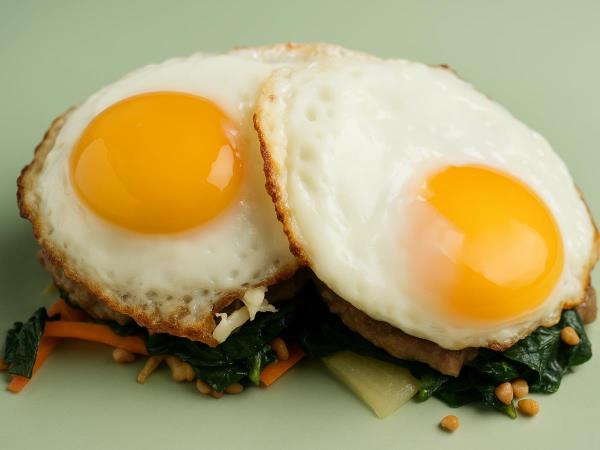
If you plan to fry eggs in a plain stainless-steel pan, don't be surprised if you end up with something quite different from a neat sunny-side-up egg. Eggs stick to the bottom very quickly, which makes them hard to fry in the wrong kind of pan. That is why Ruhlman recommends a pan that eggs won't stick to. When frying a single egg in a good non-stick pan, you don't necessarily need to add butter, but with two or more eggs a teaspoon of butter helps, and it also gives the eggs an extra pleasant flavor.
At the same time, many readers ask whether non-stick coatings are completely harmless. Conventional non-stick pans are usually coated with PTFE, better known under the brand name Teflon. In the past, a chemical called PFOA was used in the production process, but according to Food Network's cookware guide, it has been phased out, and most non-stick cookware sold in the United States today is PFOA-free. Even so, testing by Consumer Reports found that one PTFE pan labeled PFOA-free actually still contained PFOA, which is why label claims deserve some caution. The European Food Safety Authority (EFSA) has also assessed how these substances reach us through food, and it's worth noting that cookware is only one of several possible sources.
What does this mean in practice? A few simple habits can give you extra peace of mind:
- Avoid overheating an empty non-stick pan and cook eggs over medium or low heat, which is better for the eggs anyway.
- Replace pans with scratched, peeling or visibly damaged coating.
- If you prefer to avoid coatings altogether, consider a well-seasoned cast-iron or carbon-steel pan, or quality ceramic cookware. Consumer Reports lists ceramic, stainless steel, cast iron and carbon steel as good alternatives.
3. Scrambled eggs
Scrambled eggs are probably the fastest dish you can make. Ruhlman advises first whisking the eggs well in a bowl, adding seasonings if you like (salt, pepper), and only then pouring them into a pan that is not too hot. The hotter the pan, the faster you will have to work to keep the eggs from burning. It's better to turn the heat down, and you'll be much less stressed. Stir the eggs slowly the whole time. The secret really is in slow stirring, because that is the only way the eggs cook gently and evenly into soft, creamy curds.
Gordon Ramsay does things a little differently: he cracks the eggs directly into the pan and, according to many descriptions of his method, adds salt only at the very end. Two famous names, two slightly different approaches, but the same message: gentle heat and constant, calm stirring. Try both methods and see which texture you like more.
Why eggs deserve a little more attention
From a nutritional point of view, eggs are a small but valuable package. One egg provides roughly 6 grams of high-quality protein, along with vitamin B12, selenium, choline and vitamin D, as well as lutein and zeaxanthin. In our article Is egg really responsible for heart problems? we looked at why eggs have lost much of their bad reputation over the years, and in What would happen if you ate an egg every day? we explored how an egg at breakfast may help you feel full for longer.
Eggs also have a few lesser-known properties. The yolk contains a protein called phosvitin, which may reduce the absorption of iron from the same meal, something we covered in Too much iron in the blood can also be a problem. As always, balance and variety are key, and if you have a specific health condition, it's best to discuss your diet with your doctor or a registered dietitian.
And perhaps the most important lesson from Ruhlman's book: when an ingredient is this simple, every small detail counts. A few extra minutes, a lower flame and a bit of patience can turn an ordinary egg into a small everyday pleasure.
What is your secret to perfect eggs? Do you prefer them hard-boiled, fried or softly scrambled? Share your experience in the comments.
Information on this website is for educational purposes only and is not medical advice.
expert, nutritionist
 Would you like to be informed about news on the website?













|

