




Maple Syrup and Baking Soda: Why This Homemade Combination Fascinates Natural-Food Fans
expert, nutritionist
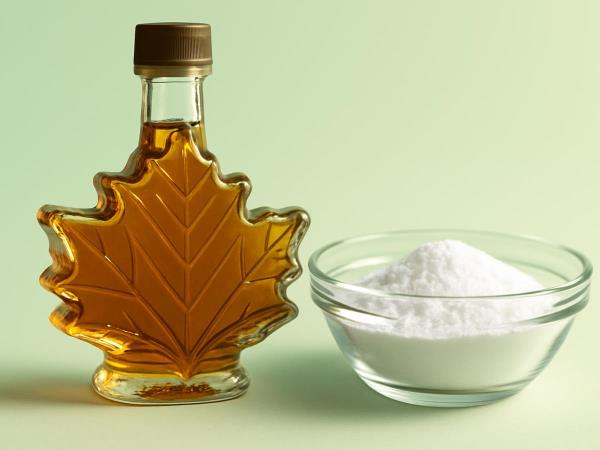
A spoonful of maple syrup, a spoonful of baking soda, a few minutes on the stove, and supposedly you have a remedy for one of the most feared diseases on earth. The recipe has been circulating on forums and social media for more than a decade, often shared by people in very difficult situations who are desperately hoping for something simple and cheap that works. It is easy to see the appeal. It is also exactly why the claim deserves an honest look. Maple syrup itself, it turns out, is far more interesting than most people realize, just not in the way the viral posts suggest.
When a superstar lived on maple syrup
Few people have put maple syrup to a more public test than Beyonc{-15447}. To prepare for her role as Deena Jones in Dreamgirls, she followed the so-called Master Cleanse, a liquid-only regimen of water, lemon juice, cayenne pepper and maple syrup, and shared on Oprah that she had lost around 20 pounds. The story turned the "lemonade diet" into a worldwide craze almost overnight. Yet the singer herself later said she would never do it again, and doctors pointed out that most of the quick weight loss came from what was essentially a fast. Her experience captures maple syrup's reputation perfectly: a natural product surrounded by big promises, some of which are worth keeping and some of which are better left behind.
More than just sugar? What science found in maple syrup
Did you know that maple syrup contains plant compounds similar to those found in blueberries, green tea and other so-called superfoods? Although pure maple syrup is roughly 66 to 67 percent sugar, many people place it closer to honey than to white sugar, and there is a reason for that.
Early research identified around 20 compounds in maple syrup that may be relevant to human health. In 2011, a team led by Navindra Seeram at the University of Rhode Island presented findings at the American Chemical Society national meeting: they had identified 54 compounds in pure maple syrup from Quebec, five of which had never before been seen in nature. One of them, named quebecol, appears to form only when maple sap is boiled down into syrup. Many of these compounds are polyphenols with antioxidant activity, and in laboratory studies some showed anti-inflammatory properties. The research was later published in the Journal of Functional Foods.
Two important caveats belong here. First, these were laboratory findings, not studies showing that eating maple syrup protects people from disease. The researchers themselves noted that it is not yet known whether these compounds contribute to health in the amounts we actually eat. Second, the work was funded in part by the Quebec Maple Syrup Producers and Agriculture and Agri-Food Canada, which does not invalidate it but is always worth knowing.
Of course, maple syrup is still, at its core, a liquid sugar rich in carbohydrates, so moderation is key. Its main components are sucrose and water, with smaller amounts of glucose and fructose.
The nutrition label, honestly
According to the USDA FoodData Central database, 100 grams of maple syrup provides:
- Energy: about 260 calories
- Protein: 0.04 g
- Fat: 0.06 g
- Carbohydrates: about 67 g, almost entirely sugars
- Dietary fiber: 0 g
- Manganese: about 2.9 mg (well over 100% of the daily value)
- Riboflavin (vitamin B2): about 1.3 mg (close to the full daily value)
- Zinc: about 1.5 mg (roughly 13% of the daily value)
- Sodium: about 12 mg (negligible)
One correction to a popular claim: maple syrup does not contain dietary fiber. Its carbohydrates are sugars, so it should be counted as a sweetener, not as a source of fiber. A typical tablespoon (about 20 g) contains roughly 52 calories.
Maple syrup's hidden minerals
Where maple syrup genuinely stands out among sweeteners is its mineral content. It is rich in manganese and provides useful amounts of zinc. Both are involved in many enzyme systems in the body, and zinc in particular plays a well-documented role in normal immune function, as summarized by the NIH Office of Dietary Supplements. Among the vitamins, riboflavin (B2) is the one present in meaningful amounts. It helps the body turn food into energy. Other B vitamins, such as niacin, B5 and B6, appear only in trace amounts.
Still, keep perspective: to get significant zinc from maple syrup, you would have to eat far more sugar than is sensible. Whole foods remain the better route. A handful of nuts, for example, delivers zinc, magnesium and manganese together with healthy fats and protein, as we explain in Did You Know Cashews Aren't Actually From India - and Why That Matters?
The maple syrup and baking soda "cure": where the idea comes from
The homemade recipe usually calls for mixing one part baking soda (sodium bicarbonate) with three parts maple syrup and heating it briefly. Online posts claim that baking soda makes the body more alkaline, that cancer cells cannot survive in an alkaline environment, and that the syrup acts as a "carrier" that delivers the soda straight to the cells.
There is a grain of real science at the root of this story, which is why it spreads so easily. In 2009, researchers including Ian Robey published a study in Cancer Research showing that oral sodium bicarbonate raised the pH around tumors and reduced the formation of new metastases in mouse models of breast cancer. Importantly, it did not slow the growth of the primary tumors, and the results were mixed across other cancer types. A follow-up modelling study in the British Journal of Cancer concluded that bicarbonate would likely have only limited effect in humans, especially with more aggressive cancers.
What about the "alkaline body" theory? Your body keeps blood pH within a very narrow range regardless of what you eat. A systematic review published in BMJ Open found that there is essentially no research supporting or disproving the alkaline-diet theory, and that promoting alkaline diets or alkaline water for cancer prevention or treatment is not justified. The American Institute for Cancer Research has described the idea as a myth, and the American Cancer Society notes that the claims behind baking soda as a cancer treatment are not supported by clinical evidence. Independent fact-checkers at Science Feedback reached the same conclusion. The idea that sugar "carries" baking soda to specific cells also has no scientific basis.
We have looked at similar viral claims before. A good example is A Spoonful of Rice, a Spoonful of Vinegar: The Old Japanese Habit Science Is Starting to Take Seriously, where an everyday habit turned out to be reasonable once the exaggerated promises were set aside.
Why the homemade mixture isn't as harmless as it looks
Baking soda is safe in the small amounts used in cooking, but regularly swallowing it as a remedy is another matter. Toxicologists at the University of California, San Francisco described in the Journal of Medical Toxicology how excessive baking soda use can upset the body's electrolyte and acid-base balance, in some cases affecting heart rhythm. Poison Control also advises against using baking soda as a homemade antacid and recommends safer over-the-counter options instead. Baking soda is also high in sodium, which matters for anyone watching their blood pressure or with heart or kidney concerns.
The biggest risk, however, is not the mixture itself. It is the temptation to rely on it instead of proven care. Anyone facing a serious diagnosis deserves treatment guided by their doctor, and any complementary approach is best discussed with the medical team first.
Where maple syrup and baking soda truly belong together: your baking
Here is the pleasant surprise: maple syrup and baking soda really are a great pair, just in the oven. Maple syrup is slightly acidic, so when you swap it for sugar in a recipe, a little baking soda helps the batter rise properly. The University of Maine Cooperative Extension suggests these rules of thumb:
- Use about ¾ cup of maple syrup in place of 1 cup of granulated sugar.
- Reduce other liquids by 2 to 4 tablespoons per cup of syrup.
- Add ¼ to ½ teaspoon of baking soda, unless the recipe already contains buttermilk, sour cream or another acidic ingredient.
- Lower the oven temperature by about 25{-15696}F (around 15{-15696}C), because maple syrup caramelizes and browns faster than sugar.
The result is moist, aromatic muffins, quick breads and cookies with a warm caramel-vanilla note that plain sugar simply can't match.
Smarter ways to enjoy maple syrup
If you love maple syrup, there is no reason to give it up. The goal is to use it wisely:
- Choose pure maple syrup. "Pancake syrup" is usually flavored corn syrup without the compounds described above.
- Use it instead of refined sugar, not in addition to it. Its stronger flavor means you often need less.
- Mind your daily sugar budget. The American Heart Association suggests keeping added sugars to about 25 g a day for women and 36 g for men, and two tablespoons of maple syrup already add up to roughly 25 g. The World Health Organization also recommends limiting free sugars, which include syrups and honey.
- Pair it with fiber, protein or fat. A drizzle over oatmeal with nuts or over plain yogurt is gentler on blood sugar than syrup on its own.
For more on how sweeteners compare, read Sugar Is the New Fat - So What's the New Sugar? If your mornings tend to start sweet, 4 Healthy Breakfast Foods Nutritionists Quietly Avoid - Even Though Millions Eat Them Every Day shows where hidden sugar often lurks. For readers keeping an eye on blood sugar, Another pandemic among us ... is also worth a look.
Autumn, immunity and the bigger picture
Many readers reach for maple syrup and other natural sweeteners in cold autumn days, stirred into warm tea or drizzled over porridge. As a comforting part of a balanced diet, that is perfectly fine. However, no single spoonful will "strengthen" your immune system on its own. What genuinely supports your body through the colder months is the overall pattern: plenty of vegetables and fruit, whole grains, legumes, enough sleep, regular movement, and less added sugar and highly refined flour.
If you are looking for seasonal inspiration, 7 types of vegetables that heal the body and Warm Water with Turmeric Against Winter Troubles are good places to start. Honey lovers will find another sweet tradition explored in Novak Djokovic Starts His Morning With It — And So Does Almost Every Kitchen in Europe.
The bottom line
Pure maple syrup is a remarkable natural sweetener. It contains dozens of plant compounds, a generous dose of manganese and some zinc and riboflavin, which makes it a more interesting choice than white sugar when used in moderation. Baking soda is an indispensable helper in the kitchen. Together, they make wonderful muffins. What they don't make, according to current evidence, is a medicine. Enjoy the syrup for its flavor, keep the baking soda for your baking, and leave health decisions to the conversations you have with your doctor.
Information on this website is for educational purposes only and is not medical advice.
expert, nutritionist
 Would you like to be informed about news on the website?









|

