




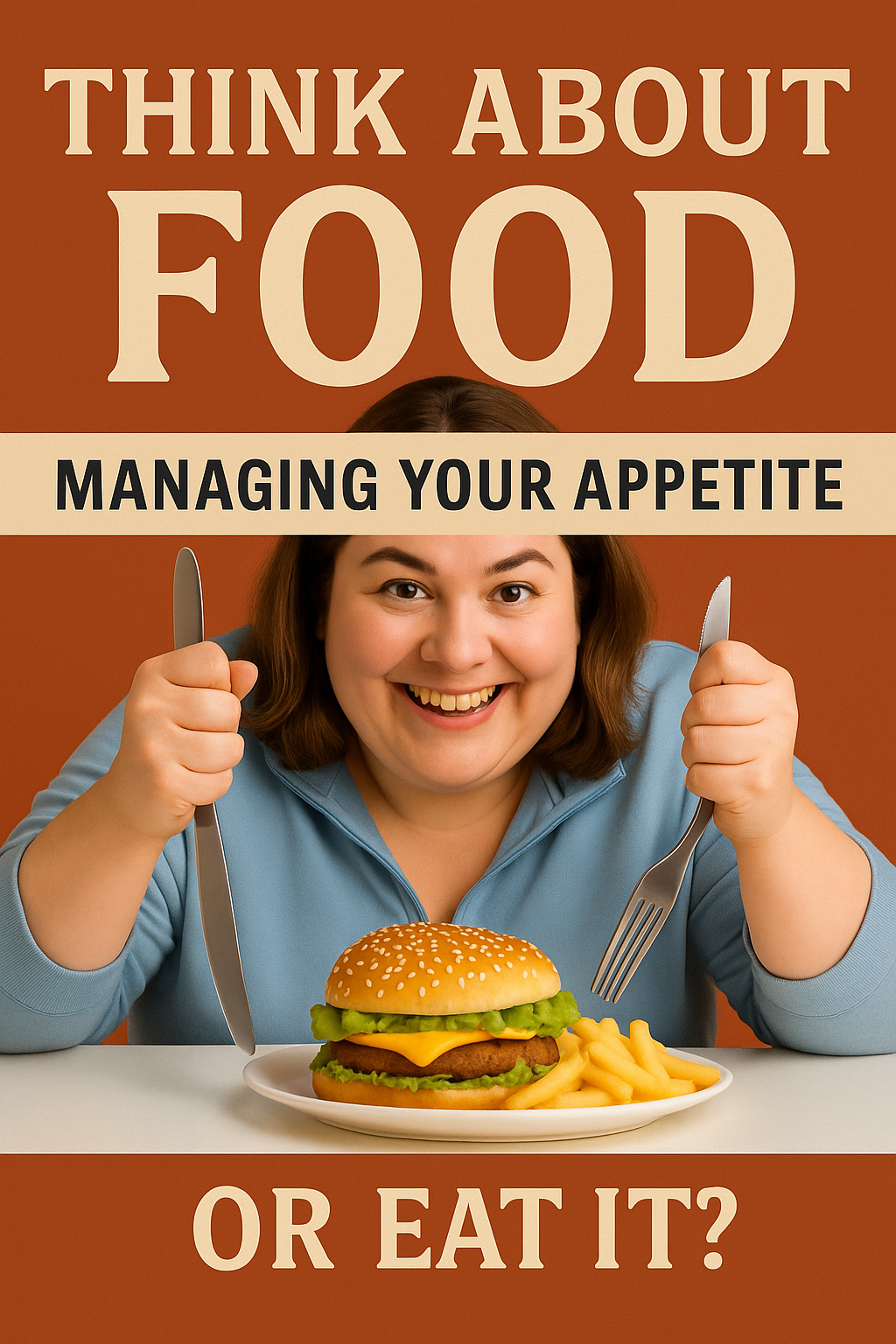

Eat It in Your Mind First: A Simple Mental Technique for Managing Your Appetite
expert, nutritionist
Imagine eating thirty chocolate candies, one by one, slowly, savoring every bite. Now imagine that this simple daydream could make you reach for fewer real candies a few minutes later. It sounds too good to be true, but that is roughly what a team of researchers observed in a study published in one of the world's most respected scientific journals. No pills, no expensive products, no strict diet. Just your imagination.
The idea that the mind can shape how much we eat is not new. The late Vietnamese Zen master Thich Nhat Hanh, one of the best-known teachers of mindfulness in the world, spent decades encouraging his students to give every mouthful their full attention: to look at their food, think about where it came from, and chew slowly before taking the next bite. Together with nutrition researcher Lilian Cheung of the Harvard T.H. Chan School of Public Health, he turned this practice into the book Savor: Mindful Eating, Mindful Life. Many readers have said that when they truly paid attention to what they were eating, they felt satisfied sooner. The Carnegie Mellon study adds an intriguing twist: some of that attention can happen before the food is even on your plate.
Why do some people think about food all the time?
Why do some people think about food constantly, while others stay relatively calm around it? Many factors play a role: eating habits formed in childhood, genetics, and determination or willpower. However, researchers at Carnegie Mellon University (CMU) came up with an interesting explanation: thinking about food, or rather imagining that you are eating it, may reduce how much you actually eat.
Yes, you read that right!
Before you actually reach for that pizza or candy, you can "trick" your brain into feeling as if you have already eaten, and this may help you eat less in the end. It is a kind of mind game that may help you manage cravings and the urge to snack, even when you do feel hungry.
How can thinking about food mean eating less of it?
In the study, led by Carey K. Morewedge together with Young Eun Huh and Joachim Vosgerau, one group of participants imagined eating 30 M&M's, one at a time. Another group imagined eating only 3. Afterwards, both groups were offered real candies. The result: the group that imagined eating the larger amount actually ate fewer real candies than the group that imagined only a few.
Why? Repeatedly "rehearsing" the act of eating in your mind appears to trigger habituation, a gradual decrease in how strongly we respond to something we are exposed to again and again. Scientists already knew that habituation happens when we really eat (the tenth spoonful of ice cream is never as exciting as the first), as described in a review by Leonard Epstein and colleagues, Habituation as a determinant of human food intake, published in Psychological Review. The CMU team showed that something similar may happen when eating is only imagined.
So if you picture yourself eating a lot, your brain may respond with something like "okay, I have already had plenty of this", and the strong urge to eat fades a little. When it is time to really eat, you may be satisfied with less.
What does this mean in practice?
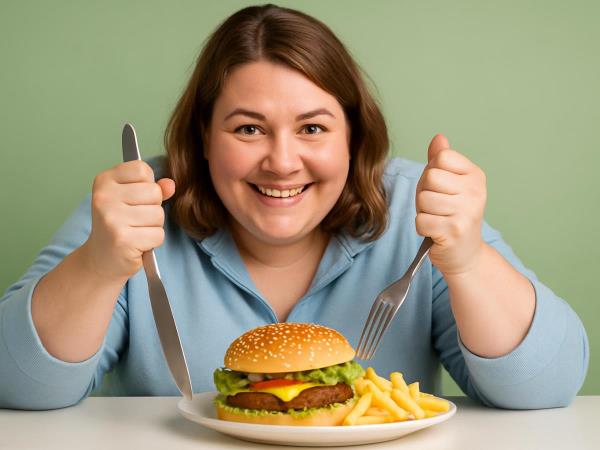
Do you ever think "oh no, I'm hungry again", even though you know you ate not long ago? Often it is not real hunger, but simply the thought "I'm going to have something to eat now" that takes control and pulls you toward the kitchen. When this happens, try a simple technique: pause for a moment and imagine a big portion of your favorite food in front of you (pizza, candy, chocolate...). Picture yourself eating it. Bite after bite. At least 30 pieces. A lot. Really a lot. When you finish, in your mind, you may notice that the urge has softened and that you feel a sense of "enough".
Then, when you sit down to eat for real, you may not want as much as you otherwise would. This way, you may be able to eat a bit less without feeling like you are on a strict diet.
Folk wisdom points in the same direction
Traditional practices and home remedies often include ways to consciously interrupt a sudden craving: drinking a glass of warm water or a cup of tea, or simply taking a moment to breathe and think before you start eating. These habits have not been studied with the same scientific rigor as the CMU experiment, but they share the same core idea: respond consciously rather than on autopilot. When you create a feeling of satisfaction, or at least "enough", in your mind beforehand, it may be easier to stay in control of how much you actually eat.
Modern research on mindful eating supports this general approach. A systematic review and meta-analysis by Ahmadyar, Zhang and Ferriday, Effects of mindfulness and mindful eating on food intake and appetite, published in Clinical Psychology Review, found that mindfulness and mindful eating interventions were linked to modestly lower food intake in controlled settings, although they did not clearly change how hungry people felt. Harvard's The Nutrition Source also offers practical guidance on eating more mindfully.
If we combine the CMU finding that thinking about eating may reduce how much we eat with the traditional advice "before a meal, stop, take a breath, think, then eat", we get an appealing combination: no expensive diet products and no extreme restrictions.
When and for whom might this help?
Imagined eating is not only for those who want to lose weight. It may also help people who often find themselves eating more than they need out of habit, stress, boredom or routine. A particularly tricky moment is the end of the day, when you sit down in front of the TV and casually eat "just two spoonfuls" of ice cream simply because it is "that time". If you did a short mental visualization first, you might "eat" it in your head much earlier, and your real portion could end up smaller.
If late-evening cravings are your weak spot, you may also find useful ideas in the article The End of the 6 p.m. Myth: Light Bedtime Snacks That May Actually Work in Your Favor.
Give it a try.
What does science say?
As mentioned, the study by Morewedge, Huh and Vosgerau, Thought for Food: Imagined Consumption Reduces Actual Consumption, was published in the journal Science in December 2010. Across five experiments, people who repeatedly imagined eating a food (such as M&M's or cubes of cheese) many times later ate less of that food than people who imagined eating it only a few times, imagined eating a different food, or did not imagine eating at all. You can read a summary in the university's press release on ScienceDaily.
Two details are especially interesting. First, it was not enough simply to think about the food; participants had to imagine actually eating it, and to do so many times. Second, the effect only applied to the specific food that was imagined. Picturing yourself eating cheese did not reduce how much chocolate people ate. So if chocolate is your weakness, imagine chocolate.
Equally interesting is what did not happen. People did not eat less because the food suddenly tasted worse, or because they had talked themselves into eating less. The researchers concluded that participants simply wanted it less, which is consistent with habituation.
It is also fair to say that science rarely ends with a single study. A later replication by Czech researchers, published in the journal E-psychologie under the title How imagination influences consummation: the more you think about it, the less you eat, did not find the same effect in a smaller group of students. The authors noted that more research is needed. In other words, imagined eating is best seen as a promising, harmless experiment you can try for yourself, not as a guaranteed method.
Simple and free things to try at home
When you feel hungry, pause first and don't rush straight to the fridge or the kitchen. Give yourself 30 seconds to think. Close your eyes, or at least gaze into the distance. Imagine your favorite food in front of you... Picture yourself taking a big bite, chewing, enjoying it in your mind, noticing how delicious it is, and repeat this dozens of times.
Then imagine eating even more! Another 30 pieces... Many people find they feel noticeably less driven to eat afterwards.
After the visualization, return to real life. Take an actual portion. Look at it for a moment... Only then eat it, slowly.
If a strong desire for "more" still appears, take another minute for the visualization and repeat the process.
With this simple method, you engage the part of your mind that often acts on impulse and gently steer it toward a more thoughtful state. One important note: don't use it as an excuse to keep hovering around the fridge, and don't use it to skip meals your body needs. Your body needs regular, nourishing food. The technique is meant for moments when you are about to eat more than you need, not for times when you are truly hungry or running low on energy. If thoughts about food feel overwhelming or distressing, it is a good idea to talk to your doctor or a registered dietitian.
If imagined eating doesn't appeal to you, you can try something else. Make yourself a cup of herbal tea, for example a warm cup of nettle, mint or linden blossom tea. Let making tea become a small ritual, and make just one cup each time. Not more! While you wait for it to brew and cool, the craving may pass or at least ease. A Columbia University health resource, Go Ask Alice!, notes that unsweetened herbal tea is practically calorie-free and can be a comforting choice for boredom-driven cravings, although it does not replace real meals or the nutrients your body needs. A small study published in Clinical Nutrition Research, Fennel and Fenugreek Tea Drinking Suppresses Subjective Short-term Appetite in Overweight Women, found that participants felt less hungry after fenugreek tea, although they did not actually eat less at the following meal.
Another small pre-meal habit worth knowing about is described in the article Eat 4–6 Walnut Halves Before a Meal and You May Naturally Eat Less – No Strict Diets, No Deprivation.
Know which foods tempt you most
Visualization works best when you know your personal "trigger foods". For many people, the hardest foods to stop eating are those that combine fat, salt and refined carbohydrates. You can read more about this in Pizza or Chocolate: Which Food Is Harder to Stop Eating, According to Science? It is also worth knowing that some seemingly healthy foods hide more calories and sugar than we think, as explained in Hello, and Fattening: Foods that Sabotage Your Diet.
Conclusion
If you are sometimes bothered by the feeling that you are "hungry again", there is one more simple and effective approach: reduce the amount of food on your plate. If you feel your weight is creeping up, smaller portions are a sensible first step toward a lighter, healthier you. Combine them with a moment of imagined eating, a cup of herbal tea and a little more attention at every meal, and you may find that "enough" arrives sooner than you expected.
Information on this website is for educational purposes only and is not medical advice.
expert, nutritionist
 Would you like to be informed about news on the website?













|

