


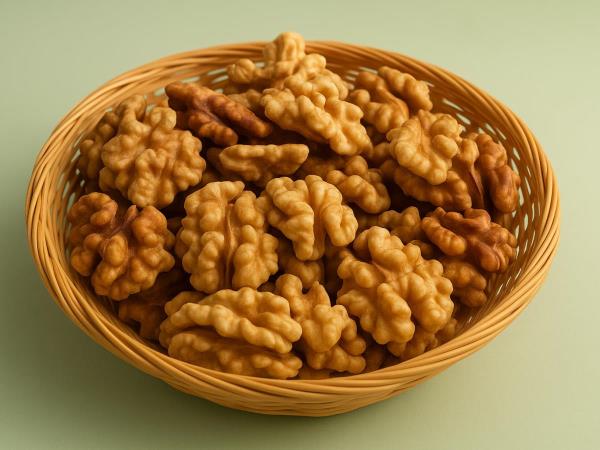



Eat 4–6 Walnut Halves Before a Meal and You May Naturally Eat Less – No Strict Diets, No Deprivation
expert, nutritionist
What if the easiest way to eat a little less at lunch were not willpower, calorie apps or a strict diet plan, but four to six walnut halves eaten a few minutes before you sit down? It sounds almost too simple, yet this small habit has a surprising amount of nutrition science and medical opinion behind it.
One of the best-known advocates of this trick is Dr. Mehmet Oz, the cardiothoracic surgeon and long-time television health host. He has recommended eating nuts about 20 minutes before a meal to take the edge off appetite, and he reportedly keeps a supply of walnuts in his office for snacking. A nod to his Turkish roots: he likes to soak them in water for a few hours to soften the texture and remove some of the bitterness. Together with his co-author Dr. Michael Roizen of the Cleveland Clinic, he went even further, explaining that a small amount of healthy unsaturated fat – roughly 70 calories, or about six walnut halves – eaten around 25 minutes before a meal can help you feel full faster. Their key warning: more is not better. Eat a big bowl of nuts, and you are working against yourself.
Many people who try this approach describe the same experience: they arrive at the table without that "I could eat a horse" feeling, serve themselves a normal portion instead of a mountain of pasta, and no longer reach for dessert out of habit. Nothing dramatic happens, and that is exactly the point. It is a quiet, sustainable change.
Fewer calories without magic tricks
Cutting calories is no magic trick. Walnuts are very effective at easing hunger and taking the edge off appetite. If you eat a small handful of walnuts before a meal, you will likely eat less and feel full sooner. Around 15 to 20 minutes before a meal, simply eat 4 to 6 walnut halves. That is roughly 10–15 grams, or about 70–100 calories.
There is interesting research behind this effect. Scientists at Beth Israel Deaconess Medical Center, a Harvard Medical School teaching hospital in Boston, used functional magnetic resonance imaging (fMRI) to look at what happens in the brain after people eat walnuts. In their randomized, double-blind, placebo-controlled study published in Diabetes, Obesity and Metabolism, volunteers drank smoothies that either contained walnuts or a placebo with the same calories and fat. After five days on walnuts, when the participants were shown pictures of highly tempting foods such as burgers and desserts, a brain region called the right insula became more active. This area is associated with regulating appetite and cravings. As Harvard Medical School reported, the study was small (only 10 volunteers) and was partly funded by the California Walnut Commission, so it should be seen as an interesting clue rather than final proof. The same research group had previously found that walnuts increase feelings of fullness.
If you enjoy little tricks like this, you will also like our article 3 tricks to never be hungry, where nuts also play an important role.
But aren't nuts fattening?
This is the most common worry, and it is understandable, since nuts are energy-dense. However, a large systematic review and meta-analysis published in Obesity Reviews, which combined prospective cohort studies and dozens of randomized controlled trials, concluded that eating nuts was associated with a lower incidence of overweight and obesity. The researchers stated that concerns about nuts contributing to weight gain appear unwarranted. A long-term observational study in BMJ Nutrition, Prevention & Health also linked an extra half-serving of nuts per day with less long-term weight gain, and walnuts in particular with a lower risk of obesity.
The secret lies in what nuts replace. A few walnuts instead of a pastry is a very different story from a few walnuts on top of a pastry. If you are trying to lose a few kilos without the misery of classic dieting, take a look at Diet without dieting and 2 kg less per week, and find out which everyday choices quietly work against you in Hello, and Fattening: Foods that Sabotage Your Diet.
Healthy fats instead of empty calories
Eating walnuts before meals has another positive side. Besides the lower energy value (fewer calories) you consume during the meal, you also bring healthy, beneficial fats into your body – the very opposite of meals loaded with refined carbohydrates and trans fats. Walnuts contain around 60 to 65 percent fat, dominated by linoleic acid (an omega-6 fatty acid) and alpha-linolenic acid (ALA, a plant-based omega-3 fatty acid). Both are essential fatty acids, which means the body cannot produce them and must get them from food.
According to the California Walnut Commission, one ounce (about 28 g, or roughly 14 halves) of walnuts provides around 18 g of fat, of which 13 g is polyunsaturated, including about 2.5 g of plant omega-3 ALA. The British Heart Foundation lists walnuts among the useful vegetarian sources of omega-3s, alongside flaxseed, chia seeds and rapeseed oil.
Don't overdo it
It is important to know that walnuts are very high in energy, so you should not go overboard. Think of walnuts above all as a replacement for sweet pastries, biscuits, fried foods and large portions of white pasta, not as an extra on top of them. Most nutrition guidance points to around 30 grams of nuts per day as a sensible target, which is also mentioned in our article Did You Know Cashews Aren't Actually From India - and Why That Matters?. If you want to know which foods are worth cutting back on, read 5 Foods That Shorten Your Lifespan.
A practical tip: count out your halves instead of eating straight from the bag. Store walnuts in an airtight container in the fridge or freezer, because their delicate fats can turn rancid. If walnuts taste bitter or smell "off", throw them away.
What else can walnuts do for you?
Walnuts are traditionally valued as good for blood vessels, skin and digestion. Many people find them a calming, satisfying snack, and they fit nicely into an eating pattern that supports a healthy metabolism. Here is what science says so far:
- Heart and cholesterol: In a two-year study published in the American Heart Association journal Circulation, healthy older adults who ate about half a cup of walnuts daily saw a modest drop in LDL ("bad") cholesterol and in the number of LDL particles. The effect was modest, but consistent with earlier research.
- The Mediterranean connection: In the large Spanish PREDIMED trial, people at high cardiovascular risk who followed a Mediterranean diet supplemented with 30 g of mixed nuts a day – half of them walnuts – had fewer major cardiovascular events than those on a low-fat control diet. The results were later reanalysed and republished in the New England Journal of Medicine in 2018 with similar conclusions. Remember, though, that this was an overall eating pattern, not walnuts alone.
- Flexible blood vessels: Walnuts contain the amino acid L-arginine, which the body uses to produce nitric oxide, a molecule that helps blood vessels relax and stay flexible, supporting good blood flow. As Mayo Clinic explains, some research suggests that L-arginine may support overall blood vessel health.
- Antioxidants and inflammation: Walnuts are rich in polyphenols and other antioxidants. According to Cleveland Clinic, their combination of omega-3s and antioxidants is one reason walnuts are part of heart-friendly eating patterns such as the Mediterranean diet.
Vitamin E and early research on cancer
And one more thing worth knowing: walnuts are an excellent source of a particular form of vitamin E called gamma-tocopherol, as well as omega-3s, polyphenols and phytosterols. These compounds have attracted the interest of cancer researchers. Studies led by Dr. Elaine Hardman at Marshall University found that mice genetically programmed to develop breast cancer developed tumours at a lower rate when their diet included walnuts, and researchers at UT Health San Antonio reported fewer and smaller prostate tumours in mice on a walnut-enriched diet.
It is important to put this in perspective: these were animal studies, and they cannot be directly applied to people. Even the researchers themselves, as reported by Scientific American, stressed that walnuts should be just one part of an overall healthy diet. In other words, walnuts are a smart, nutritious food choice, but no single food can prevent cancer.
How to make the walnut habit work for you
- Timing: eat 4–6 walnut halves about 15–20 minutes before your main meal.
- Chew slowly and drink a glass of water with them; this gives your body time to register fullness.
- Swap, don't add: let walnuts replace a biscuit, chips or a sugary snack, not join them.
- Choose plain: raw or lightly toasted walnuts, without salt, sugar or chocolate coating.
- Vary it: sprinkle chopped walnuts over porridge, yogurt or salads on days when you don't eat them before a meal.
Important: walnuts are one of the more common food allergens. If you have a tree nut allergy, avoid them completely. Anyone with a medical condition, on a prescribed diet or taking medication should talk to a doctor or registered dietitian before making significant dietary changes.
Information on this website is for educational purposes only and is not medical advice.
expert, nutritionist
 Would you like to be informed about news on the website?











|

