






When Everyone Told Her to Accept Herself, She Chose a Different Path… and Lost 95 Kilograms
expert, nutritionist
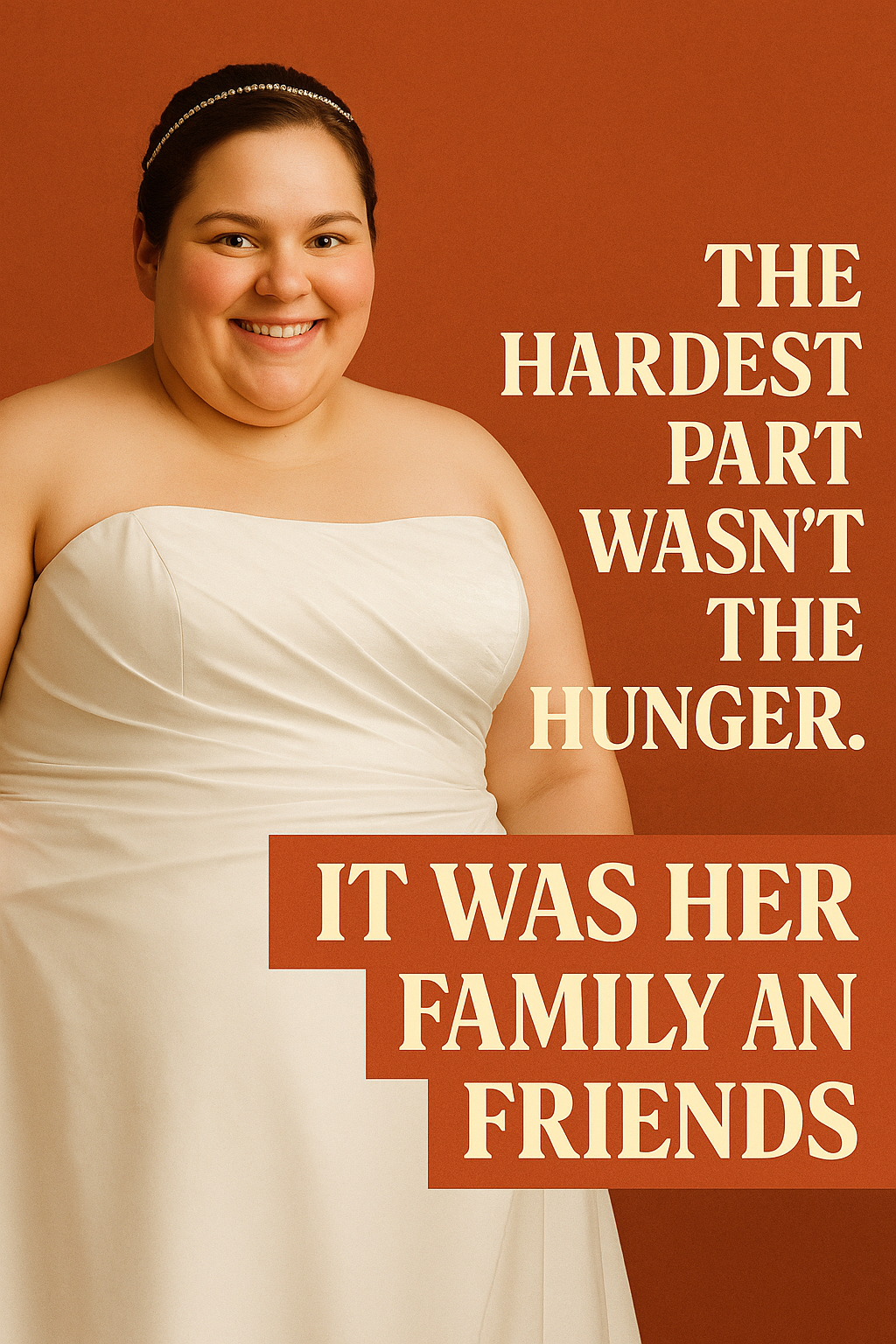
Seven meals a day. A run every single morning. And once a week, pizza and dessert, with no guilt. It sounds like the opposite of a strict diet, yet this is exactly the routine that helped a young Australian woman lose around 95 kilograms. The hardest part, she says, was not hunger. It was the people who loved her most.
"There's no magic bullet"
Few public figures have spoken as openly about weight-loss surgery as American TV weatherman Al Roker. At his heaviest he weighed around 340 pounds (about 154 kg), and in 2002 he chose gastric bypass surgery after a conversation with his dying father, who told him he had to be there for his own children. Roker lost more than 100 pounds, but he has never pretended the operation did the work for him. Soon after surgery, stress eating during a family crisis brought back around 40 pounds, and he had to rebuild his habits from the ground up. Years later, in an interview with People, he summed it up simply: there is no magic bullet, and surgery, like weight-loss medication, is only "a means," not the end. As early as 2004 he warned in a Dateline NBC special that anyone who thinks the operation alone solves everything is making a mistake.
Haley's story follows the same lesson, only she was still a teenager when it began.
A world that fell apart at 16
In 2010, young Haley's world collapsed. Doctors found serious blood-sugar problems and, soon after, a series of cysts, later diagnosed as polycystic ovary syndrome (PCOS), a common hormonal condition that, according to Australia's women's health organisation Jean Hailes, is often linked with weight gain and difficulty losing weight. Her doctors felt that stomach surgery was the best option available to her. Her health had become so fragile that her overall wellbeing was seriously at risk.
After the operation, her life changed completely. Partly because of the surgery itself, and partly because Haley decided she would no longer simply listen to her parents and friends. Everyone kept telling her that they loved her just the way she was and that she should not worry about her appearance. Deep down, however, she knew that the extra kilograms were at the root of many of her problems. At just 16 she weighed 175 kilograms, and she felt low and full of insecurities. Like so many people in her situation, she looked for comfort in food.
About a kilogram a week
After the surgery, things began to shift. She lost roughly a kilogram a week, and in just under three years she had shed around 95 kilograms. Since then, she says, she exercises regularly, goes running every morning and watches what she eats. Today the only visible reminder of the old days is her excess skin.
When she launched a Facebook fundraiser a little over a year later to pay for surgery to remove that loose skin, media around the world picked up her story. Yet hardly anyone took a closer look at what she had actually achieved. Excess skin after major weight loss is very common; the American Society of Plastic Surgeons explains that once skin has been stretched for a long time it often loses its elasticity, and body-contouring procedures are frequently the final step in a long weight-loss journey. Haley later admitted that the loose skin still affected her confidence every day, a reminder that the emotional side of such a change can take longer than the physical one.
Haley's daily rules
In one interview, the young woman revealed the habits that now shape her everyday life:
- Seven small meals a day instead of three large ones.
- Fewer carbohydrates, but not zero. She limits them rather than banning them completely.
- No more than three different vegetables on her plate at once.
- Very little meat. She has almost, but not entirely, removed it from her menu.
- No sugary drinks.
- A morning run, every day.
- One relaxed day a week.
And then comes the surprise: even though she is always on a diet, she has one day a week when she can treat herself. Pizza, desserts, a sandwich. But all of it still fits within her allowed calories. Haley says she never feels hungry, and on many days she does not even manage to eat all the calories she could.
A nutritionist's view: what can we learn from her routine?
Haley's rules were shaped by her surgery and her medical team, so they should not be copied one-to-one. Still, several of her habits reflect principles that are useful for almost anyone trying to eat more mindfully.
Small, frequent meals
After stomach surgery, smaller and more frequent portions are usually a practical necessity, because the stomach simply holds less. For people without surgery, the research is more nuanced: a meta-analysis published in Nutrition Reviews found that when total calories stay the same, eating more often does not by itself appear to make a meaningful difference to body composition. What matters most is the total amount and the quality of food. For some people, though, regular small meals help keep hunger under control, which is exactly what Haley describes. If you tend to eat a lot more than you planned, it is worth reading 10 reasons why every weight loss diet fails.
The "cheat day" that is not really cheating
Haley's weekly treat day may sound like a contradiction, but she keeps it inside her calorie limits, which makes it a planned break rather than a binge. Some researchers believe that planned breaks can help people stick with a diet over the long term. In the MATADOR study, published in the International Journal of Obesity, men who alternated two weeks of dieting with two weeks of balanced eating lost more fat than those who dieted continuously. A case study in the Proceedings of the West Virginia Academy of Science also described how occasional planned higher-calorie meals seemed to help one woman stay on track during a long weight-loss journey. The evidence is still limited, but the idea behind it is simple: a plan you can live with is better than a perfect plan you abandon.
Goodbye, sugary drinks
Cutting out sugary drinks is one of the simplest changes with the biggest impact. The World Health Organization's guideline on sugar intake recommends keeping free sugars below 10% of daily energy intake, ideally under 5%, and sweetened beverages are one of the main sources. Liquid calories rarely make us feel full, which is why they add up so quickly. For more on the foods that quietly work against your efforts, see Hello, and Fattening: Foods that Sabotage Your Diet.
More plants, less meat, simpler plates
Haley's habit of limiting herself to three vegetables at a time may be a personal trick to keep meals simple and portions manageable. Plant foods rich in fiber help many people feel full for longer; our article The Secret Weapon Against Stubborn Weight: Is Fiber the One Thing Missing From Your Diet? explains why fiber can be so helpful when you are trying to manage your weight.
Movement every morning
Her daily run is not only about burning calories. The World Health Organization recommends that adults aim for at least 150 to 300 minutes of moderate activity per week, noting benefits for mood, sleep and overall wellbeing. Speaking of sleep, it plays a bigger role in weight management than most people realise: read When you sleep too little, your belly grows.
Patience on the scale
A kilogram a week over three years is a steady, sustainable pace, especially compared with diets that promise dramatic results in days. If you have ever wondered why the first few kilos disappear so quickly and then everything slows down, our article The dilemma of all diets: have you really lost weight or have you just lost excess water? explains what is really happening.
Surgery in teenagers: what the research says
Weight-loss surgery in adolescents is a serious decision made only after careful medical assessment. The largest study on the subject, Teen-LABS, published in The New England Journal of Medicine, followed teenagers for three years after surgery and reported substantial average weight loss along with improvements in several health markers. The same researchers also noted that some participants needed additional procedures and that nutritional deficiencies, such as low iron levels, were common, which is why long-term follow-up with a medical team is essential.
The hardest part: family, friends and routine
According to Haley, the most difficult part of her weight loss was not the food. It was her parents and friends. Changing your eating habits often means changing your environment too: friends, colleagues, the people you share meals with. And the toughest of all is daily routine.
Science supports her experience. A well-known study in The New England Journal of Medicine by Nicholas Christakis and James Fowler, which followed more than 12,000 people over 32 years, found that weight changes tended to spread through social networks: a person's chances of gaining weight rose noticeably when a close friend did. The people around us shape what we eat, how much we eat and what feels "normal."
That does not mean you need to leave your loved ones behind. It means it is worth telling them clearly what you need. Haley's family meant well when they said they loved her as she was, and they were right. But she also knew that she wanted to feel healthier and more at ease in her own body. Both things can be true at the same time.
If you are looking for a gentler way to start, without strict rules, take a look at Diet without dieting and 2 kg less per week.
The takeaway
Haley's journey is not a recipe to copy. It is a reminder that big changes rarely come from one decision alone. The operation gave her a starting point, but the real work was done every morning on her run, at every one of her seven small meals, and in every conversation with people who did not yet understand why she wanted to change.
Information on this website is for educational purposes only and is not medical advice.
expert, nutritionist
 Would you like to be informed about news on the website?















|

