




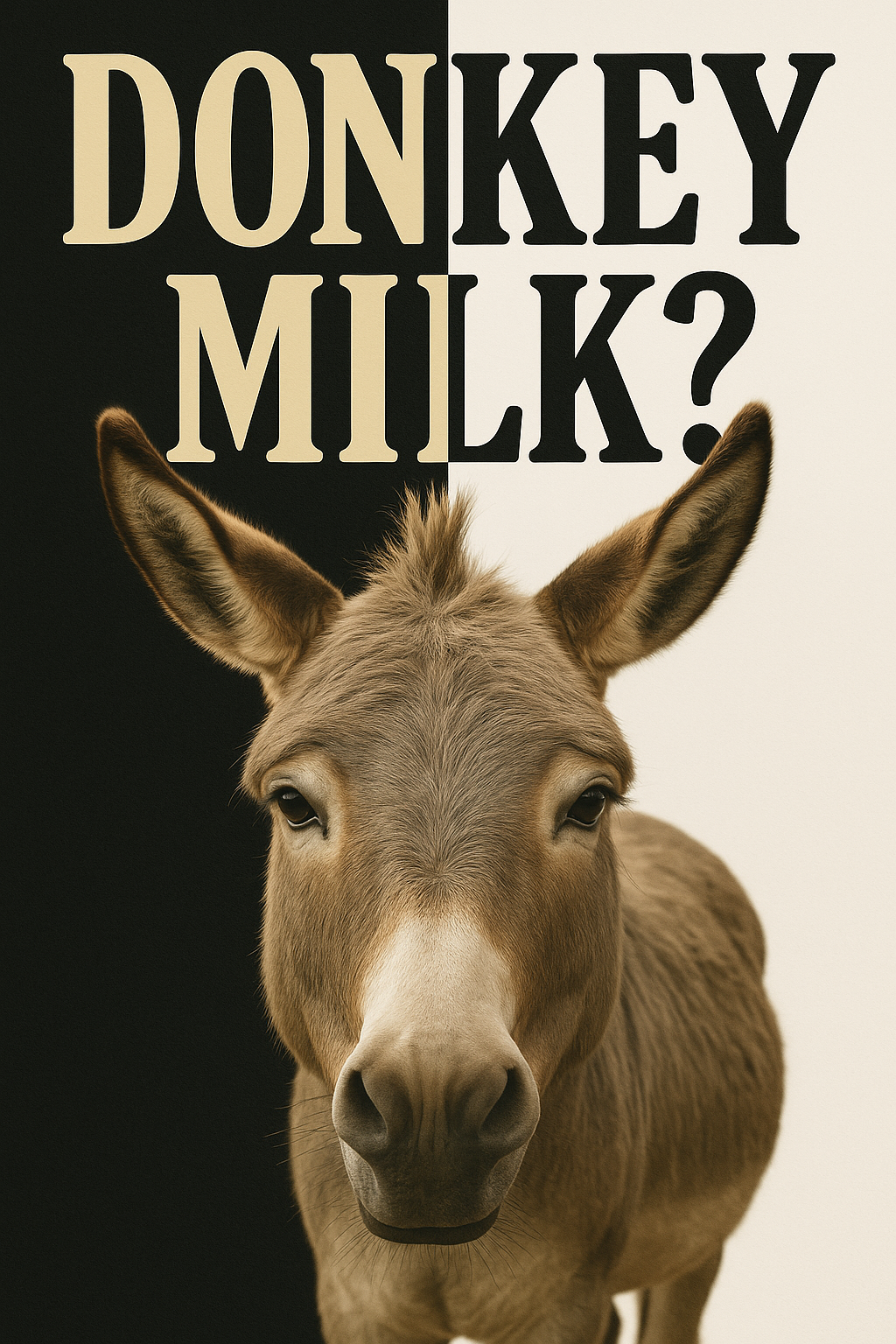


The Milk With Far More Vitamin C Than Cow's Milk: Why Almost Nobody Drinks It
expert, nutritionist
Imagine a drink that ancient physicians recommended for poisoning, that royal beauties reportedly used for soft skin, and that modern science is now rediscovering as one of the most bioactive dairy foods on the planet. We are talking about donkey milk, a food most people have never tasted, and many have never even heard of.
Donkey milk also made headlines in a surprising way. When Ecuador's Maria Esther de Capovilla was recognized as the oldest woman in the world, her family credited her long life largely to the donkey milk she drank. As FoodNavigator reported, even Olivier Denys, who runs Belgium's donkey dairy Asinerie du Pays des Collines, was surprised. He said he knew donkey milk was good for digestion, but had never heard that it might lengthen lives. Of course, one remarkable life proves nothing scientifically, but the story shows how much faith people have placed in this unusual milk.
An acquaintance of mine who follows a natural diet, and whose child is sensitive to cow's milk, recently told me that after months of searching for an alternative she stumbled upon donkey milk almost by chance. She tried it with her pediatrician's approval. After about two weeks, she said, her child seemed to sleep better, tummy troubles eased and the skin looked noticeably smoother. "I wouldn't have believed it if I hadn't seen it myself," she told me. Her experience is anecdotal, but similar stories are increasingly shared among parents of children with dairy sensitivities.
A Glimpse Into History: Hippocrates and Cleopatra Already Knew
Donkey milk has a long history. According to a review published in the journal Animals, Hippocrates and later Pliny the Elder were among the first to describe its benefits. Hippocrates is said to have recommended it most often for poisoning and skin injuries. Egyptian Queen Cleopatra, famous for her beauty, is said by tradition to have bathed in donkey milk to keep her skin soft, firm and smooth. Historians cannot confirm the legend, but as the history of donkey milk shows, people have used it for both food and cosmetics since antiquity.
Although donkey milk once had a reputation as a drink for the wealthy, ordinary people also knew and valued it. Why? People noticed very early on that donkey milk resembles mother's milk. It seemed gentler on babies' tummies than cow's milk, it was easier to digest, and it was rich in vitamins and minerals. Modern analyses support part of that folk wisdom: published data confirm that donkey milk is closer to human breast milk in lactose, protein and mineral content than cow's, sheep's or goat's milk.
What Does Donkey Milk Contain?
Donkey milk is one of the leanest milks there is. It contains only about 0.6 grams of fat per 100 grams, compared with roughly 3.7 grams in cow's milk, about six times less. A 2024 review in Frontiers in Nutrition puts the fat content at roughly 0.3 to 1 percent and notes a higher share of polyunsaturated fatty acids, especially linoleic acid. But low fat is not its only interesting feature.
What truly surprises people is the vitamin C content. Some older measurements suggested donkey milk can contain up to 60 times more vitamin C than cow's milk, and it also contains notable amounts of vitamins A, B, D and E. Figures vary considerably with the breed, diet and stage of lactation. A comprehensive 2025 review in the journal Foods (MDPI) gives a more conservative average of about 4.75 times more vitamin C than cow's milk, alongside useful amounts of calcium, phosphorus and zinc. Either way, donkey milk clearly stands out among animal milks. If you are looking for everyday ways to get more vitamin C and other immune-friendly nutrients, try our recipe Ginger, Avocado and Orange in One Glass: The Smoothie That Goes Straight to Where Your Immune System Lives.
The protective proteins deserve special attention. According to the Frontiers in Nutrition review, donkey milk is rich in whey proteins such as lysozyme, alpha-lactalbumin, lactoferrin and beta-lactoglobulin. It also contains immunoglobulins and other bioactive components. In laboratory and animal studies these compounds have shown antioxidant, antimicrobial and anti-inflammatory activity. Immunoglobulins are proteins that act as antibodies in the body, which is one reason donkey milk is often described as a natural ally of the immune system. However, the same researchers stress that more human studies are needed before firm health claims can be made.
Who Might Benefit Most From Donkey Milk?
Modern research suggests that donkey milk may be a good alternative to cow's milk for many children with cow's milk protein allergy. It contains less casein and has a different balance of the proteins that most often trigger allergic reactions. The Frontiers in Nutrition review describes it as a promising option for people with cow's milk allergy. The review in Animals reports that most clinical studies found donkey milk was tolerated by roughly 83 to 98 percent of infants with this allergy. That is a high rate, but it is not 100 percent, so every child should be introduced to it only under medical supervision.
This also matters for babies: donkey milk is light and easy to digest, but on its own it is too low in fat and energy for an infant. In clinical use it is usually supplemented with vegetable oil to match the energy of human milk. The American Academy of Pediatrics generally advises against giving babies unmodified animal milk in the first year of life. For infants, donkey milk should therefore never replace breast milk or formula without a pediatrician's guidance.
Traditional use and modern interest also overlap on the following points:
- It is valued as a food that may support normal immune function
- Its antimicrobial proteins are being studied in the laboratory
- It has traditionally been offered to pregnant women, growing children and older adults as a light, nutritious drink
- It is widely used in skin-care products such as soaps, creams and masks
- In the past it was used as a folk remedy for respiratory complaints such as coughs, bronchitis and asthma
A few practical cautions: donkey milk is high in lactose, so people with lactose intolerance should avoid it or limit it. Like any milk, it should be pasteurized before drinking to reduce the risk of harmful bacteria.
Important: Donkey milk is a food, not a medicine, and it does not replace medical advice. All of the properties described above are still being researched. If you have a health condition, a food allergy, or you are choosing milk for a baby, always talk to your doctor or pediatrician first.
Why Is Donkey Milk So Expensive, and Why Is It So Rare?
A liter of fresh donkey milk can cost 30 euros or more, and Food Republic calls it the costliest milk on Earth. Cheese made from it is even more extraordinary. The famous Serbian Pule cheese is often called the most expensive cheese in the world. It reaches prices of around 1,000 euros per kilogram, partly because about 25 liters of milk are needed to make a single kilogram.
The other reason is simple biology. A jenny, the female donkey, gives only about 1 to 1.5 liters of milk a day, and at least half must be left for her foal. A cow, by comparison, can produce dozens of liters in a single day. Donkey dairies are also small, rarely keeping more than about ten animals. As FoodNavigator noted, even one of Europe's most productive donkey farms collected only a few thousand liters a year, and half of that went into cosmetics.
So the reason donkeys are so rare on farms is also the reason this milk is so scarce. The economics are interesting: per liter, donkey milk sells for many times the price of cow's milk, but the low yields mean it demands patience, care for the animals and a very different business model from conventional dairy farming.
If you enjoy exploring the world of milk and dairy, you can also try making your own fresh, preservative-free spread with our recipe for Homemade Philadelphia-Style Cream Cheese from Four Ingredients: The Recipe Born from a Dairyman's Happy Accident. When the colder months arrive, you may also like our tip for Warm Water with Turmeric Against Winter Troubles. Every milk and every drink has its own story, and donkey milk is without doubt one of the most fascinating.
Information on this website is for educational purposes only and is not medical advice.
expert, nutritionist
 Would you like to be informed about news on the website?












|

