





Does Popcorn Make You Fat? The Answer May Surprise You
expert, nutritionist
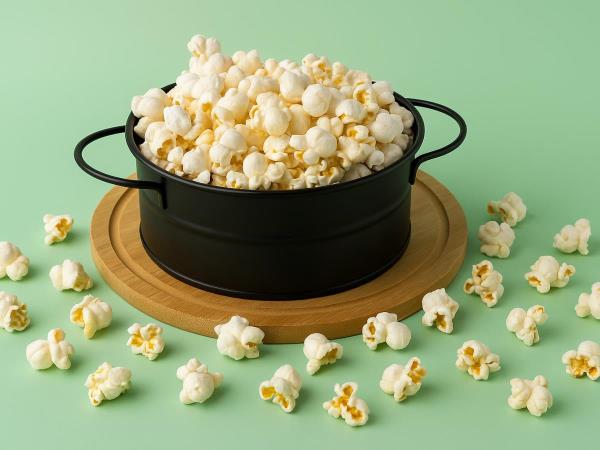
Gram for gram, a bowl of plain popcorn can contain more polyphenols than many fruits. Yet the same snack, drenched in butter, caramel or cheese powder, can carry more calories than a full meal. So which is it: a smart snack or a diet saboteur? The honest answer is "both." It all comes down to how you make it.
Even Hollywood's most disciplined action star is a fan. In a 2025 interview with the Just The Nobodys podcast, Tom Cruise revealed that popcorn is his favourite snack, both on film sets and at the cinema. He joked that there is a big difference between what he would like to eat and what he is actually allowed to eat while preparing for a role. Popcorn, it seems, makes it onto both lists.
Have you ever paused with a handful of popcorn and wondered: Does popcorn make you fat? You may be surprised to learn that the answer is not a simple yes or no. Everything depends on preparation, and that is where the truth lies.
A friend recently told me that during a diet he swapped his evening bag of crisps for a bowl of home-made popcorn without butter. A month later he was pleasantly surprised: he wasn't battling hunger in the evenings, and the scale had started to move in the right direction. The reason wasn't a magic snack. It was a smart swap to something with lower calorie density and more fibre. Several of our readers have shared similar stories. Many say that a big, crunchy bowl simply "feels" like more food than a small packet of crisps, which makes it easier to stop.
What Popcorn Is, and Why It Isn't "Empty" Food
Popcorn comes from a special variety of corn. Only kernels with a hard enough outer shell actually pop when heated. Inside, each kernel holds starch and a little water. As the kernel heats up, the water turns to steam, pressure builds, and the kernel bursts with that familiar, satisfying pop. From a nutritional point of view, the key fact is this: popcorn is a 100% whole-grain food. The kernel isn't stripped or heavily processed, so all of its layers are kept intact. That means more fibre, minerals and antioxidants. According to the American Chemical Society, one serving of popcorn can provide more than 70% of the typical daily whole-grain intake.
Let's look at some concrete numbers (values for plain, air-popped popcorn, based on data such as USDA FoodData Central):
- 3 cups of plain popcorn (≈ 24 g) contain only about 90–100 kcal.
- 100 g of plain popcorn contains roughly 380–390 kcal, mostly from carbohydrates, with some protein and very little fat. That sounds like a lot, but 100 g is an enormous, bucket-sized volume.
- Fibre: 100 g provides around 14–15 g of fibre, which makes it an exceptionally rich source for a snack.
- Antioxidants: A study published in the journal Antioxidants (Coco & Vinson, 2019, University of Scranton) found that commercial popcorn contained an average of 5.93 mg/g of total polyphenols. After simulated digestion, 2.66 mg/g was still available, which suggests a meaningful share may be accessible to the body.
Polyphenols are protective plant compounds that act as antioxidants. Professor Joe Vinson of the University of Scranton, who presented his findings at a national meeting of the American Chemical Society, reported that popcorn contains more polyphenols than most fruits and vegetables. The reason is concentration. Popcorn is only about 4% water, while many fruits and vegetables are around 90% water, which dilutes their polyphenols. He also found popcorn's levels to be comparable to nuts and up to 15 times higher than whole-grain tortilla chips. And the hulls that so often get stuck between your teeth? They are actually the part richest in these compounds.
One important caveat, which Vinson himself stressed: popcorn is not a replacement for fruit and vegetables. Fresh produce provides vitamins and many other nutrients that popcorn simply doesn't have. Think of popcorn as a better snack, not a substitute for your five-a-day.
Why Some Popcorn (Really) Can Make You Gain Weight
The numbers above sound great, so why does popcorn have a reputation for being "fattening"? Because we rarely eat it plain. Most popcorn we buy or order comes loaded with extras: oil, butter, salt, sugar, caramel, cheese powder and flavour enhancers. Just one tablespoon of oil adds roughly 120 kcal to a batch, and cinema-style butter toppings can add far more. Pre-coated microwave bags often contain saturated fats and high amounts of salt. That much salt can contribute to water retention, bloating and simply feeling sluggish.
The key isn't the corn itself; it's the preparation. A large cinema tub with butter and salt is a completely different food product from home-made popcorn from an air popper. If you want to know which other everyday foods quietly undermine your efforts, read Hello, and Fattening: Foods that Sabotage Your Diet.
Popcorn and Fullness: Is It Better Than Crisps?
One of popcorn's most frequently cited advantages is its low energy (calorie) density: you get a large volume of food for relatively few calories. A bowl of plain popcorn has roughly 90–100 kcal, while the same volume of potato crisps can easily exceed 300 kcal. That is a big difference.
Research supports this. In a study published in Nutrition Journal (Nguyen et al., 2012), 35 normal-weight adults tried different snacks before a meal. After 6 cups of popcorn (≈ 100 kcal), participants reported less hunger and more satisfaction than after a 150 kcal serving of potato crisps. Their total calorie intake for the snack plus the following meal was not significantly different from drinking water alone. When they ate crisps, total intake was noticeably higher. (Worth knowing: the study was co-authored by a researcher from a popcorn manufacturer, so it is best viewed as one encouraging piece of evidence rather than the final word.)
Fibre slows digestion, which may help you feel full for longer and reduce the urge to graze between meals. Timing matters too, especially in the evening, when tiredness often drives snacking. On that topic, you may find this interesting: When you sleep too little, your belly grows.
The Diverticulosis Myth: Popcorn Isn't Necessarily Your Gut's Enemy
For decades, people with diverticulosis (a condition in which small pouches form in the wall of the large intestine) were routinely told to strictly avoid popcorn, nuts and seeds. Today we know that this advice lacked solid evidence. A large prospective study published in JAMA (Strate et al., 2008) followed more than 47,000 men for 18 years. It found that eating popcorn, corn and nuts was not associated with a higher risk of diverticular complications. In fact, men who ate popcorn most often had a somewhat lower risk of diverticulitis. The authors concluded that the old recommendation should be reconsidered. If you have a diagnosed bowel condition, though, it is always best to discuss your diet with your doctor or a registered dietitian.
How to Make Popcorn That Works for You
Preparation is everything. Here are three tried-and-tested methods:
- Air popper: The best option, with not a drop of oil and no added calories. Simply pour the kernels into the machine, and within minutes you'll have fluffy popcorn.
- Paper bag in the microwave: Put the kernels in a plain paper bag (no print, no metal parts), fold the top over and microwave for 2–3 minutes, stopping when the popping slows. Simple, cheap and effective.
- Pot on the stove: Heat a heavy pot, add the kernels (with a teaspoon of oil at most, if you like), cover and shake occasionally until the popping slows down. As Harvard Health Publishing notes, home-made popcorn is easy, far cheaper than pre-packaged versions, and lets you control exactly what goes in.
Instead of salt and butter, try spices: paprika, garlic powder, turmeric, cinnamon, nutritional yeast or a little finely grated Parmesan. Cheese powders, caramel and sugary coatings are what turn popcorn into a calorie bomb. Even seemingly healthy ingredients can work against you when used the wrong way. More on that in Foods We Use Incorrectly.
Conclusion: Popcorn as an Ally, Not an Enemy
Popcorn can be an excellent snack within a balanced diet: cheap, accessible, whole-grain, and rich in fibre and polyphenols. Plain popcorn on its own is unlikely to be the reason for weight gain; the toppings usually are. Weight management always comes down to energy balance: over time, taking in a little less than you use. Popcorn won't do that work for you, but it can make it easier, with less hunger and more satisfaction. For more ideas on eating sensibly without strict dieting, read Diet without dieting and 2 kg less per week.
Follow one simple rule: portion it out in advance (for example, 2–3 cups) into a bowl, and don't eat straight from the bag. Dietitians commonly recommend pre-portioning snacks for exactly this reason, because when the package is in your lap, it is very easy to lose track. A few extra handfuls every evening add up over a week.
And don't overdo it. Even with popcorn, the old rule still applies: everything in moderation.
Information on this website is for educational purposes only and is not medical advice.
expert, nutritionist
 Would you like to be informed about news on the website?









|

