







The Egg Diet: A Simple Idea Backed by Surprising Science
expert, nutritionist
In one study, overweight adults who ate two eggs for breakfast as part of a reduced-calorie plan lost 65% more weight over eight weeks than people who ate a bagel breakfast with exactly the same number of calories. Same calories, different breakfast, noticeably different result. That finding helped make eggs one of the most talked-about breakfast foods in nutrition research. The egg diet itself, though, is not for everyone and has a few traps of its own.
In recent years, especially since 2020, many people have gone back to simple ways of eating. The egg diet sounds exactly like that: simple, affordable and effective. But is it really?
A Hollywood Breakfast That Starts With Eggs
Few celebrities are as disciplined about food as actor Mark Wahlberg. He has shared publicly that he eats the same protein-rich breakfast every single day: hard-boiled eggs, scrambled eggs with turkey, salmon and blueberries. He admits the routine is repetitive, but he says he feels better for it every day.
You don't need Wahlberg's 4 a.m. workouts to borrow the idea. One reader told us she replaced her usual pastry with two boiled eggs and a handful of berries. "The first week I missed the sweetness," she said, "but by the second week I noticed I wasn't raiding the office biscuit tin at 11 a.m. anymore. That alone changed my whole day." A very similar experience is described in our article With three eggs over hunger, about a writer who ate three eggs for breakfast every morning for a week and what happened next.
What Is the Egg Diet?
Basically, it is an eating plan where the main star is boiled eggs. You eat two to three eggs a day, plus some lean meat and low-carbohydrate vegetables.
The main goal is to give the body plenty of protein (the building blocks of muscles, hair and skin) with relatively few calories. One egg has about 70 calories but around 6 grams of protein, so it fills you up without loading you with calories.
Research supports the "fuller for longer" effect. In a study by researchers at the University of Connecticut, published in Nutrition Research, men who ate an egg-based breakfast ate fewer calories at lunch and over the following 24 hours than when they ate a bagel breakfast with the same calories. Over the whole day the difference was roughly 400 calories. They also reported feeling less hungry, and their blood sugar levels stayed steadier. In other words, one smart breakfast choice may make a real difference to the rest of your day.
Why Do People Swear by This Diet?
Many athletes and fitness coaches call eggs an almost perfect food because they contain much of what the body needs, from B vitamins to minerals such as iron, zinc and selenium. They also provide choline, as well as lutein and zeaxanthin, two compounds associated with eye health.
But the egg diet is more than just a fashion trick. Many people report that after a few days they feel lighter, more focused and more energetic.
Why? Because eggs promote a feeling of fullness. Protein is digested slowly, so for several hours after a meal the body doesn't ask for extra snacks. If you often find yourself snacking without real hunger, our guide to Hello, and Fattening: Foods that Sabotage Your Diet may help you spot the hidden culprits.
What Does Research Say About Effectiveness?
The 2008 study from Saint Louis University, published in the International Journal of Obesity, is the one behind the headline figure. Overweight adults who ate two eggs for breakfast at least five days a week, combined with a reduced-calorie diet, lost about 65% more weight in eight weeks than those who ate a bagel breakfast with the same calories. Note the important detail: the eggs helped alongside a calorie-controlled diet. Without the calorie reduction, the egg breakfast alone did not lead to weight loss.
What about cholesterol? A large international analysis from the PURE study, led by researchers at McMaster University and published in the American Journal of Clinical Nutrition, followed about 177,000 people in 50 countries. It found that moderate egg intake (around one egg per day) was not linked to higher blood cholesterol or a higher risk of heart disease in most people.
Put simply, the old fear that eggs "clog the arteries" no longer reflects current evidence for most healthy people. Today, nutrition experts look more at the whole diet. In practice, eggs often come with bacon, sausages, white toast and butter, and that overall pattern, along with heavily processed food, matters more than the egg itself. We explored this question in more detail in our article 5 Foods That Shorten Your Lifespan.
What Does the Egg Diet Menu Look Like?
The idea is that you eat eggs at least once a day, often for breakfast. You can also eat:
- cooked or roasted vegetables (e.g. broccoli, spinach, zucchini),
- lean meat and fish (chicken, fish, beef),
- some low-sugar fruit (orange, grapefruit, strawberries).
Anything high in sugar or starch is left out: bread, pasta, sweets and fizzy drinks.
If you imagine saying goodbye to bread and candy for three weeks, you'll understand why the diet works. It's not just about the eggs. It's about cutting out empty calories.
Interesting: people who follow this kind of plan for two to three weeks and drink about 2 liters of water a day often report losing 2 to 5 kilograms. Keep in mind that part of the early loss is water rather than fat, which is normal whenever carbohydrate intake drops.
Advantages of the Egg Diet
The main advantage is obvious: quick, visible results.
Because eggs are rich in protein and relatively low in calories, and the diet limits carbohydrates, the body may rely more on stored fat for energy. Many people also notice fewer sugar cravings, because blood sugar tends to stay steadier than after a breakfast of bread or pastries.
Another interesting fact: egg protein is traditionally used as the reference protein in nutrition, with a biological value of 100. This means the body uses it very efficiently. Many plant proteins score lower on their own, which is why vegetarians are advised to combine different plant sources.
The low cost of the diet is also worth mentioning. If one egg costs about 0.25 euros, the core of the diet costs less than 1 euro a day. At a time when diets are often tied to expensive supplements, that is very accessible.
Disadvantages and Pitfalls of the Egg Diet
Although it sounds simple, the egg diet has its pitfalls.
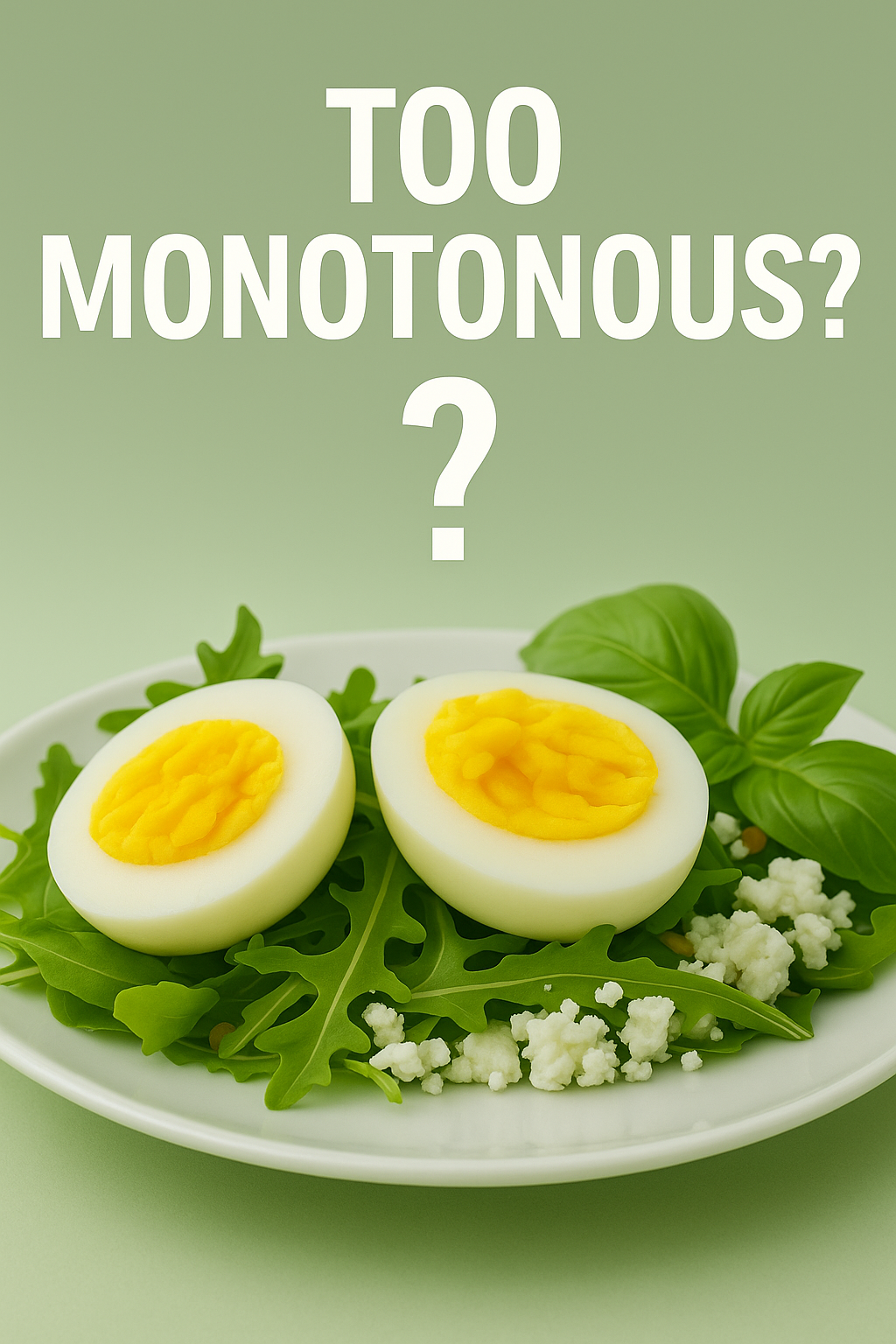
The biggest problem is that it is too monotonous. After a few days you might feel like eggs are coming out of your ears. That's not just a joke. The body really does need variety, and very restrictive plans are hard to stick to. Nutrition experts quoted by Men's Health describe the egg diet as a fad that can bring short-term weight loss mainly because it lowers calorie intake.
Because the diet is low in fiber (the plant parts of food that keep digestion running smoothly), constipation can occur. You can ease this by eating more leafy vegetables and drinking enough fluids. If you feel bloated, our tips in Get Rid of Bloating and Excess Water may help.
The egg diet is also not suitable for everyone. If you have diabetes, kidney or liver problems, high cholesterol, an egg allergy, or if you are pregnant, talk to your doctor or a registered dietitian first.
What about cholesterol limits? The old guideline of a maximum of 300 mg of dietary cholesterol per day has been relaxed. A 2019 science advisory from the American Heart Association no longer sets a fixed number. Instead, it suggests that healthy people can include about one whole egg a day as part of a heart-healthy diet, and that older adults with normal cholesterol may eat up to two. One large egg contains roughly 185 to 200 mg of cholesterol. So two eggs a day during a short diet is generally considered reasonable for healthy adults, while six every day is clearly too much.
How to Combine It With Traditional Remedies and Natural Approaches
Our grandmothers already knew the value of eggs. In folk tradition they were used not only as food but also as a soothing compress for tired eyes, as a hair mask, and even as a home remedy for an upset stomach, where egg white was often mixed with honey.
If you decide to try the egg diet, you can add unsweetened herbal teas that many people find pleasant for digestion.
For example:
- dandelion tea is traditionally used to support digestion,
- chamomile is valued for its calming, gentle effect on the stomach,
- peppermint is a popular choice when you feel bloated.
Teas like these can make it easier to drink enough fluid while you adjust to a new way of eating. As the old folks say: if you eat simply, you must drink wisely.
What Happens in the Body During the Egg Diet?
When you cut carbohydrates (bread, pasta and sweets), the body gradually relies more on fat for energy. On very low-carb plans this can lead to a state called ketosis. The egg diet as described here includes some fruit, so most people will simply burn more fat rather than enter deep ketosis. Eggs help because they contain all the essential amino acids, which support muscle maintenance. Ideally, you lose mostly fat rather than muscle, and that is key to healthy weight loss.
Nutrition experts at the Harvard T.H. Chan School of Public Health note that getting enough good-quality protein matters for overall health. Research on weight loss suggests that adequate protein, especially combined with physical activity, helps preserve muscle mass. More muscle means a healthier metabolism and may reduce the yo-yo effect after the diet ends.
Example of a Seven-Day Menu
This menu is only an example of what your diet might look like. You can adjust it and build your own meals on the same principle.
- Day 1
Breakfast: two boiled eggs, a handful of spinach, one orange.
Lunch: 100 g baked salmon, mixed green salad.
Dinner: baked pork chop (150 g) with broccoli. - Day 2
Breakfast: two eggs, one tomato, 200 g melon.
Lunch: 200 g baked chicken breast with a bowl of salad of your choice.
Dinner: tuna (without oil) with Brussels sprouts. - Day 3
Breakfast: two boiled eggs, one orange.
Lunch: 100 g steak with a bowl of salad of your choice.
Dinner: baked salmon (100 g) with mushrooms. - Day 4
Breakfast: two boiled eggs, asparagus, strawberries.
Lunch: skinless chicken drumstick, one tomato and green salad.
Dinner: roast beef with steamed cauliflower. - Day 5
Breakfast: two boiled eggs, a slice of ham, strawberries.
Lunch: 100 g baked cod with asparagus.
Dinner: grilled chicken skewers (150 g) with peppers and onions. - Day 6
Breakfast: two boiled eggs, 300 g melon.
Lunch: 100 g baked salmon, boiled green beans.
Dinner: baked hake (100 g), roasted vegetables of your choice. - Day 7
Breakfast: two boiled eggs, watermelon (200 to 300 g).
Lunch: 100 g baked chicken breast, roasted zucchini and mushrooms.
Dinner: pork steak (150 g) with grilled broccoli and cauliflower.
The diet is usually followed for no longer than 14 to 21 days, and many people report a loss of 2 to 5 kg in that time.
During the diet, aim for about 2 liters of water a day. You can replace some of the water with unsweetened herbal teas.
A Little Trick for More Success
If you try the egg diet, here is a simple trick that home cooks have used for generations: add a pinch of turmeric (the natural yellow powder from the root of the plant) to your scrambled eggs. It adds a warm, mild flavor and a beautiful golden color.
Turmeric contains a compound called curcumin, which researchers have studied with interest. In a randomized trial from Iran published in Phytotherapy Research, people with fatty liver who took a curcumin supplement for eight weeks showed a greater reduction in liver fat than the placebo group. Keep in mind that this study used a concentrated supplement, not the small amount you sprinkle on eggs. Turmeric in your kitchen is a flavorful addition, not a treatment. You'll find more ways to use it in our article Warm Water with Turmeric Against Winter Troubles.
How to Maintain Your Weight After the Diet
The biggest mistake people make is saying after three weeks: "Now I'm going back to pizza." After a restrictive diet, a sudden return to large amounts of sugar and refined carbohydrates often brings the kilograms back quickly.
To maintain your weight, gradually add more vegetables, fruit, legumes and whole grains. Don't forget movement: even 30 minutes of brisk walking a day supports a healthy metabolism and makes it less likely that the kilograms will return. Sleep matters too. Read why in When you sleep too little, your belly grows. And if you're looking for a gentler long-term approach, take a look at Diet without dieting and 2 kg less per week.
The Egg Diet: Yes, but Wisely
The egg diet can be a good way to kick-start weight loss, but it is not a long-term solution. Used as a short reset or a starting line for healthier eating, it can be very helpful. But remember: real health is built on balance, not extremes.
If you are ever tempted to try the egg diet, do it thoughtfully. Drink enough water, listen to your body, check with your doctor if you have any health conditions, and remember that the greatest power lies in moderation.
Information on this website is for educational purposes only and is not medical advice.
expert, nutritionist
 Would you like to be informed about news on the website?















|

