





Pluck Your Nose Hair at Your Own Risk: Your Nose Sits in the Middle of the Face's "Danger Triangle"
expert, nutritionist
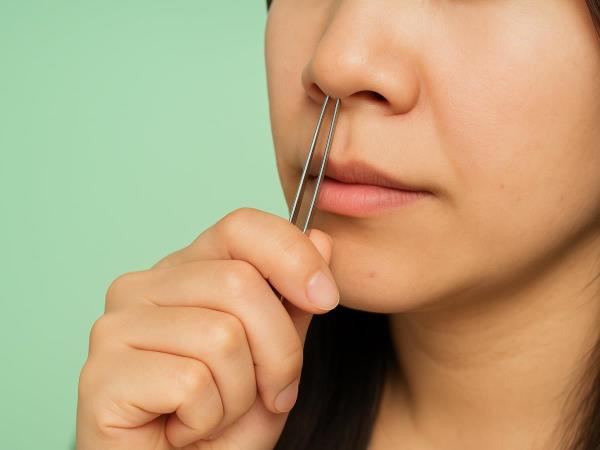
It takes about three seconds: a wax stick goes up the nostril, hardens, and is yanked out with a clump of hair attached. Millions of people have watched this ritual on TikTok and Instagram. What most videos don't mention is that the nose sits in the middle of an area doctors call the "danger triangle of the face". Pulling hair out by the root there creates small open wounds right next to veins that drain toward the brain. The risk is rare, but it is real and medically recognized.
Nose hair is not there by accident. Just as roots protect a tree, the hairs in your nose protect your body. And if you remove them the wrong way, in rare cases you could even risk a serious infection.
A famous "never again" moment
Actress Tracee Ellis Ross, known from the series Black-ish, once shared a video of her own nose-waxing appointment. Viewers watched her squirm on the salon chair and beg the beautician to take the wax out, before bursting into tearful laughter. Her caption was a warning to her fans: after trying it, her advice was simply to say no. The clip was covered by Refinery29 and Essence. Many commenters agreed with her, and several reminded others that nose hair exists for a reason and should be trimmed rather than ripped out.
Readers often tell similar stories: a sneezing fit that lasted all afternoon, a tender red spot at the rim of the nostril a day later, or a nose that "felt dusty" for weeks. Most of these are just uncomfortable. Occasionally, however, a small wound becomes infected, and that is when the location matters.
Why do we have nose hair at all?
We have two types of hair in the nose. The first are cilia, microscopically small hairs you cannot see with the naked eye. Their job is to catch mucus and move it toward the throat, where it ends up in the stomach. There, stomach acid neutralizes it. The second type are vibrissae, the larger hairs you see when you look in the mirror. Vibrissae work like a net, catching larger particles of dust, pollen or bacteria so they don't travel deep into the airways.
If you pull these hairs out by the root, you create an open path for microbes. They can settle in the tiny wound left behind and, in rare cases, enter the bloodstream from there. A case report in the journal Malaysian Family Physician notes that infection of the hair-bearing entrance of the nose (nasal vestibulitis or furunculosis) is associated with minor trauma such as nose picking, hair plucking and excessive nose blowing. The bacterium Staphylococcus aureus is the most common culprit.
Why is the nose a particularly sensitive area?
Doctors sometimes call the area around the nose the triangle of death. It stretches from the bridge of the nose to the corners of the mouth. Why such a grim name? Because the veins in this part of the face communicate with the cavernous sinus, a large venous channel at the base of the brain. If an infection develops here and is left untreated, bacteria can in rare cases spread inward. This can lead to cavernous sinus thrombosis (a blood clot in that sinus), meningitis (inflammation of the membranes around the brain) or a brain abscess.
Surgeon Dr. Karan Rajan, a UK doctor who regularly warns about risky trends on social media, has explained why he considers waxing nose hair one of these risks. As reported by Telegrafi, he described the two types of nose hair and warned that germs around a plucked follicle can get inside and cause infection. Because the veins draining the nose join those draining the brain, he noted that such an infection can, in rare instances, reach the brain.
British dermatologist Dr. Anjali Mahto has made a similar point. Speaking about face-waxing trends, she said to Fox News that waxing inside the nose or ears is not recommended, as it can damage the delicate skin there and cause ingrown hairs and inflammation. She added that removing nose hair strips away a natural layer of protection against bacteria and germs.
How often does this really happen?
You may wonder whether this is truly a big risk. The honest answer: serious complications are rare, but when they happen, they are severe. According to a review in the American Journal of Emergency Medicine, cavernous sinus thrombosis affects roughly 2 to 13 people per million each year. The Merck Manual lists infected boils in the nose (nasal furuncles) among its typical causes, alongside sinus and dental infections. It estimates mortality in the antibiotic era at around 10 to 15%. According to StatPearls (hosted by the U.S. National Library of Medicine), both the frequency and the death rate appear to be falling thanks to the widespread availability of antibiotics.
Stories from everyday life show how quickly a harmless-looking spot can become serious. In one case reported by Fox News, a woman discovered that what she thought was a pimple was actually a staph infection, possibly caused by a dirty eyebrow brush. Dermatologist Dr. Sandra Lee ("Dr. Pimple Popper") explained that such infections in the danger triangle can, in a worst-case scenario, spread into blood vessels. She also stressed that with timely treatment they can be cleared. That is the key message: it is rare, and it is treatable, but it should never be ignored.
Beauty standards and social pressure
It's true that many people remove nose hair for beauty and aesthetic reasons. For men it's common because the hairs are more visible. For women it's more about the feeling that it "isn't pretty," even if the hairs are barely noticeable. Social media adds extra pressure by showing idealized images where not a single hair is out of place. Nose-waxing kits are now sold online, and a viral nose-waxing video reported by Yahoo collected more than three million views and sparked a heated debate in the comments.
But it's important to know that by following beauty trends, you may be putting your health at risk. It's similar to nose piercings done in poor hygienic conditions or aggressively squeezing pimples. They seem like trivial things, but they can occasionally leave serious consequences.
What can you do instead of plucking?
The best solution is very simple and cheap: just trim your nose hair. There are special small scissors with rounded tips, and electric trimmers designed exactly for this purpose. They remove only part of the hair, not the root, so there's no open path for bacteria. A few practical tips:
- Trim only what's visible. Shorten the hairs that stick out of the nostril and leave the deeper ones alone. They are doing their filtering job.
- Keep tools clean. Wipe scissors or trimmer heads with alcohol before and after use, and don't share them.
- Use good light and a mirror. Rounded-tip scissors and slow movements help avoid nicking the delicate lining.
- Hands off. Avoid picking, squeezing or pulling at spots inside or around the nose.
If we look into the past, people rarely removed nose hair. In folk tradition it was even considered a sign of strength, because it protected the airways from dust and disease. Grandmothers liked to say that if the hairs are peeking out, at least they're protecting you. And indeed, nature made sure they aren't there by accident.
Does waxing really carry extra risk?
Waxing is particularly problematic because it removes several hairs at once from the nasal cavity, together with their roots. That means several small wounds at the same time, where bacteria can settle. In addition, wax can stick to the moist lining of the nose and cause micro-injuries. As Dr. Mahto noted, it can also lead to ingrown hairs and inflammation. Plucking with tweezers carries the same basic problem, just one hair at a time.
Simple, low-cost habits for a healthy nose
Traditional practices offer a few simple ways to keep the nose clean and comfortable without risky procedures:
- Rinsing the nose with salt water: this is an old practice, known in Ayurveda (traditional Indian medicine) as jala neti. It helps clean the nasal lining and wash away dust and pollen. One important safety rule: according to the U.S. Food and Drug Administration (FDA), you should use only distilled, sterile or previously boiled and cooled water, never plain tap water. Clean the rinsing device after each use.
- Steam inhalation: you can add chamomile or mint to a bowl of hot (not boiling) water. The steam moistens the nasal lining, which then does its natural protective job more comfortably. Keep a safe distance to avoid scalds, and don't use this method with small children.
- Honey and garlic: both have a long history in folk kitchens. Garlic contains allicin, a compound studied for its antibacterial properties, and honey is valued for its soothing effect. The U.S. National Center for Complementary and Integrative Health summarizes what research does and doesn't show about garlic. Crushing garlic and letting it rest a few minutes before cooking helps preserve allicin, as explained in our article Foods We Use Incorrectly. For more everyday foods and why honey has been valued for centuries, read Foods that positively impact health. Remember that honey is not suitable for babies younger than one year.
A varied diet, good sleep and enough fluids help keep your mucous membranes in good shape all year round. Seasonal changes and warmer climates are also changing how often we meet germs and allergens, a topic we explored in Global Warming and Infectious Diseases.
What does research say?
Nasal hair is more than decoration. A study by researchers from Hacettepe University in Ankara, published in the International Archives of Allergy and Immunology (2011), examined 233 people with seasonal allergic rhinitis (hay fever). It divided them into groups with few, moderate and many nasal hairs. The authors explain that denser nasal hair improves the nose's filtering efficiency, while fewer hairs let more allergens reach the airways. In their results, people with fewer nasal hairs were more likely to have asthma, which suggests that the hairs help trap pollen and other allergens.
This suggests that nose hair isn't a problem to be eliminated, but part of the body's natural defense system.
When should you see a doctor?
Most small irritations after trimming or accidental plucking settle on their own within a day or two. Contact a doctor promptly if you notice any of the following:
- a red, swollen, painful spot at the tip or inside of the nose that keeps getting worse;
- fever or chills;
- swelling around the eye, a drooping eyelid, double vision or pain behind the eye;
- a severe headache, stiff neck or confusion.
These signs are uncommon, but in the danger triangle they deserve quick medical attention.
Let nature do its job
Waxing nose hair is a trend that looks harmless, but it carries real, if rare, risks. Pulling hairs out by the root can open a door for bacteria, and in the worst case, lead to dangerous infections. What seems like a small cosmetic detail can therefore occasionally lead to serious health problems.
That's why the best solution is simple: trim the hairs instead, and don't pluck or wax them. That way you combine good looks and safety.
Nature is wise. If it gave us something, it has its purpose. Nose hairs are there to protect us. Instead of hating them, think of them as a natural shield that works quietly for you with every breath.
Information on this website is for educational purposes only and is not medical advice.
expert, nutritionist
 Would you like to be informed about news on the website?















|

