


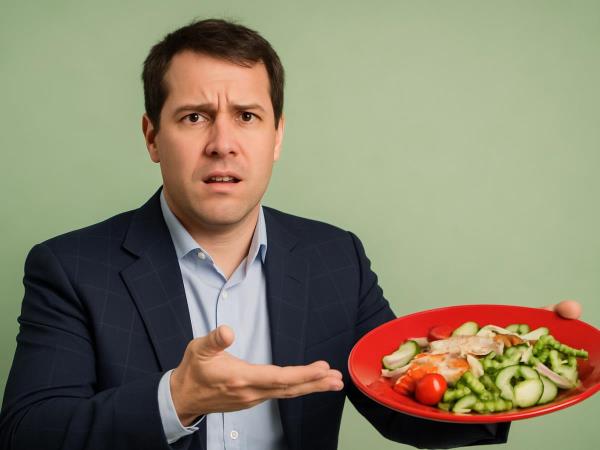




When the Menu Becomes a Red Flag: 7 Signs of a Bad Restaurant That Most People Miss
expert, nutritionist
You have probably eaten a meal you regretted before you even paid for it. The soup tasted like it came from a packet, the "fresh" fish was hidden under a mountain of fries, and the waiter seemed surprised that you wanted to order at all. The good news is that a disappointing restaurant usually reveals itself long before the food arrives. You just need to know where to look.
Few people have seen more struggling restaurants from the inside than Gordon Ramsay. In one memorable episode of Kitchen Nightmares, he asked the kitchen staff to cook every dish on the menu at once, all 181 of them. As Tasting Table recalls, he pointed out that such a huge menu overwhelms guests, slows the kitchen down, and makes inconsistent quality far more likely. He then had the cooks go through the dishes one by one and say which were fresh and which came from the freezer. The celebrity chef, who today runs dozens of restaurants worldwide, is equally suspicious of long lists of daily specials. He told the Daily Mail: "When they list 10 specials, that's not special."
Ramsay is not alone. The late Anthony Bourdain famously warned readers of his book Kitchen Confidential to think twice before ordering certain dishes, because kitchens sometimes use specials to move ingredients that need to be sold quickly. Most of us have walked into a place that looked fine from the outside and left wondering what went wrong. Here are seven signs that experienced diners watch for.
1. Nobody greets you at the entrance
Of course, this does not mean a mascot should stand outside and drag you into the restaurant. Still, it is appropriate for someone to welcome you at or near the entrance. Ideally that person knows how to excite you, raises pleasant expectations, and guesses right away what kind of food you are in the mood for. People need a little encouragement, and we like it when someone else makes a decision for us. Everyone enjoys a pleasant surprise.
Hospitality experts agree that the first minute sets the tone for the whole meal. A warm welcome is not just good manners. It shows that the team is organized, that someone is paying attention to the dining room, and that guests are seen as people rather than table numbers.
2. Avoid restaurants with "international" signs, and those that offer sushi, strudel and tourist menus all at once
If a restaurant has more than 10 dishes on its menu, it is usually not much to write home about. Places with only one, two or three dishes are what we call "fast food." But when a restaurant offers too many dishes, only a few of them are likely to be fresh. A kitchen can only keep so many ingredients fresh at the same time. Everything else tends to come from the freezer, a can or a packet.
Science also suggests that more choice does not always make us happier. In a well-known experiment published in the Journal of Personality and Social Psychology, researchers Sheena Iyengar and Mark Lepper found that shoppers offered a smaller selection of jams were considerably more likely to buy one than those faced with a large display. The effect, known as "choice overload," applies to menus too. Long lists tire us out before the food even arrives.
Pay attention to the daily offer as well. The best restaurants often have more dishes on their daily menu than on their permanent one, because they cook with what the market offers that day. Seasonal, locally sourced ingredients are usually a sign of a kitchen that cares about freshness. A short, focused menu is also easier to fit into a balanced diet. If you like to eat well while traveling, see our article Ideal food for vacation.
3. It matters when a restaurant is empty and when it is full
At lunch or dinner time, good restaurants are almost always full. There is nothing unusual about them being empty now and then between meals. At least that way you know the place attracts guests who appreciate good food. Every restaurant ends up with the guests its offer deserves.
A packed dining room at peak hours also has a practical benefit. High turnover means ingredients are used up quickly and replaced often. An empty restaurant at 7 p.m. on a Friday, on the other hand, may be telling you something the menu is not. Local regulars are an even better sign than crowds of tourists. If you see people from the neighborhood coming back again and again, you are probably in the right place.
4. Some restaurants still do not accept credit cards
A cash-only policy is not automatically a bad sign. Small family-run places sometimes avoid card fees for understandable reasons. Still, restaurants that accept cards generally run their business transparently, follow the rules, and that attitude often carries over to their staff. Orderly finances often go hand in hand with an orderly kitchen.
If you want to check a restaurant before you visit, many countries publish official hygiene inspection results. In the United Kingdom, for example, the Food Standards Agency food hygiene ratings are available online for anyone to look up. A quick search takes a minute and may save you an unpleasant evening.
5. Waiting for the menu is exhausting
If you do not get a menu within the first minute, or worse, if nobody even notices that you have come in, you should be concerned. Do you think the chef in such a restaurant notices that a steak is burning, or that the salad has not been washed properly? Probably not.
Slow, inattentive service is often a symptom of a deeper problem: too few staff, poor organization or low motivation. Those same problems can show up in the kitchen, where attention to detail matters most for food safety. The World Health Organization's Five Keys to Safer Food are keeping things clean, separating raw and cooked foods, cooking thoroughly, keeping food at safe temperatures, and using safe water and raw materials. All of them depend on a team that is paying attention.
6. Some places have stickers over the prices, or prices written by hand
Does this mean they changed their prices today? Do they change them every day? Can the owner not decide how much things cost? Most often it means one thing: prices are set on a whim rather than on what the food actually costs. Stay away from such places!
There is also a legal side to this. In the European Union, the Price Indication Directive (98/6/EC) requires that prices for consumers be clear, easy to identify and easy to read. A menu full of crossed-out numbers and taped-on labels hardly meets that spirit. A clean, clearly printed menu, on the other hand, shows respect for the guest.
7. Sometimes there is more side dish than main course
Good restaurants do not cover your plate with roast potatoes when you order grilled fish. Good restaurants do not serve a shrimp risotto that has never seen a shrimp. And good restaurants do not serve mushroom soup from a packet with a few slices of cheap button mushrooms floating on top.
From a nutritionist's point of view, this is more than a question of value. A plate piled high with fries and a tiny portion of protein is rarely a balanced meal. The Healthy Eating Plate from the Harvard T.H. Chan School of Public Health suggests filling about half the plate with vegetables and fruit, a quarter with whole grains and a quarter with a healthy protein source. If fries tend to dominate your restaurant meals, you may find our article Does French fries really increase the risk of anxiety and depression? interesting.
Restaurant portions in general deserve a closer look. A multisite study published in the Journal of the Academy of Nutrition and Dietetics found that many frequently ordered restaurant meals contain far more energy than most people need at a single sitting. Packet soups and ready-made sauces also tend to be high in salt, and the World Health Organization recommends that most adults keep their salt intake moderate. Research from Arizona State University, published in Public Health Nutrition, classified the large majority of menu items at the top-selling US fast-food chains as ultra-processed. For more on everyday choices that can quietly undermine healthy eating, read Hello, and Fattening: Foods that Sabotage Your Diet and 5 Foods That Shorten Your Lifespan.
A quick checklist before you sit down
Next time you are standing in front of an unfamiliar restaurant, take thirty seconds and ask yourself a few simple questions. Did someone greet you? Is the menu short and focused, with a daily or seasonal offer? Is the place busy at mealtimes? Are the prices clearly printed? Do the dishes on neighboring tables look fresh, with a sensible balance between the main course and the sides? If most of the answers are yes, you are probably in good hands. If not, there is no shame in politely walking out and trying the place next door.
A good meal out is about more than filling your stomach. It is about trust, fresh ingredients and people who care about what they put on your plate. Learning to read these small signals will not guarantee a perfect dinner every time, but it can help you enjoy more meals you will want to remember.
Information on this website is for educational purposes only and is not medical advice.
expert, nutritionist
 Would you like to be informed about news on the website?













|

