






Your Face Knows More Than You Think: 5 Health Conditions That May Hide Behind Signs We Overlook Every Day
expert, nutritionist
Imagine brushing your teeth one morning, looking up, and realizing that half of your face simply isn't moving. No pain, no warning, just a smile that stops halfway. It sounds like a scene from a medical drama, yet for many people this is exactly how a serious health problem first announces itself: not in a lab report, but in the bathroom mirror.
That is precisely what happened to one of the most famous faces on the planet. In June 2022, Justin Bieber posted a video on Instagram showing that he could not blink one eye, smile on one side, or move one nostril. He explained that he had been diagnosed with Ramsay Hunt syndrome, a viral infection affecting the facial nerve, and had to cancel concerts while he recovered (as reported by CNN via ABC7). Only a few months earlier, his wife Hailey Bieber had been hospitalized after a small blood clot reached her brain, an event she later described as a mini-stroke. Two very different conditions, one shared lesson: the face is often the first place the body shows that something has changed.
Our readers tell similar stories. One woman told us she noticed small yellowish bumps near the inner corners of her eyelids and dismissed them as a cosmetic nuisance. It was only when her dermatologist suggested a blood test that she learned her cholesterol levels were much higher than she had assumed. "I went in to ask about removing a spot," she told us, "and came out with a completely new approach to breakfast."
Your face really does know more than you think. Below are five everyday signs worth paying attention to, what they may be connected with, and how your plate can support your overall wellbeing. Remember: none of these signs is a diagnosis on its own. They are simply a reason to listen to your body and talk to a healthcare professional.
1. Dry skin or flaky lips
Usually this is a sign of dehydration, but sometimes a more serious issue may be hiding behind it. Dry, rough skin can be associated with an underactive thyroid (hypothyroidism), a condition in which the thyroid gland doesn't produce enough hormones, and it can also appear in people with diabetes. According to the National Institute of Diabetes and Digestive and Kidney Diseases (NIDDK), other possible signs of hypothyroidism include feeling cold, weight gain, and ongoing tiredness. Common signs of diabetes listed by the U.S. Centers for Disease Control and Prevention (CDC) include constant thirst, frequent urination, and blurred vision.
In most cases, though, flaky lips are simply a reaction to dry air, wind, sun, or not drinking enough. As the editors of Healthy Food Guide point out, lips often dry out in hot summer weather and in cold winter conditions alike, and this is rarely a sign of anything serious on its own.
Nutritionist's tip: Start with the basics: water throughout the day, plenty of vegetables and fruit with a high water content, and healthy fats from nuts, seeds, olive oil and oily fish, which help support the skin's natural barrier. If you are curious how everyday drinks may affect your hormones, read Sweetened drinks and the thyroid: what happens to your hormones when you reach for lemonade every day. If dryness persists despite good hydration, and especially if it comes with fatigue, thirst, or weight changes, ask your doctor about simple blood tests.
2. Facial hair
Sometimes hair appears on the face in the most unusual places, and it may grow faster or slower. In many cases this is simply inherited and completely harmless. However, if you notice that it is suddenly growing faster, darker, or thicker, particularly along the jawline, chin, or upper lip, the cause may be a hormonal imbalance or polycystic ovary syndrome (PCOS).
The CDC describes PCOS as a common hormonal condition in women of reproductive age in which levels of male-type hormones are higher than usual, and notes that it is linked with insulin resistance. Excess hair growth in a male-like pattern is known medically as hirsutism, and the Mayo Clinic recommends seeing a doctor if the growth is sudden or accompanied by other changes, such as irregular periods or acne.
Nutritionist's tip: Because PCOS is closely connected with how the body handles blood sugar, many women find that a steadier eating pattern helps them feel better: regular meals, more fiber from vegetables, legumes and whole grains, protein at every meal, and fewer sugary snacks. See which everyday choices can work against you in Hello, and Fattening: Foods that Sabotage Your Diet.
3. Yellow eyelids
Elevated cholesterol and problems with the blood vessels or the heart are sometimes reflected in soft, yellowish patches on or around the eyelids, most often near the inner corner of the eye. These patches are called xanthelasma. According to the Cleveland Clinic, they are harmless deposits of cholesterol under the skin, but because they can be a visible warning sign of high cholesterol and heart issues, a doctor will often recommend checking your blood lipid levels.
Researchers have looked at this connection closely. A large Danish study published in the BMJ (British Medical Journal), which followed participants of the Copenhagen City Heart Study for decades, found that people with xanthelasma had a higher risk of heart attack and heart disease, independent of other well-known risk factors. It is worth knowing, however, that these patches can also appear in people whose cholesterol levels are completely normal.
Nutritionist's tip: A heart-friendly plate is one of the best everyday allies for healthy blood lipids: more oats, barley, legumes, vegetables, fruit, nuts and olive oil, and less processed meat, fried food, and pastries. The American Heart Association notes that foods high in dietary cholesterol also tend to be high in saturated fat, which is why the overall pattern of your diet matters most. For a list of foods worth limiting, read 5 Foods That Shorten Your Lifespan.
4. Tired eyes and puffiness
Chronic tiredness, a puffy face, and tired-looking eyes can be a sign of too little sleep, but they may also point to an allergy. According to The Healthy by Reader's Digest, chronic allergies can dilate the tiny blood vessels under the eyes and make them leak, which creates puffiness and a dark bluish tint, sometimes called "allergic shiners." The same article mentions that an underactive thyroid and sleep apnea can also be behind a persistently tired look.
Pay particular attention if puffiness, especially swelling that doesn't go away during the day, appears together with shortness of breath, swollen ankles, or unusual fatigue. In such cases, it is wise to have your heart and blood vessels checked, as fluid retention can sometimes be connected with cardiovascular or kidney problems.
Nutritionist's tip: Salty evening meals and alcohol are two of the most common reasons we wake up with a puffy face. Try reducing salt, drinking enough water, and adding potassium-rich foods such as vegetables, beans, and bananas. You'll find more ideas in Get Rid of Bloating and Excess Water, and if short nights are part of the problem, don't miss When you sleep too little, your belly grows.
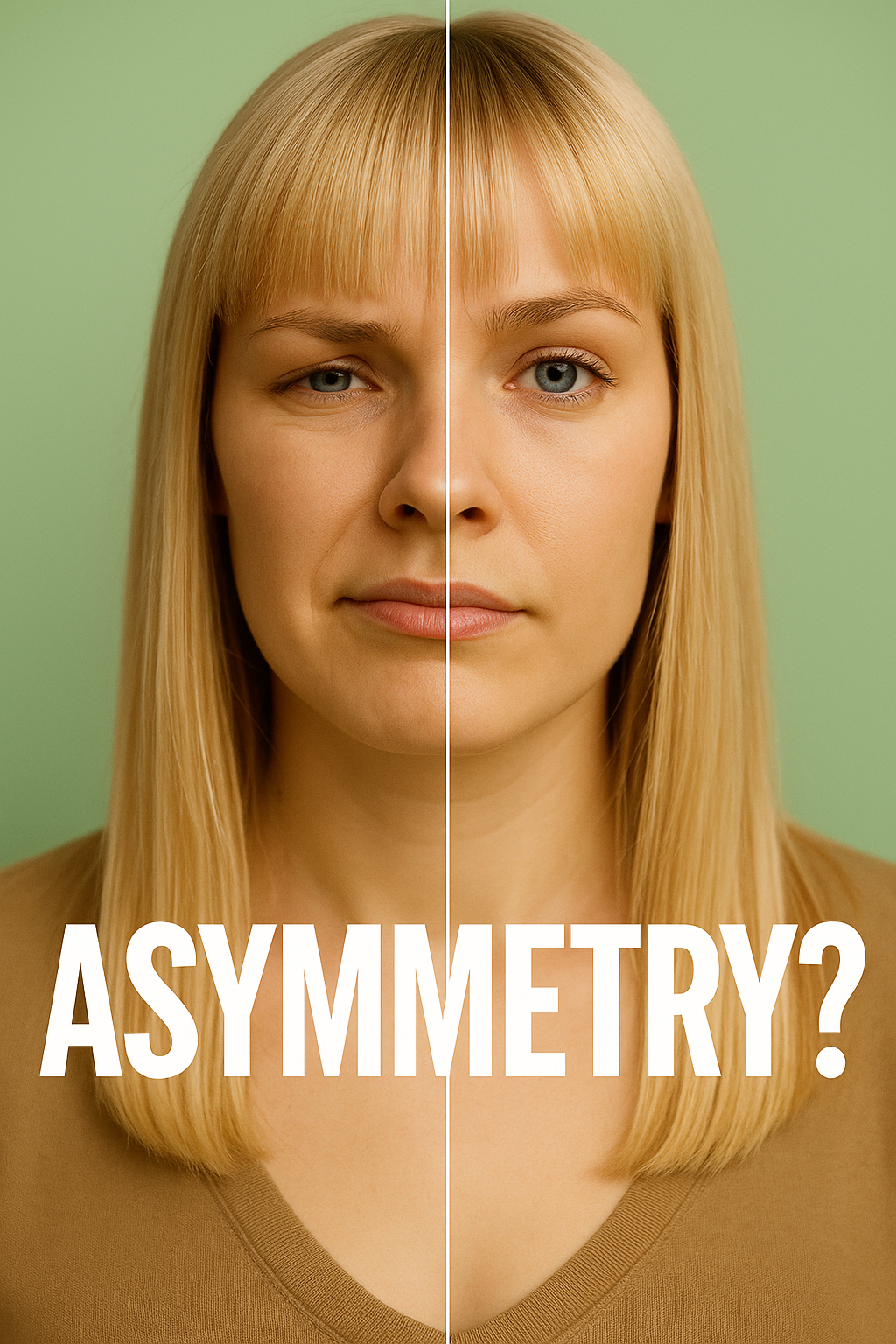
5. Asymmetry
Facial asymmetry can be one of the first signs of a stroke. Many patients find it remarkable that they were the first to see their illness, in the mirror, before anyone else had noticed any change in their face. Emergency physician Dr. Leana Wen told The Healthy by Reader's Digest that patients often describe it simply as looking in the mirror and seeing that their face looked different. One side of the face may feel numb, or the smile may not be complete.
We should be especially attentive to asymmetry in the morning. A significant share of strokes happen during sleep and are only noticed after waking, and research published in the journal Stroke has long shown that stroke onset tends to be more common in the morning hours.
Not every lopsided face is a stroke. As Justin Bieber's story shows, facial nerve conditions such as Ramsay Hunt syndrome or Bell's palsy can also cause one side of the face to droop. But doctors are clear on one thing: a stroke must always be ruled out first, and quickly.
The American Stroke Association recommends remembering the letters F.A.S.T.:
- F – Face drooping: Does one side of the face droop or feel numb? Ask the person to smile.
- A – Arm weakness: Is one arm weak or numb? Ask the person to raise both arms.
- S – Speech difficulty: Is speech slurred or hard to understand?
- T – Time to call emergency services: If any of these signs appear, call for help immediately, even if the symptoms go away.
Nutritionist's tip: Everyday habits play an important role in keeping blood vessels healthy. Limiting salt, eating plenty of vegetables, fruit, whole grains and legumes, staying active, and keeping blood pressure, blood sugar and cholesterol in check are all part of a lifestyle that supports your heart and brain.
Your face is a mirror, not a diagnosis
None of the signs above should cause panic. Dry lips are usually just dry lips, and tired eyes are often simply the result of a late night. But when a change appears suddenly, doesn't go away, or comes together with other symptoms, it is worth taking seriously. Your face sees the mirror every single day, and so do you. Take a moment to really look.
Information on this website is for educational purposes only and is not medical advice.
expert, nutritionist
 Would you like to be informed about news on the website?















|

