




Horseradish vs. Wasabi: Which One Wins on the Plate and in the Pot?
expert, nutritionist
Here is a secret most sushi lovers never learn: the green paste next to your sushi is very likely not wasabi at all. Industry estimates suggest that the vast majority of "wasabi" served outside Japan, and even most of it inside Japan, is actually ordinary horseradish mixed with mustard, starch and green colouring. So if you have ever wondered which of the two is better, there is a good chance you have already been eating horseradish all along.
A sushi master in central Tokyo, whose tiny restaurant has a waiting list of about a month, told AFP that he would never serve the imitation. He finds it powdery and nearly flavourless. Real wasabi, in his experience, is spicy with sweet notes and brings out the taste of the fish. He grates one whole root every day, fresh for each order, and spends more than 700 US dollars a month on wasabi alone. That is dedication, and it shows how precious the real thing is.
In taste and in the way they are used, horseradish and wasabi are very similar. A first look at their nutritional values seems to favour horseradish, but a closer analysis shows that neither is a clear winner.
Horseradish: Europe's original hot spice
Horseradish is believed to be native to Eastern Europe and Western Asia and has been cultivated since ancient times. It spread westward through the Slavic lands, and in much of Central and Eastern Europe it is still known by its old Slavic name. For centuries it was the only sharp spice in many European kitchens. This was long before black pepper arrived, and even afterwards pepper stayed so expensive for generations that few could afford it.
Today mostly the root is used, either freshly grated or in a sauce. In spring, the young horseradish leaves are also worth trying: a salad made from them has a distinctive, equally sharp taste.
One food writer at Foodal vividly remembers her first encounter with horseradish as a hungry child at a dinner party. She mistook a bowl of horseradish cream for vanilla yogurt and swallowed a whole spoonful: red face, burning mouth and tears included. Many readers will recognise that moment. Horseradish does not forgive haste.
That fiery kick comes from natural compounds called isothiocyanates. According to Forks Over Knives, the uncut root has no aroma at all. The volatile compounds are only released when the root's cells are broken by grating or cutting, which is why some people prefer to prepare it outdoors.
Horseradish has a long history in traditional kitchens and folk practice. If you are curious about one such old custom, read What happens if you eat horseradish on an empty stomach?
Wasabi: Japan's green treasure
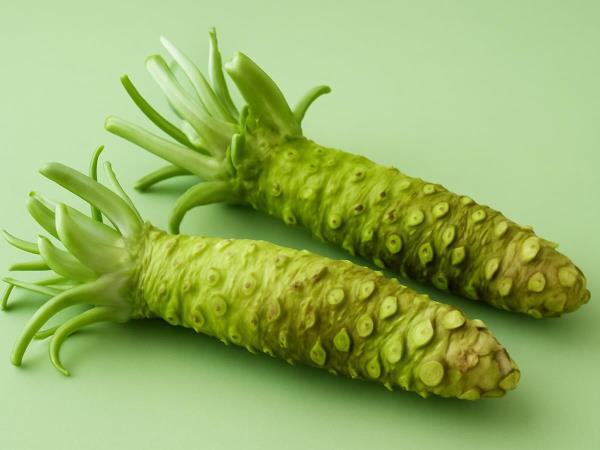
Wasabi differs from horseradish in colour and, according to many, in the character of its heat. Freshly grated real wasabi is bright green, with a clean heat that fades quickly and a hint of sweetness. The Japanese serve it with sushi and sashimi and often combine it with soy sauce. In Japan it is considered one of the most expensive condiments. According to Japan Food Guide, records of its use as a medicinal plant go back to the 8th century, and it became a sushi staple during the Edo period.
Outside Japan you will find it hard to get original wasabi, and it is an open question whether you would even like it, mainly because of its unusual sharpness. Interestingly, grated wasabi loses much of its flavour within about 15 minutes if left uncovered. That is why top sushi chefs grate it only moments before serving.
Growing wasabi is notoriously demanding: it needs cool, shaded mountain streams, clean running water and steady temperatures, and the plant takes well over a year to mature. As a result, fresh roots can easily cost well over 100 euros per kilogram, and premium roots considerably more. That is why processed products in shops often contain substitutes made of horseradish, mustard, starch and green colouring. As byFood notes, many such products contain only 1 to 3 percent real wasabi.
Most wasabi is grown in Japan, with smaller production in countries such as New Zealand, the United States (for example in greenhouses in the Pacific Northwest) and the United Kingdom, where The Wasabi Company grows it commercially. Mexico also produces a little, although Mexicans usually prefer chili, which gives dishes a comparable kick.
A fun twist: while Europeans sometimes call wasabi "Japanese horseradish", the Japanese call horseradish "Western wasabi".
How to tell real wasabi from the imitation
Look at the texture. A thick, perfectly smooth paste usually points to a horseradish-based product. Freshly grated real wasabi is slightly grainy. Check the ingredient list, too: if horseradish, mustard and colouring come first, you are holding a substitute. And if the sushi is very cheap, the wasabi almost certainly is not real.
The differences in numbers
Values per 100 grams, based on data from the USDA FoodData Central database (raw wasabi root compared with prepared horseradish; values are approximate):
| Nutrient | Wasabi (raw root) | Horseradish (prepared) |
|---|---|---|
| Energy | 109 kcal | 48 kcal |
| Carbohydrates | about 24 g | about 11 g |
| Dietary fibre | about 8 g | 3.3 g |
| Potassium | about 570 mg | about 250 mg |
| Calcium | about 130 mg | about 55 mg |
| Magnesium | about 70 mg | about 27 mg |
| Sodium | about 17 mg | about 420 mg |
100 grams of horseradish contains 48 calories, while wasabi has 109. Horseradish has 11 grams of carbohydrates, wasabi 24.
On the other hand, wasabi offers about 8 grams of dietary fibre, while horseradish has only 3.3 grams. Wasabi also contains noticeably more potassium, calcium and magnesium. Horseradish leads in sodium, with roughly 25 times more than wasabi, mostly because prepared horseradish usually contains added salt. Both provide only small amounts of vitamin A.
Keep in mind that we eat these condiments by the teaspoon, not by the 100 grams. In real portions, the differences in calories and minerals are tiny. What matters more is how much salt comes with the sauce and what you eat it with.
What does research say?
Horseradish has been studied far more. Laboratory studies, such as one published in Phytomedicine, describe its isothiocyanates and review its traditional use against infections, while others have looked at its antimicrobial activity and anti-inflammatory potential in cell cultures. These are mostly test-tube and laboratory findings, however, and they cannot be directly applied to a spoonful of horseradish on your plate.
Research on wasabi is much scarcer, probably because of its price and limited production, but it is growing. A small double-blind trial by researchers at Tohoku University, published in Nutrients in 2023, gave 72 healthy adults aged 60 and over a wasabi-derived supplement or a placebo for 12 weeks. The supplement group showed better results in some memory tests. As Deseret News reported, the study was funded by a wasabi manufacturer, although the researchers said the company had no role in the study itself. It was a small study of a concentrated supplement, not of wasabi paste, so it is an interesting first step rather than proof.
For everyday life, both are best seen as tasty ways to add flavour to food without much fat or sugar, not as remedies. If you are unsure how to use common kitchen ingredients to your advantage, take a look at Foods We Use Incorrectly.
Which one is better?
Horseradish certainly has a more European flavour and adds very few calories. It is also cheaper and easy to grow and store. The horseradish root is almost completely odourless. Its flavour and sharpness only develop once it is grated. According to Huntsinger Farms, part of the world's largest horseradish grower, prepared horseradish slowly darkens and loses pungency as it ages. That is why many people add a little lemon juice or vinegar to freshly grated horseradish, and why it is best kept in a tightly closed jar in the fridge.
Because horseradish is better known and more accessible, Europeans will probably remain loyal to it.
And Japanese dishes seasoned with horseradish are no worse than the originals. At least, most European palates will not taste the difference. If you ever get the chance to try freshly grated wasabi in a good Japanese restaurant, though, do it. It is a small culinary adventure worth having at least once.
A note of caution
Both horseradish and wasabi are very pungent and can irritate the mouth, nose and stomach, especially in larger amounts. If you have a sensitive stomach, digestive problems or are following a low-sodium diet, enjoy them in moderation and check the salt content of ready-made sauces. This article is for general information and does not replace advice from a doctor or dietitian.
Information on this website is for educational purposes only and is not medical advice.
expert, nutritionist
 Would you like to be informed about news on the website?














|

