





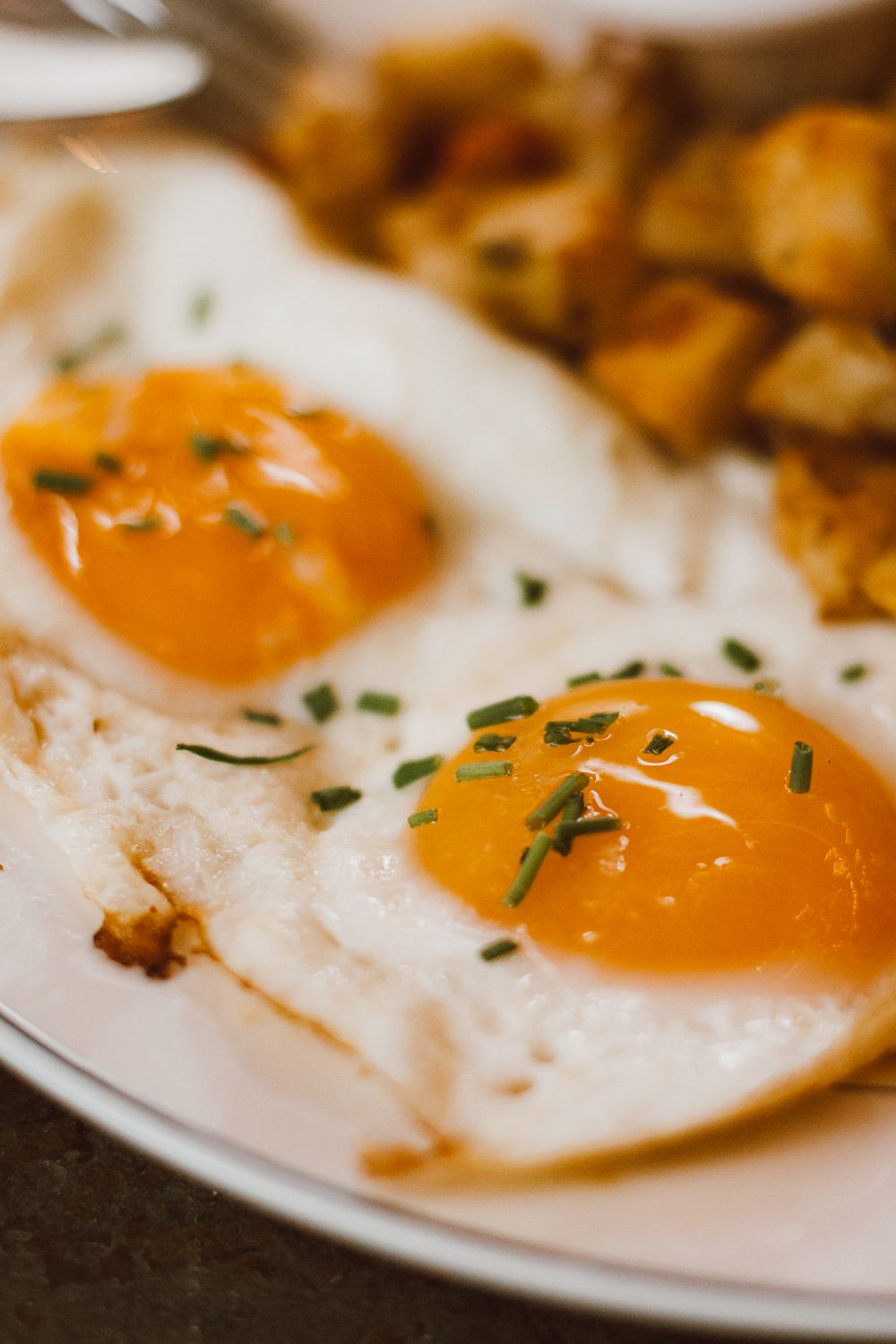
Two Eggs at Breakfast Can Wipe Out 415 Calories From Your Whole Day — Here's What Else Actually Works
expert, nutritionist
Actress Rebel Wilson has spoken publicly about how her own approach to weight loss changed once she stopped thinking in terms of deprivation and started paying attention to what — and how much — she was actually putting on her plate. She's far from the only public figure to discover that the difference between "eating less" and "starving" often comes down to a handful of small, repeatable habits rather than a single dramatic diet. Nutrition science backs that instinct up: you don't need to white-knuckle your way through hunger to eat a few hundred fewer calories a day. You just need to know where the easy wins are.
Here's the thing about that mythical 500-calorie-a-day threshold nutritionists like to mention: it's roughly the gap between a diet that quietly, sustainably chips away at excess weight and one so restrictive that it backfires the moment life gets in the way. Below are nine simple, well-studied habits that can help you get there — sometimes several times over — without ever feeling like you're "on a diet."
1. Start the day with eggs
Two boiled or scrambled eggs for breakfast do more than fill you up. In a study of overweight women published in the Journal of the American College of Nutrition, researchers at Wayne State University found that women who ate an egg-based breakfast felt fuller and went on to eat noticeably less over the rest of the day than women who ate a bagel breakfast with the same number of calories — a difference reported at up to 415 fewer calories. A follow-up trial published in the International Journal of Obesity found that dieters who swapped a bagel breakfast for two eggs lost 65% more weight over eight weeks. Researchers believe it comes down to satiety: eggs are a compact package of high-quality protein, and protein is simply better than refined carbohydrates at keeping hunger hormones quiet for hours afterward. For more on how eggs affect fullness and long-term health, see What would happen if you ate an egg every day? and Is egg really responsible for heart problems?
2. Skip the fizzy drinks — even the "diet" ones
This isn't only about the sugary sodas, which are an obvious source of empty calories. It also applies to sparkling mineral waters and the drinks marketed as "diet" or "zero," which train your palate to expect sweetness without necessarily reducing your overall appetite for it. A single 300ml glass of regular soda can carry 200 calories or more, and it rarely leaves you feeling any less thirsty or any fuller — often the opposite.
3. Cook more of your own meals
Home cooking isn't just about avoiding restaurant portion sizes. A large Johns Hopkins Bloomberg School of Public Health study of more than 9,000 adults found that people who cooked dinner at home six to seven nights a week consumed roughly 130–200 fewer calories a day, and less sugar and fat, than people who rarely cooked — and interestingly, frequent home cooks also ate less when they did eat out, suggesting the habit itself builds a kind of portion awareness that carries over. For the effect to hold, it helps to actually sit down at the table, eat slowly, and put the phone away — all habits linked in other research to lower overall intake (see the eating-distraction research under point 7 below).
4. Go easy on pasta and refined carbs
You may not think you eat much pasta, but nutrition guidelines generally recommend keeping refined starches like white pasta to modest, occasional portions rather than a daily staple. Anchoring your plate around vegetables, legumes, and lean protein instead — and treating pasta as a side rather than the main event — is one of the more reliable ways to trim daily calories without ever feeling like you're "cutting carbs."
5. Leave the pots on the stove
A classic mistake is bringing the serving dish to the table, where it sits within arm's reach all through the meal, quietly inviting second and third helpings. It's not really about willpower — proximity and visibility of food are well-documented triggers for extra eating. Cook for the people actually at the table, not for an imaginary crowd, and you'll naturally serve — and eat — less.
6. Try a smaller plate
The evidence here is more mixed than the popular version of this tip suggests, and it's worth being honest about that. Some research, including a meta-analysis of 56 studies summarized by ScienceDaily, found that halving plate size cut self-served portions by around 30% — but only when people were serving themselves and weren't aware they were being watched. Other, more tightly controlled trials have found little to no effect once portion size is held constant. The honest takeaway: a smaller plate can nudge you toward smaller self-served portions, especially at a buffet or when serving yourself at home, but it's a nudge, not a guarantee.
7. Don't eat in front of the TV
Distracted eating has a real, if modest, effect on how much ends up on your plate — and even more so on how much you eat later. A 2025 systematic review and meta-analysis in the journal Nutrients found that eating in front of the television increased food intake, with the biggest effect showing up not during the meal itself but at the very next one — likely because watching TV blunts your memory of how much you just ate, so you feel hungry again sooner. A separate Cornell-adjacent survey found people eating with media on the screen consumed roughly 150 more calories per sitting than when eating without it.
8. Don't starve yourself
This is the tip that undoes all the others if ignored. Skipping meals or cutting calories too aggressively almost always backfires: the body responds to prolonged restriction with stronger hunger signals, and most people end up eating more — often much more — at the next opportunity. Sustainable calorie reduction is built from small, boring, repeatable habits like the ones above, not from going without.
9. Get a bit more sleep
Of all nine tips, this might be the most underrated. Sleep is when your body regulates the hormones that control hunger — ghrelin, which stimulates appetite, and leptin, which signals fullness. Multiple controlled studies, summarized in a review in Nature Reviews Endocrinology, have found that people who are sleep-restricted tend to eat measurably more the next day, often reaching for calorie-dense, carbohydrate-heavy snacks in particular. A Harvard Health–reported trial found that participants who extended their sleep by roughly an hour a night ate about 270 fewer calories a day, without trying to. For more on how a single night's poor sleep shows up on the scale the next morning, see Why did you gain weight overnight?
Information on this website is for educational purposes only and is not medical advice.
expert, nutritionist
 Would you like to be informed about news on the website?














|

