


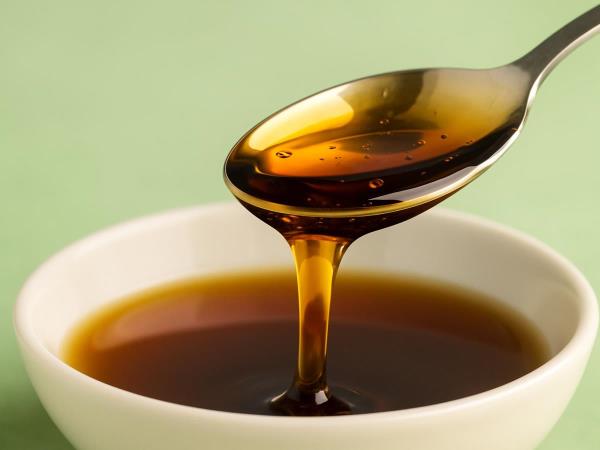




Sweeter Than Honey, Yet Gentle on Blood Sugar: The Truth About Agave Syrup
expert, nutritionist
Imagine a sweetener that tastes richer than honey on your tongue but, according to nutrition researchers, is metabolized far more slowly by your body. That's the promise that has made agave syrup a pantry staple for home bakers and, reportedly, more than a few professional kitchens. Celebrity chef Sam Talbot, who has lived with type 1 diabetes for decades, has said in interviews that he reaches for agave in his own cooking specifically because of its comparatively low glycemic impact and distinctive flavor, even while cautioning that its high fructose content means it still isn't something to pour freely (Healthline). His take echoes what has become a wider conversation among nutritionists: agave isn't a miracle food, but it isn't just hype either.
Agave Syrup vs. Honey: Not Really a Fair Comparison
Comparing agave syrup to honey isn't entirely fair to either one. While both serve a similar purpose on the table, honey is a natural product made by bees, while agave syrup is an industrially processed plant extract. Yes, both can sweeten your coffee, tea, or cocoa, both show up throughout culinary traditions, and both bring a handful of beneficial compounds to the table — but each has its own distinct strengths.
Meet the Plant Behind the Syrup
The agave plant looks like it should belong to the cactus family, but it's actually a member of the lily group. Sailors brought it to Europe from Mexico back in the 16th century, and today it grows widely across the Mediterranean. Agave is a relatively low-maintenance plant — it needs very little moisture, though it can't tolerate frost. Its most famous product is tequila, with agave syrup coming in a close second. Both are derived from the plant's thick, spiky leaves, and anyone who has brushed against those spines can attest that the injuries they cause are no fun at all.
What's Actually in Agave Syrup?
Agave syrup is roughly 70–90% fructose, according to a detailed nutritional review published in the International Journal of Environmental Research and Public Health, which also found the syrup to contain measurable amounts of minerals, vitamins, and polyphenol compounds compared with more conventional sweeteners (Saraiva et al., 2022). That same fructose-heavy composition is exactly why agave tastes sweeter than honey while still registering a low glycemic index — commonly cited between roughly 15 and 30, well below honey's GI in the 50–80s range and far below table sugar (WebMD). That slower rise in blood sugar is one reason some people managing diabetes look to agave as an occasional substitute — though as the Cleveland-based dietitians interviewed by Medical News Today point out, it's still higher in calories than table sugar and should be used in moderation, not as a free pass.
The syrup also contains agave fructans, including inulin, a plant fiber that some early research has linked to appetite regulation and digestive health. It's worth being clear-eyed here: while inulin's fiber-related digestive benefits are reasonably well documented, broader claims about agave syrup fighting cancer or curing osteoporosis go well beyond what current human research supports, and readers dealing with those conditions should rely on their doctor's guidance rather than a sweetener. What the research does support more modestly is that agave's fiber content can be a gentle ally for digestion, and that in folk medicine, agave mixed with salt was traditionally used as a topical wound treatment, credited to the plant's antibacterial compounds — an interesting historical use, though not a substitute for modern wound care.
If you're weighing agave against other options day to day, our related piece on foods that quietly make you bloated even when they're not fattening also flags agave and stevia as gentler choices for people prone to digestive discomfort.
Light or Dark: Which Agave Syrup Should You Buy?
Grocery shelves typically carry two types of agave syrup: light and dark. Light agave syrup is filtered more times and heated less, giving it a mild, neutral flavor that works well in everyday cooking and baking. Dark agave syrup is filtered less, has a bolder flavor, and — according to several sweetener-industry overviews — tends to retain a bit more of the plant's natural nutrient content (Sweetener Products). If the earthy, distinct taste of agave doesn't bother you, the darker variety is generally the more flavorful pick.
One practical note: because agave syrup is sweeter than honey, a little goes a long way — there's rarely a need to use more of it than a recipe calls for.
Recipe: Dark Chocolate Raspberry Cake with Agave Syrup
To finish, here's a simple cake recipe built around agave syrup, dark chocolate, and fresh raspberries — a naturally sweetened dessert if you're looking to swap out refined sugar. If you enjoy experimenting with alternative sweeteners in baking, you may also like our five-minute avocado dessert recipe, which uses a similar honey-or-agave approach.
Ingredients
- 6 tablespoons agave syrup
- 3 eggs
- 1 vanilla pod (or 1 tsp vanilla extract)
- 200 g fresh raspberries
- 240 g dark chocolate (at least 70% cocoa), melted
- 170 g butter
- Fresh fruit, for decoration
Instructions
- Melt the chocolate and butter separately, then let both cool slightly.
- While they cool, whisk the eggs with the vanilla and agave syrup until the mixture becomes light and foamy.
- Slowly fold in the slightly cooled melted butter, followed by the melted chocolate.
- Once the batter is combined, gently fold in the raspberries.
- Pour the batter into a baking pan lined with parchment paper.
- Bake at 180{-15696}C (356{-15696}F) for about 30 minutes.
Enjoy!
Information on this website is for educational purposes only and is not medical advice.
expert, nutritionist
 Would you like to be informed about news on the website?














|

